

If you spend enough time around serious long-range cruisers, one thing becomes obvious very quickly: nobody offshore cares about brochure numbers.
They care about:
- how the engine behaves on day five of a passage
- whether fuel burn stays predictable
- whether parts can be sourced when the nearest marina is a thousand miles away
As a marine engine vendor, I’ve had this conversation hundreds of times. Often it starts after something has already gone wrong. A buyer chose an engine that looked perfect on paper—but once loaded with fuel, water, provisions, and real cruising weight, it struggled, overheated, or drank fuel at an alarming rate.
That’s why choosing a marine diesel engine for long range cruising buy is a very different decision than selecting an engine for coastal use or weekend boating. This article breaks down what actually matters—power, fuel efficiency, and reliability—based on real-world outcomes, not marketing claims.
This perspective comes from years of advising customers through Power Engine Market, where long-range cruisers, commercial operators, and expedition boat owners come specifically because they want engines that keep running when conditions are no longer forgiving.
Why Long-Range Cruising Requires a Different Engine Mindset
Long-range cruising exposes weaknesses that never show up near shore.
An engine that performs beautifully for short runs may fail when asked to:
- run at steady load for hundreds of hours
- push a fully loaded displacement hull
- operate in varying fuel quality conditions
- remain serviceable without specialized tools
From a vendor standpoint, this is where many buyers misjudge their needs. They assume “marine-rated” automatically means “long-range capable.” That is not always true.
A true marine diesel engine for long range cruising buy must be selected around duty cycle, not peak output.
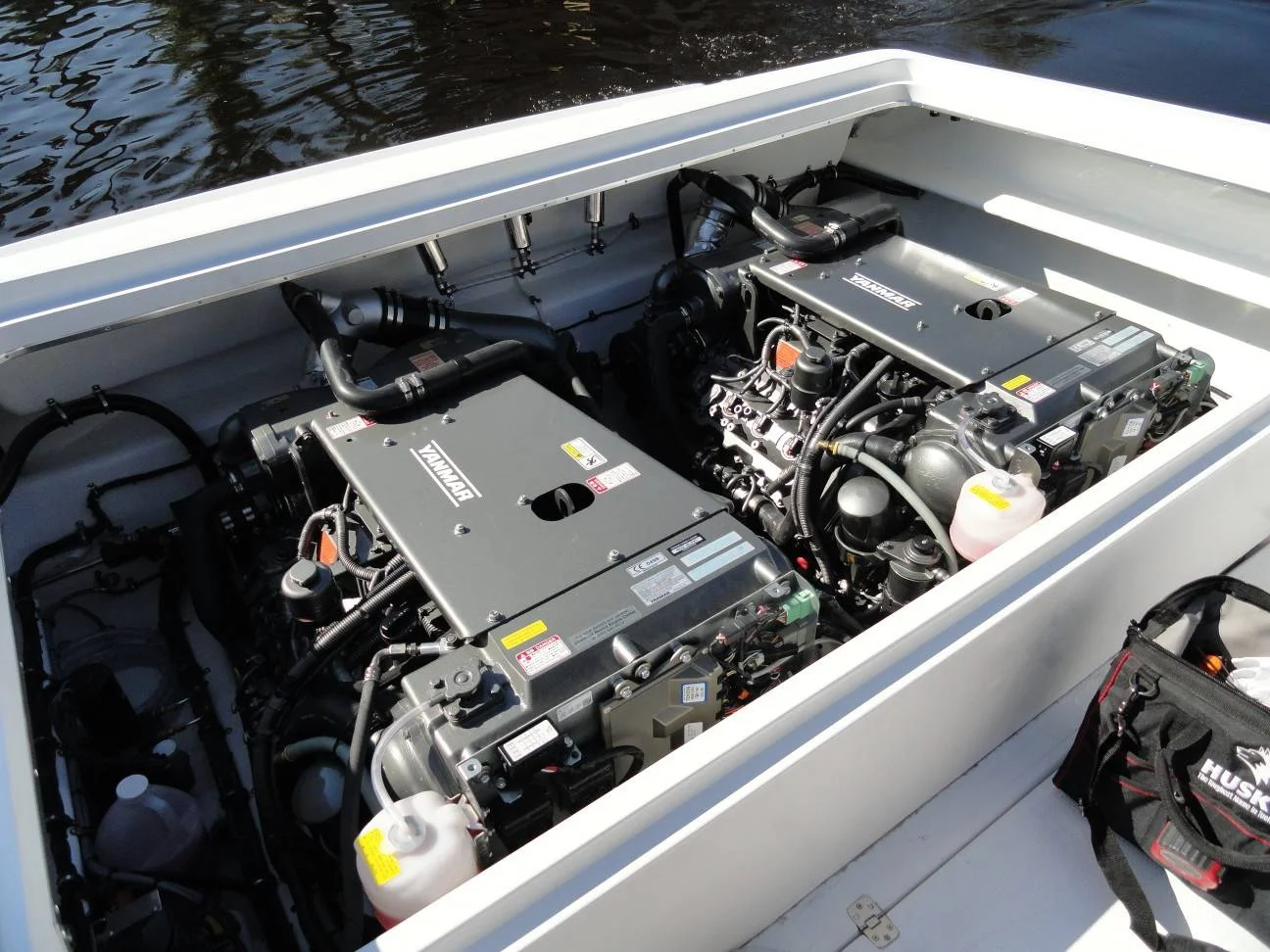
How Experienced Buyers Approach a Marine Diesel Engine for Long Range Cruising Buy
Experienced cruisers rarely ask, “What’s the most powerful engine I can fit?”
Instead, they ask:
- What RPM will this engine run at for days without stress?
- How efficient is it at that RPM?
- How forgiving is it if maintenance intervals stretch?
- Can I source filters, belts, and injectors internationally?
These questions are rooted in experience—and they separate successful long-range setups from expensive mistakes.
Understanding Continuous-Duty Ratings (What Vendors Actually Watch)
One of the most overlooked specs in engine selection is continuous-duty capability.
Engines built primarily for intermittent use:
- run hotter under sustained load
- consume more fuel when pushed continuously
- show wear sooner
Engines designed for continuous duty:
- are often conservatively rated
- operate comfortably below maximum output
- last significantly longer in real cruising conditions
When customers approach Power Engine Market for a marine diesel engine for long range cruising buy, this is one of the first filters we apply.
Power Explained: How Much Is Enough—and When It’s Too Much
Power should support the boat, not dominate the decision.
In long-range cruising, excessive horsepower often creates more problems than it solves:
- engines run underloaded
- combustion efficiency drops
- long-term reliability suffers
From real-world installations we’ve supported, the most successful setups share one thing: the engine operates comfortably at 60–75% load at cruising speed.
This keeps:
- fuel burn stable
- internal temperatures controlled
- wear patterns predictable
Torque vs Horsepower in Long-Range Cruising
Torque is what moves a loaded boat through water efficiently.
High-torque engines:
- push displacement hulls with less throttle
- reduce stress on gearboxes and drivetrains
- allow smoother operation in adverse conditions
This is why many commercial-grade or derated marine diesel engines outperform higher-horsepower recreational models in long-range cruising scenarios.
Fuel Efficiency: The Real Limiting Factor Offshore
Range is dictated far more by fuel burn than tank size.
Every extra unit of fuel consumed:
- shortens passage range
- increases cost
- reduces safety margins
Diesel engines dominate long-range cruising not just because diesel fuel is energy-dense, but because marine diesel engines are engineered for efficiency under load.
A properly selected marine diesel engine for long range cruising buy can mean the difference between confident routing and constant fuel anxiety. Check out diesel engine fuel efficiency.
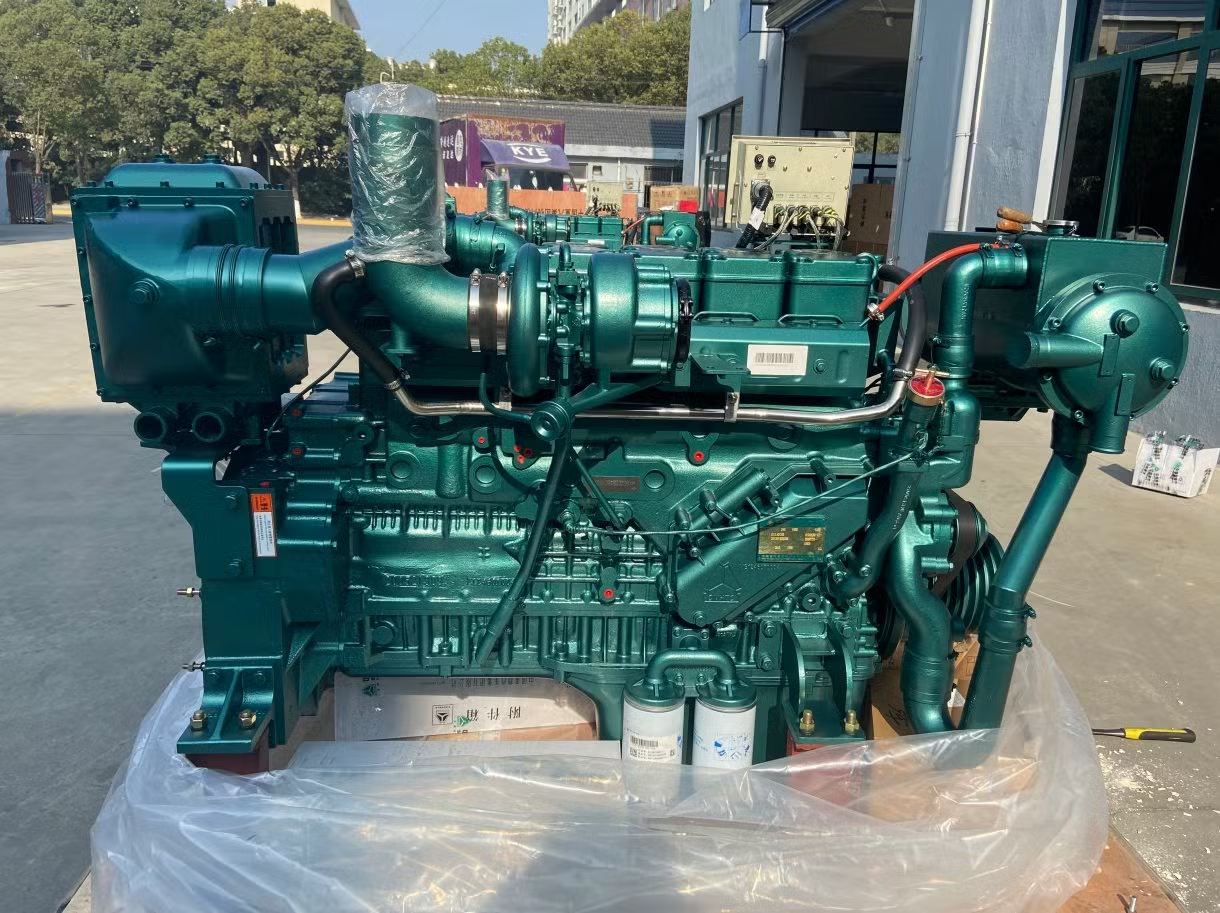
Design Choices That Affect Fuel Consumption
From vendor data and customer feedback, fuel efficiency is strongly influenced by:
- Engine tuning for mid-range RPM
- Conservative boost pressures
- Injection system simplicity
- Propeller and gearbox matching
Over-engineered systems may look advanced but can increase consumption when operated outside ideal conditions. Simpler designs often deliver more consistent real-world efficiency.
Reliability Offshore: What Actually Keeps You Moving
Reliability is not the absence of failure—it’s predictability and recoverability.
Engines trusted by long-range cruisers share several traits:
- proven block designs with long service histories
- global parts availability
- straightforward maintenance access
- conservative thermal management
As a vendor, we see far fewer emergencies from engines that prioritize stability over performance.
This is why reliability sits at the center of every marine diesel engine for long range cruising buy recommendation we make.
Why Simplicity Often Wins in Remote Cruising
Electronic control systems can be excellent—but they demand:
- clean fuel
- diagnostic tools
- trained technicians
Many long-range cruisers choose mechanical or lightly electronic systems because they:
- tolerate variable fuel quality
- can be serviced manually
- fail more transparently
Neither approach is “wrong,” but matching system complexity to cruising plans is essential.
Comparing Engine Types for Long Range Cruising Buy Decisions
Light-Duty Recreational Diesels
- Suitable for coastal use
- Lower upfront cost
- Limited sustained-load tolerance
Continuous-Duty or Commercial-Derived Diesels
- Built for long operating hours
- Often derated for longevity
- Ideal for long-range cruising
New vs Rebuilt Engines
- New engines offer predictability and warranty
- Rebuilt engines depend heavily on rebuild quality
From our experience, most serious cruisers ultimately choose new marine diesel engines for long-range applications because risk reduction matters more than short-term savings.
Installation and Support: The Hidden Reliability Factors
Even the best engine can fail if installed poorly.
Critical installation considerations include:
- cooling flow design
- exhaust routing
- gearbox compatibility
- vibration isolation
We’ve seen reliability issues traced not to the engine itself, but to overlooked installation details. That’s why experienced vendors treat installation guidance as part of the engine selection process—not an afterthought.
Why Long-Range Cruisers Work With Power Engine Market
Buyers working with Power Engine Market are typically not impulse shoppers. They are planners. They want:
- engines matched to real cruising profiles
- honest discussion of trade-offs
- long-term support, not just a transaction
Our role is not to push the most powerful option—it’s to help buyers make marine diesel engine for long range cruising buy decisions they won’t regret mid-passage.
Marine Diesel Engine for Long Range Cruising Buy FAQs
How long should a properly selected marine diesel engine last?
With correct loading and maintenance, 10,000–20,000 hours is common in cruising applications.
Is higher horsepower safer offshore?
Not necessarily. Proper loading and efficiency matter more than peak output.
Are electronic engines risky for long cruising?
They can be excellent, but they require cleaner fuel and diagnostic access.
Is buying new worth the cost?
For long-range cruising, predictability and warranty coverage often justify the investment.
Final Thoughts: Choosing the Right Marine Diesel Engine for Long Range Cruising Buy
Long-range cruising rewards conservative decisions.
The best marine diesel engine for long range cruising buy is rarely the flashiest or the most powerful. It’s the one that:
- runs calmly day after day
- burns fuel predictably
- can be serviced anywhere
- inspires confidence when conditions deteriorate
That confidence doesn’t come from marketing—it comes from experience, proper matching, and realistic expectations.
And that’s exactly how experienced cruisers—and experienced vendors—approach this decision.
Next Post: Short Shaft vs Long Shaft Outboard Engine Buy Guide: Real-World Pros and Cons Explained


