

After years of supplying marine engines to both recreational anglers and commercial operators, one pattern shows up again and again.
Most buyers focus on horsepower first.
And almost every time, they come back with the same issue:
The engine looks powerful on paper, but struggles in real conditions.
Heavy gear, multiple passengers, rough water—suddenly the performance drops, fuel consumption rises, and the engine feels constantly under strain.
In many of these cases, the problem isn’t the engine quality. It’s the wrong type of power delivery.
A properly matched high torque outboard engine for fishing boat solves that problem immediately because it’s designed for how fishing boats are actually used, not how they are marketed.
At Power Engine Market, we’ve worked with customers upgrading from underperforming setups to torque-focused configurations, and the difference is not subtle—it’s immediate and measurable.
What Is a High Torque Outboard Engine for Fishing Boat?
In technical terms, torque is the rotational force an engine produces at the crankshaft.
In practical terms, it’s what determines how well your boat moves under load.
A high torque outboard engine for fishing boat is engineered to:
- Deliver stronger low-end and mid-range power
- Maintain propulsion efficiency under weight
- Reduce strain during acceleration
Unlike high-speed engines, torque-focused engines operate more effectively in the RPM ranges where fishing boats spend most of their time.
This is especially important when:
- Launching from idle
- Navigating currents
- Operating with full onboard weight
You can read more articles to help in understanding marine engine performance.
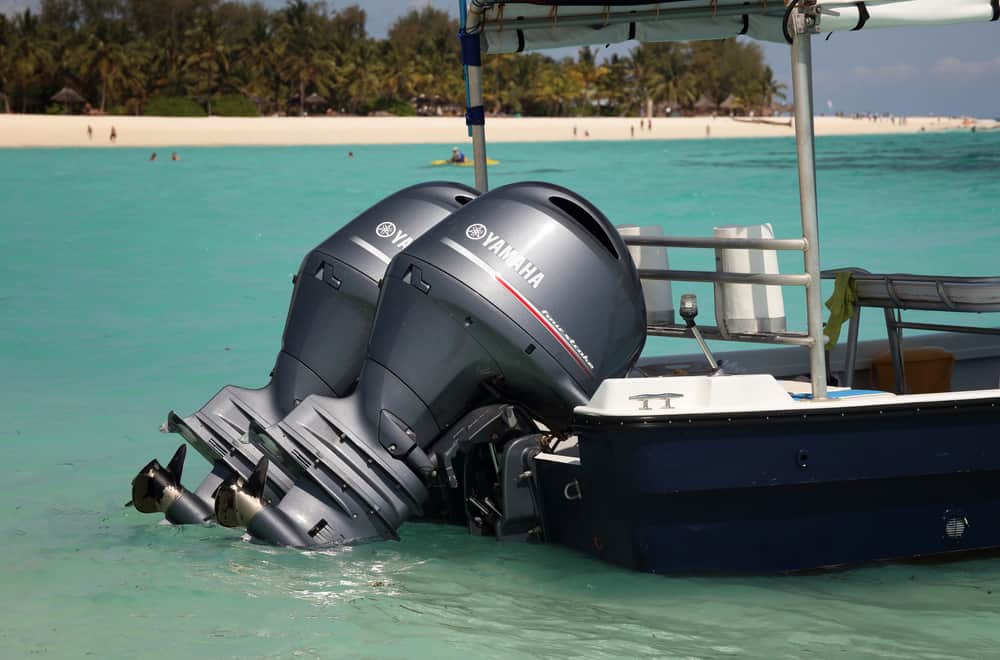
Why Torque Matters More Than Horsepower for Fishing Boats
Horsepower is often misunderstood.
It measures potential speed, but it does not guarantee usable power under load.
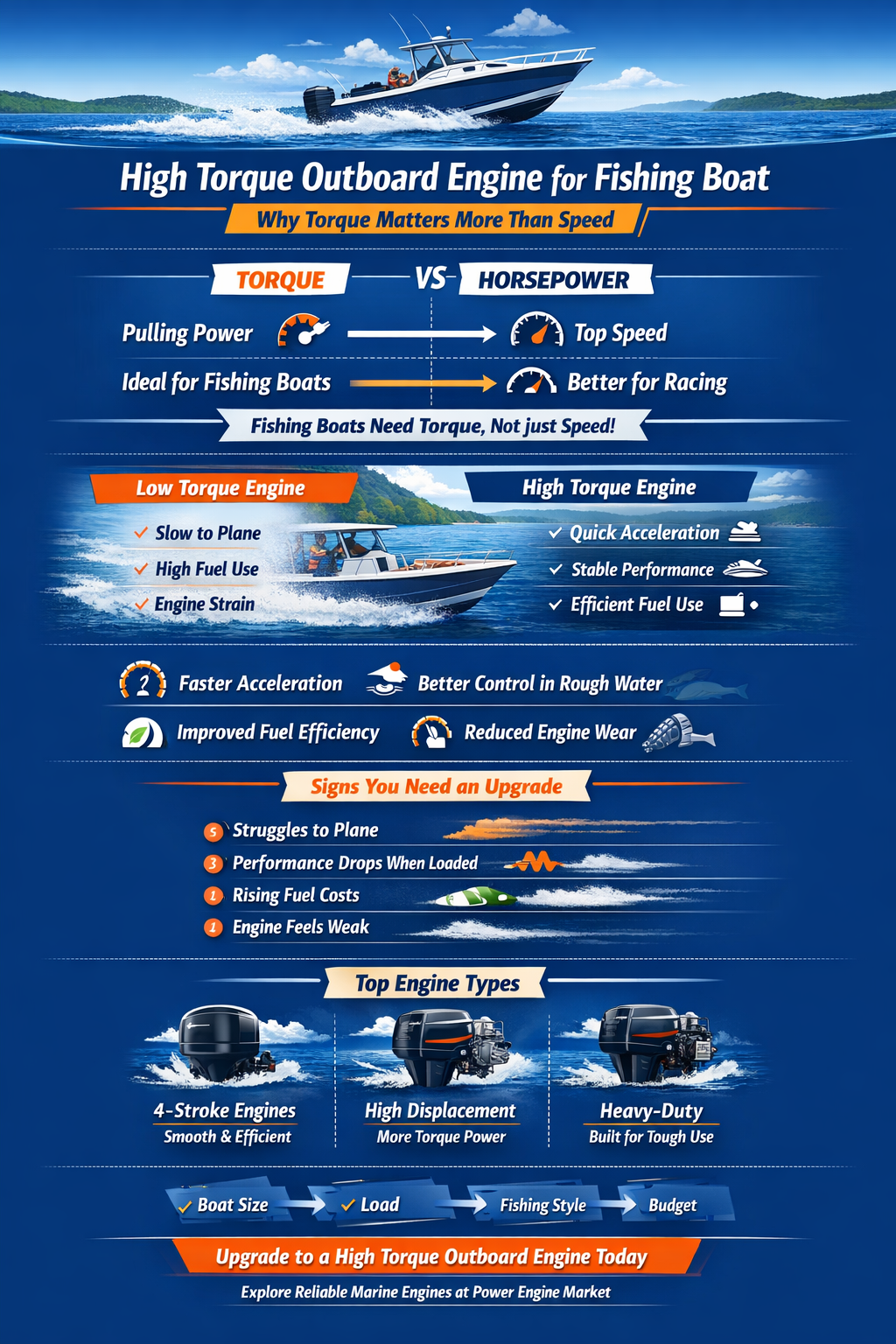
In real marine applications, especially fishing, torque determines:
- How quickly your boat planes
- How well it maintains speed under resistance
- How efficiently it uses fuel
You can do more readings on the difference between torque and horsepower.
Real-World Case
One offshore client we worked with was running a 150HP engine on a fully equipped fishing vessel.
Despite sufficient horsepower, the engine struggled during acceleration and consumed excessive fuel.
After switching to a higher torque configuration, the results were clear:
- Planing time reduced significantly
- Engine RPM stabilized under load
- Fuel usage improved over extended trips
This is a consistent pattern across similar upgrades.
Key Benefits of a High Torque Outboard Engine for Fishing Boat
Consistent Acceleration Under Load
Torque allows the engine to perform without hesitation, even when the boat is heavily loaded.
Improved Handling in Variable Conditions
In rough water or strong currents, torque ensures stable propulsion without excessive throttle input.
Lower Long-Term Fuel Consumption
Engines operating efficiently within their torque range require less fuel to maintain performance. Read more on how marine engines improve fuel efficiency.
Reduced Mechanical Stress
When an engine is properly matched to the boat’s load, internal components experience less wear over time.
Reliable Performance Across Long Distances
For offshore trips, reliability is not optional. Torque-focused engines deliver consistent output without performance drops.
When You Should Consider Upgrading
From a technical standpoint, these are clear indicators that your current setup lacks sufficient torque:
- Extended time to reach planing speed
- Noticeable RPM spikes under load
- Increased fuel consumption without performance gain
- Difficulty maintaining control in rough conditions
These issues are often misdiagnosed as engine failure, when in reality they are caused by insufficient torque capacity.
Engine Types That Deliver High Torque Performance
4-Stroke Outboard Engines
Modern 4-stroke engines provide:
- Strong mid-range torque
- Efficient fuel consumption
- Long operational lifespan
High Displacement Engines
Larger displacement engines produce more torque naturally due to increased cylinder volume.
These are particularly effective for:
- Offshore fishing boats
- Larger vessels carrying significant load
Commercial-Grade Outboards
Used by professionals, these engines are built for sustained performance and durability under continuous operation.
Proven Brands in High Torque Outboard Engines
Based on consistent field performance and customer feedback, the following brands stand out:
- Yamaha – Known for reliability and balanced torque delivery
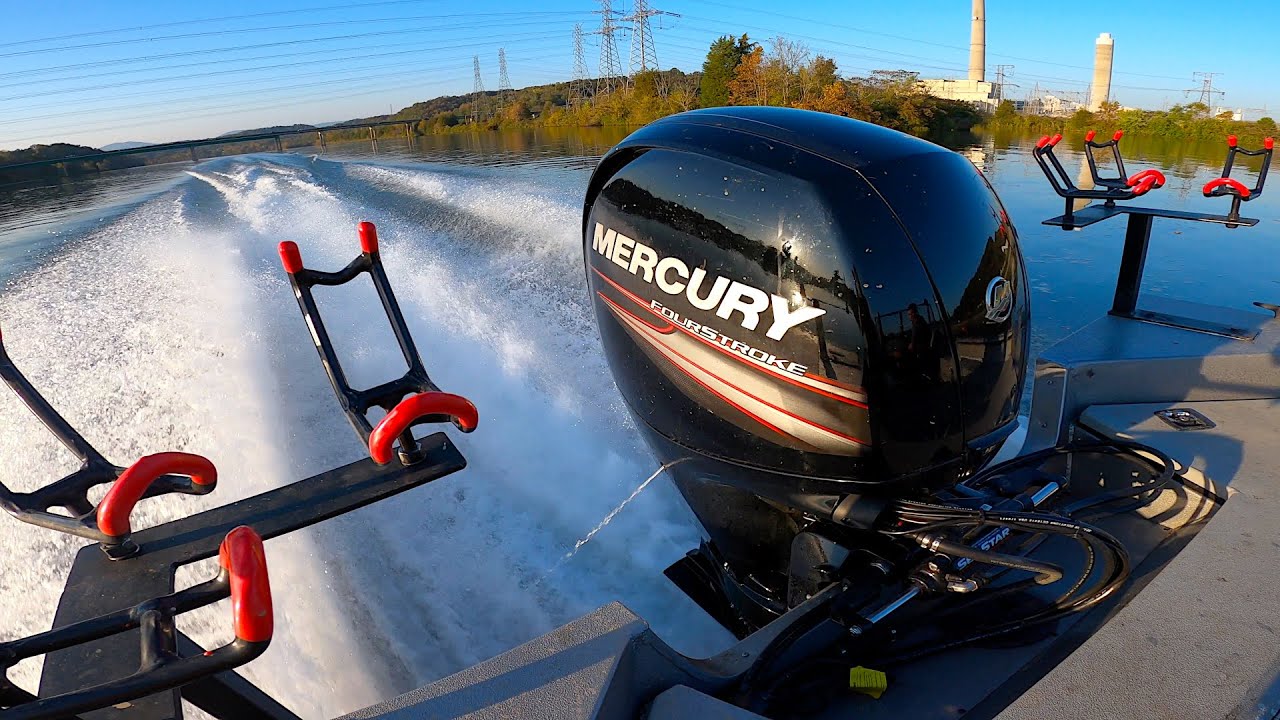
- Mercury – Strong acceleration and responsive performance
- Tohatsu – Efficient and dependable under varying loads
These manufacturers have established long-term credibility through engineering consistency and global service networks.
How to Choose the Right Engine (Professional Approach)
Selecting the right high torque outboard engine for fishing boat requires evaluating:
1. Total Vessel Weight
Include:
- Hull weight
- Fuel load
- Equipment
- Passenger capacity
2. Operating Conditions
- Offshore → higher torque demand
- Inland → moderate torque requirement
3. Performance Expectations
- Fast planing vs steady cruising
- Fuel efficiency vs maximum output
4. Engine Compatibility
Improper shaft length or mounting height can significantly reduce performance efficiency.
5. Long-Term Cost Efficiency
Lower upfront cost does not always mean better value. Fuel consumption and maintenance must be factored in.
Cost Considerations and Value
The cost of a high torque outboard engine for fishing boat varies depending on specifications and condition.
- Mid-range: $5,000 – $10,000
- High-performance: $10,000+
From experience, many buyers benefit from remanufactured engines, which provide:
- Verified performance standards
- Reduced cost
- Reliable operation when properly sourced
Why Buyers Choose Power Engine Market
Customers choose Power Engine Market because we focus on matching engines to real-world applications, not just selling inventory.
Our process includes:
- Evaluating boat requirements
- Recommending suitable torque configurations
- Providing tested and verified engines
We work with:
- Individual boat owners
- Commercial operators
- Marine technicians
This allows us to offer guidance based on actual usage, not assumptions.
Installation and Maintenance Best Practices
Installation
Proper alignment and mounting height are essential for optimal torque transfer.
Maintenance
Routine checks should include:
- Oil condition
- Fuel system integrity
- Propeller performance
Operational Efficiency
Running the engine within its optimal load range ensures:
- Better fuel economy
- Reduced wear
- Consistent performance
Common Buyer Mistakes
From industry experience, the most common errors include:
- Prioritizing horsepower over torque
- Underestimating total vessel weight
- Choosing engines based solely on price
- Ignoring compatibility requirements
Avoiding these mistakes significantly improves long-term satisfaction and performance.
Frequently Asked Questions
Is torque more important than horsepower for fishing boats?
Yes, particularly when operating under load. Torque determines usable power in real conditions.
What is the best high torque outboard engine for fishing boat?
The best choice depends on vessel size and usage, but Yamaha, Mercury, and Suzuki consistently perform well.
Can upgrading improve fuel efficiency?
Yes. Properly matched engines operate more efficiently, reducing unnecessary fuel consumption.
How do I know if my engine is underpowered?
Signs include slow acceleration, high RPM under load, and reduced control in challenging conditions.
Conclusion: Make the Right Upgrade Decision
Choosing the right engine is not about selecting the highest number on a specification sheet.
It’s about selecting the engine that performs under real conditions.
A properly selected high torque outboard engine for fishing boat delivers:
- Stronger performance
- Greater efficiency
- Long-term reliability
For anglers who rely on their equipment, this is not just an upgrade—it’s a necessary improvement.
Next Post: Buy Yanmar Marine Gearbox With Warranty at Unbelievable Prices Today

