
Description
Volvo Penta D6-400A DPI – Engine and Propulsion Package
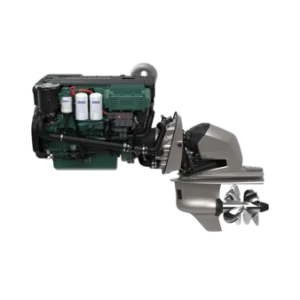
The Volvo Penta D6-400A DPI is designed as a complete engine-and-drive solution rather than an engine operating independently from its propulsion system. The D6 diesel engine and DPI Aquamatic sterndrive are engineered to work together, allowing the engine’s torque to be transferred efficiently through the drive and DuoProp propellers.
The engine uses a six-cylinder inline configuration with approximately 5.5 liters of displacement and a high-pressure Common Rail fuel system. The supplied product information identifies both turbocharging and supercharging, giving the engine strong torque across the operating range.
This approach is particularly valuable in planing boats where rapid acceleration, strong cruising performance and precise maneuvering are important.
Volvo Penta describes the D-series engines as providing strong marine torque throughout the engine-speed range. The DPI system is then designed to transfer that torque effectively to the water while maintaining smooth operation at low speeds.
Performance and On-Water Handling
A major strength of the D6-400A DPI package is the combination of engine torque and the DPI drive system.
The engine’s supercharger contributes strong low-end torque, helping the boat accelerate efficiently toward planing speed. As engine speed increases, the turbocharger contributes to maintaining power and performance at higher operating speeds. Volvo Penta specifically describes this combination as a way of delivering strong torque across the engine-speed range.
The DPI drive complements the engine by using a hydraulic clutch that allows smooth engagement and controlled slipping at low engine speeds. This is particularly useful during docking, harbor maneuvering and other situations where precise control at low speed is more important than outright acceleration.
The DuoProp arrangement uses twin counter-rotating propellers to transfer the engine’s torque to the water efficiently. The integrated design helps maintain propulsion control through acceleration, cruising and maneuvering.
Advanced Electronic Control
The package incorporates Volvo Penta’s Electronic Vessel Control (EVC) architecture, bringing engine, drive and helm controls together within an integrated electronic system.
The supplied product description identifies electronic acceleration and shifting, while Volvo Penta’s DPI system also supports advanced helm functions such as electric steering and optional joystick control.
Depending on the selected installation and equipment, the system can support features such as joystick maneuvering and Dynamic Positioning System (DPS). DPS can help maintain the vessel’s heading and position during situations such as docking or waiting in challenging conditions.
The result is a propulsion package designed not only to provide horsepower but also to give the operator greater control over how that power is delivered.
A Compact and Integrated Marine Design
The D6-400A DPI package is engineered around the principle of integrating the engine and driveline into a single propulsion system.
Rather than treating the engine, transmission, steering and propeller system as unrelated components, Volvo Penta integrates these systems to work together electronically and mechanically.
This approach can simplify the overall propulsion architecture while providing coordinated control from the helm.
The supplied description also highlights accessible service points and a design intended to support straightforward maintenance. Volvo Penta’s current customer platform provides access to manuals, service information, warranty status and relevant product information for registered engines.
Fuel System and Efficiency
The D6-400A uses Common Rail fuel injection, allowing fuel delivery to be electronically controlled according to engine operating conditions.
Combined with forced induction and Volvo Penta’s integrated Aquamatic propulsion system, the configuration is designed to extract strong performance from the engine while maintaining efficient fuel utilization.
Fuel consumption will naturally depend on vessel size, hull design, loading, propeller selection, sea conditions, engine speed and operating profile. For this reason, actual fuel consumption should be evaluated for the complete boat rather than assumed solely from the engine specification.
The DPI system’s efficient torque transfer also contributes to the overall propulsion package by matching the engine’s output to the DuoProp drive system.
Smooth Shifting and Low-Speed Maneuvering
The DPI Aquamatic sterndrive is particularly suited to operators who place a high value on maneuverability and comfort.
Its hydraulic clutch allows the drive to engage smoothly and provides controlled slipping at low engine speeds. This reduces the abrupt engagement associated with conventional mechanical shifting and provides greater control during low-speed operation.
The system can also be equipped with electric steering and joystick functionality, depending on the selected configuration. Volvo Penta identifies the combination of electric steering and joystick control as a key advantage of the DPI platform.
For larger recreational boats and applications where docking precision is important, these features can make a significant difference to the overall operating experience.
Technical Specifications
| Specification | Details |
|---|---|
| Product | Volvo Penta Aquamatic D6-400A DPI |
| Engine Family | Volvo Penta D6 |
| Engine Type | Marine Diesel |
| Configuration | 6-Cylinder Inline |
| Displacement | Approximately 5.5 L |
| Rated Power | 400 hp class |
| Fuel System | Electronically Controlled Common Rail |
| Forced Induction | Turbocharged & Supercharged |
| Propulsion System | Volvo Penta DPI Aquamatic Sterndrive |
| Propeller System | DuoProp Twin Counter-Rotating Propellers |
| Transmission | Integrated DPI Drive |
| Clutch | Hydraulic Clutch |
| Vessel Control | Electronic Vessel Control (EVC) |
| Steering | Electric Steering |
| Joystick | Available depending on configuration |
| Dynamic Positioning | Available depending on configuration |
| Electronic Shifting | Yes |
| Electronic Throttle | Yes |
| Engine Control | Electronic |
| Application | Marine Leisure / High-Performance Boat Propulsion |
Who This Package Is Best For
The Volvo Penta Aquamatic D6-400A DPI is best suited to boat owners and operators looking for a high-output diesel propulsion system with sophisticated electronic control and integrated sterndrive technology.
It is particularly relevant for:
- High-performance recreational boats
- Larger planing vessels
- Owners seeking 400hp-class diesel propulsion
- Boats requiring strong acceleration and low-speed maneuverability
- Repower projects compatible with Volvo Penta DPI propulsion
- Operators who value integrated electronic helm controls
Because the DPI system is an integrated propulsion package, compatibility should be assessed at the complete-system level. Hull design, vessel weight, engine-room configuration, sterndrive installation, propeller requirements and existing control systems all need to be considered.
Installation, Compatibility, and Support
Selecting the correct D6-400A DPI package requires more than matching horsepower. Buyers should verify the vessel’s existing propulsion arrangement and confirm that the boat is designed for the DPI sterndrive system.
For repower projects, useful information includes the existing engine model, current drive system, vessel specifications, available installation space and existing helm-control arrangement.
Volvo Penta’s support ecosystem includes manuals, maintenance information, warranty information and product-specific service resources through Volvo Penta Connect.
Volvo Penta also recommends authorized dealers as the primary point of contact for engine service, repairs, parts and technical support.
The Volvo Penta marine diesel engine range and related Aquamatic propulsion systems can also be considered when comparing alternative power levels or propulsion configurations.
Frequently Asked Questions
What is the Volvo Penta D6-400A DPI?
The Volvo Penta D6-400A DPI is an integrated diesel propulsion package combining a high-output D6 marine diesel engine with Volvo Penta’s DPI Aquamatic sterndrive. The system uses DuoProp counter-rotating propellers, electronic vessel control and a hydraulic clutch for smooth shifting and precise low-speed maneuvering.
What type of fuel system does the D6-400A use?
The engine uses an electronically controlled Common Rail fuel-injection system. The supplied product information also identifies turbocharging and supercharging, providing strong torque across the engine’s operating range.
What is the DPI Aquamatic drive?
The DPI is Volvo Penta’s modern Aquamatic sterndrive system. It combines a hydraulic clutch, electric steering and DuoProp propulsion, with optional features such as joystick control and Dynamic Positioning System depending on configuration.
Does the D6-400A DPI have a supercharger and turbocharger?
Yes. The supplied product information identifies both a turbocharger and supercharger. Volvo Penta explains that the supercharger helps produce strong low-end torque, while the turbocharger contributes as engine speed increases.
Is joystick control available with the DPI system?
Yes. Volvo Penta’s DPI platform supports joystick functionality, with electric steering and other advanced maneuvering functions available depending on the selected configuration. The system is designed to provide precise control during low-speed maneuvering and docking.
Is Dynamic Positioning available?
Volvo Penta’s DPI system can be equipped with a Dynamic Positioning System (DPS). DPS is designed to help maintain a vessel’s heading and position, which can be useful during docking, waiting or other low-speed situations. Availability depends on the final vessel and equipment configuration.
What should I verify before buying a D6-400A DPI?
Before purchasing, verify the vessel’s engine and drive compatibility, available installation space, existing control system, hull and vessel specifications, and required sterndrive configuration. For a repower, the existing engine and drive model, vessel dimensions and current helm controls are especially useful for determining compatibility.