

If you’ve spent any time around marine engines—whether as an owner, captain, or yard manager—you’ve probably heard this sentence before:
“The engine is solid. The gearbox is where things usually go wrong.”
After years in the marine engine business, I can tell you that statement is painfully accurate.
Not because ZF gearboxes aren’t reliable—they are—but because most gearbox problems aren’t product failures, they’re selection failures. The wrong unit, matched to the wrong horsepower range, used in the wrong way, will fail no matter how good the brand name is.
That’s why people searching for a zf marine gearbox for specific horsepower range sale often feel overwhelmed. On the surface, everything looks similar. Same brand. Similar prices. Similar specs. But in the real world, the differences matter more than most buyers realize.
This article explains how professionals actually choose the right ZF marine gearbox, based on experience, not theory—and how we approach this decision every day at Power Engine Market.
Why Horsepower Matching Matters More Than Anything Else
Let me start with a real scenario.
A commercial operator once contacted us after replacing a gearbox twice in under three years. Both units were “rated higher” than his engine’s horsepower. On paper, nothing looked wrong. In reality, the gearbox was constantly overloaded because it was matched to peak horsepower, not operating horsepower.
That mistake cost him downtime, repairs, and lost contracts.
Here’s the truth most catalogs won’t tell you:
A gearbox doesn’t fail because it’s weak.
It fails because it’s used outside the range it was designed for.
That’s why professionals never shop blindly for a zf marine gearbox for specific horsepower range sale. They define the range first, then choose the gearbox.
What a ZF Marine Gearbox Actually Does (Beyond the Basics)
At a basic level, a marine gearbox:
- Transfers power from engine to propeller
- Reduces engine RPM to usable prop speed
- Handles forward and reverse engagement
But in real-world operation, it does much more.
A gearbox absorbs:
- Continuous torque loads
- Shock loads during acceleration and shifting
- Propeller resistance changes
- Vessel inertia
This is why ZF Friedrichshafen gearboxes are so widely used in professional marine applications—they’re engineered for predictable, repeatable performance under load, not just peak numbers.
However, every ZF model is engineered around a specific operating envelope. That envelope includes:
- Horsepower range
- Torque limits
- RPM bands
- Duty cycle assumptions
Ignore that envelope, and even the best gearbox won’t last. Learn about ZF marine drivetrain engineering standards.
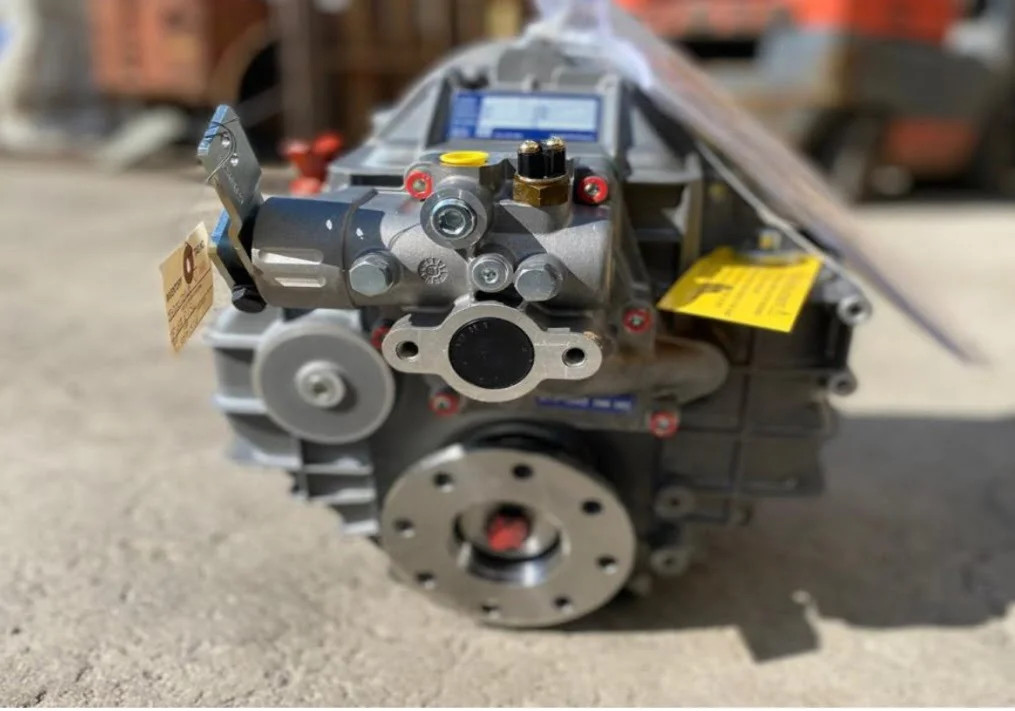
Horsepower Ranges: Where Most Buyers Go Wrong
Continuous vs Intermittent Horsepower
This distinction alone explains most gearbox failures.
- Intermittent horsepower applies to short bursts—acceleration, brief top-speed runs
- Continuous horsepower is what the gearbox sees hour after hour
Pleasure boats usually operate closer to intermittent loads.
Commercial vessels—charter boats, workboats, patrol craft—operate near continuous loads. That difference changes everything.
When someone shops for a zf marine gearbox for specific horsepower range sale, professionals immediately ask:
- How long will the engine run at load?
- At what RPM?
- Under what vessel weight?
Because a gearbox rated for 300 HP intermittently may only be suitable for 220–250 HP continuously.
Peak Horsepower vs Real Operating Horsepower
Engines are marketed by peak horsepower. Gearboxes live in the real world.
What actually matters is:
- Torque curve shape
- Typical cruise RPM
- Propeller load
- Vessel displacement
Two engines with the same HP rating can place very different stress on the same gearbox. That’s why professionals never size a gearbox using brochures alone. Learn about marine propulsion system fundamentals.
At Power Engine Market, we’ve learned that the fastest way to avoid problems is to size the gearbox for how the boat is actually used, not how it’s advertised.
How Professionals Choose the Right ZF Marine Gearbox
This is the decision process used by experienced marine technicians, not guesswork. Marine gearboxes matched to engine horsepower.
1. Torque Comes First
Torque determines internal stress.
High torque at low RPM is far more demanding than high RPM with lighter load. That’s why torque compatibility often matters more than raw horsepower when evaluating a zf marine gearbox for specific horsepower range sale.
Professionals always ask:
- Where does peak torque occur?
- How often does the engine operate in that range?
2. RPM Compatibility Is Non-Negotiable
Every ZF gearbox is optimized for a certain RPM window.
Mismatch here leads to:
- Excess heat
- Vibration
- Inefficient power transfer
- Premature wear
This isn’t a tuning issue—it’s a compatibility issue.
3. Vessel Weight and Duty Cycle Matter
A 10-ton displacement hull and a lightweight planing hull behave very differently, even with the same engine.
Professionals factor:
- Loaded displacement
- Acceleration demand
- Cruise speed profile
- Forward/reverse shift frequency
Ignoring these factors is one of the fastest ways to shorten gearbox life. Read on how marine gearboxes handle torque and load.
Why “Oversizing” Often Backfires
One of the most common buyer assumptions is that a larger gearbox is safer.
In practice, oversizing can:
- Reduce efficiency
- Complicate propeller matching
- Increase fuel consumption
- Add unnecessary cost
Professionals size gearboxes precisely, not generously.
That precision is what separates a smart purchase from an expensive one.
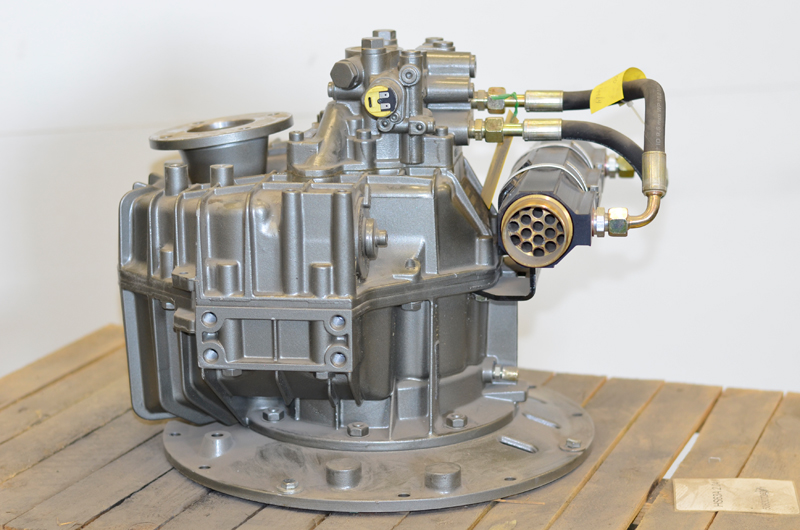
ZF Reduction Ratios Explained the Way Buyers Actually Need
Reduction ratio determines how engine RPM is translated into propeller speed.
- Lower ratios favor speed
- Higher ratios favor torque and control
There is no universally “best” ratio.
The correct ratio depends on:
- Horsepower range
- Torque characteristics
- Hull design
- Intended operating speed
When evaluating a zf marine gearbox for specific horsepower range sale, professionals always choose ratio based on application, not convenience. Browse gear reduction options available at Power Engine Market.
New vs Reconditioned ZF Marine Gearboxes
Both options can be excellent—when chosen correctly.
New Units Make Sense When:
- The vessel operates under continuous load
- Reliability is mission-critical
- Long service intervals are required
Reconditioned Units Make Sense When:
- They’re professionally rebuilt
- Horsepower history is verified
- The gearbox is matched correctly
- Warranty support is included
At Power Engine Market, we guide buyers through this decision honestly, because the “right” option depends on how the vessel will actually be used.
How Power Engine Market Approaches Gearbox Matching
When someone contacts us looking for a zf marine gearbox for specific horsepower range sale, we don’t start with a price.
We start with questions:
- What engine are you running?
- How is the vessel used?
- What load profile does it see?
- What problems are you trying to avoid?
Only after understanding the system do we recommend a gearbox model and ratio. That’s how professionals prevent failures before they happen. You can contact us to learn more about Power Engine market.
Signs You’ve Chosen the Correct Gearbox
When the match is right:
- Shifting is smooth
- Engine reaches proper operating RPM
- Temperatures remain stable
- Vibration is minimal
- The drivetrain feels balanced
These aren’t marketing claims—they’re operational realities professionals look for.
Final Checklist Before You Buy
Before purchasing any zf marine gearbox for specific horsepower range sale, confirm:
- Engine horsepower range verified
- Torque compatibility confirmed
- RPM band aligned
- Reduction ratio selected intentionally
- Vessel duty cycle considered
- Warranty and support clarified
If any item is unclear, pause and reassess.
Final Thoughts: Match It Once, Run It Right
Every gearbox failure I’ve seen started with a rushed decision.
Professionals don’t rush. They evaluate, match, and commit with confidence.
If you’re serious about buying a zf marine gearbox for specific horsepower range sale, approach it the way professionals do—because the right match doesn’t just protect your gearbox, it protects your engine, your vessel, and your investment.
That’s how we do it at Power Engine Market, and it’s why the right choice lasts long after the purchase is forgotten.
Next Post: Quiet Marine Generator CE Certified for Sale: The Smart Buyer’s Checklist for Silent Yacht Power

