Over the years at Power Engine Market, we’ve worked with hundreds of customers — from first-time boat owners to commercial operators running heavy-duty vessels daily.
And there’s one mistake we see repeatedly.
A customer purchases a high-quality marine gearbox, installs it, and expects improved performance. Instead, the boat struggles under load, burns more fuel than expected, and the engine begins to show signs of stress much earlier than it should.
In most of these cases, the issue is not the engine or the gearbox brand.
It comes down to one overlooked factor: the gearbox ratio.
This marine gearbox ratio guide with buy advice is based on real-world experience, technical understanding, and years of helping customers choose the right marine transmission systems. The goal is simple — to help you avoid costly mistakes and make a decision that improves both performance and long-term reliability.
What Is a Marine Gearbox Ratio? (Clear Technical Explanation)
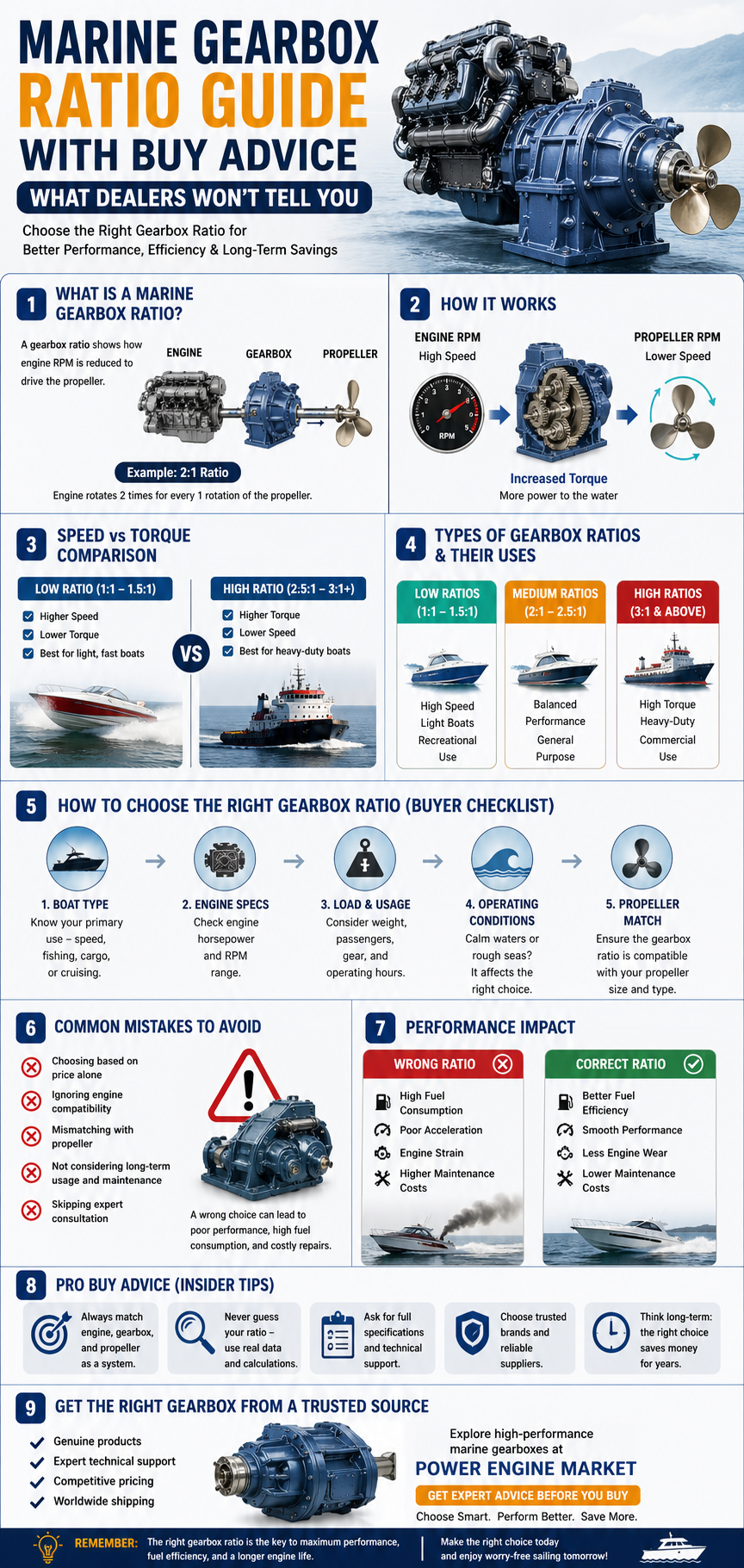
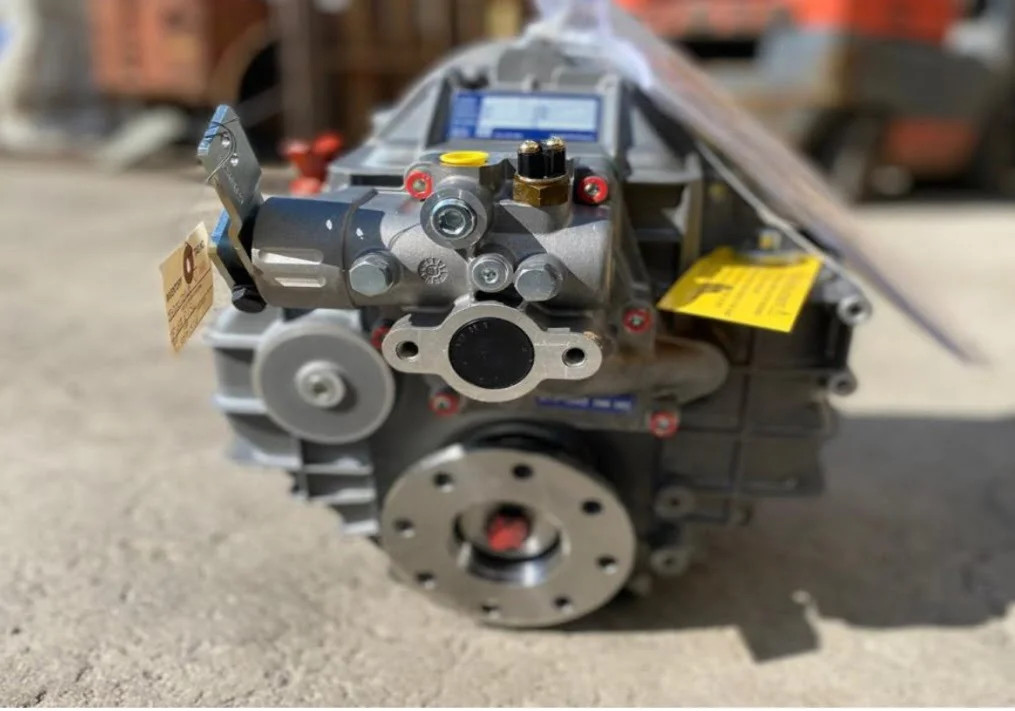
A marine gearbox ratio defines the relationship between engine rotation (RPM) and propeller rotation.
For example:
- A 2:1 gearbox ratio means the engine rotates twice for every single rotation of the propeller.
This ratio directly influences how engine power is transferred into thrust in the water.
From a technical standpoint, the gearbox acts as a torque converter. It adjusts engine output to match the operational demands of the vessel. Choosing the correct ratio ensures that the engine operates within its optimal RPM range while delivering efficient propulsion.
Understanding this principle is fundamental to any marine gearbox ratio guide with buy advice, because incorrect ratios disrupt the entire propulsion system. Do research on mechanical gear ratios to better understand.
How Marine Gearbox Ratios Affect Boat Performance
Speed vs Torque: Engineering Reality
From a mechanical perspective, gearbox ratios determine whether your setup prioritizes speed or torque.
- Lower ratios (1:1 to 1.5:1) increase propeller speed and are suitable for lighter vessels
- Higher ratios (2.5:1 to 3:1 and above) increase torque, making them ideal for heavy loads
In practical terms, a mismatch leads to:
- Reduced propulsion efficiency
- Increased mechanical stress
- Suboptimal performance
At Power Engine Market, we’ve analyzed multiple cases where incorrect ratios reduced overall vessel efficiency by more than 30%.
Fuel Efficiency and Engine Protection
One of the most overlooked impacts of gearbox ratio selection is fuel consumption.
When the ratio is incorrect:
- The engine operates outside its optimal efficiency range
- Fuel consumption increases significantly
- Internal components experience higher stress levels
From a long-term operational standpoint, this leads to:
- Higher maintenance costs
- Reduced engine lifespan
- Increased downtime
Correct ratio selection is not just about performance — it is about protecting your investment.
Propeller and Gearbox Synchronization
A marine propulsion system is not made of independent parts. It is a synchronized system consisting of:
- Engine
- Gearbox
- Propeller
If one component is mismatched, the entire system underperforms.
For example, installing a high-ratio gearbox with an incompatible propeller can result in:
- Cavitation
- Poor thrust
- Increased vibration
This is why every professional marine gearbox ratio guide with buy advice emphasizes system-wide compatibility.
Types of Marine Gearbox Ratios and Their Applications
Based on industry standards and real-world usage, gearbox ratios can be grouped into three main categories:
Low Ratios (1:1 – 1.5:1)
Used in:
- High-speed vessels
- Lightweight recreational boats
Medium Ratios (2:1 – 2.5:1)
Used in:
- General-purpose marine applications
- Balanced performance setups
High Ratios (3:1 and above)
Used in:
- Commercial vessels
- Fishing boats
- Cargo transport systems
These classifications are widely accepted across marine engineering practices and are essential when narrowing down options.
How to Choose the Right Marine Gearbox Ratio
Step 1: Define Vessel Application
Start by identifying the primary use of your boat:
- High-speed operation
- Load carrying
- Long-distance cruising
Each application requires a different torque-speed balance.
Step 2: Analyze Engine Specifications
The gearbox must align with:
- Engine horsepower
- Operating RPM range
- Torque output
Failure to match these parameters leads to inefficient energy transfer.
Step 3: Evaluate Load Conditions
Operating conditions play a critical role:
- Heavy loads require higher torque
- Continuous operation demands efficiency
- Harsh environments require durability
Step 4: Confirm Propeller Compatibility
This is where expert input becomes critical.
At Power Engine Market, we ensure that:
- Gearbox ratio
- Engine specifications
- Propeller dimensions
are fully aligned before recommending any product. Follow marine engineering principles.
What Dealers Often Overlook (Industry Reality)
In many cases, customers are offered gearboxes based on:
- Stock availability
- Pricing convenience
- General assumptions
Rather than precise system compatibility.
This leads to short-term solutions that create long-term problems.
A reliable supplier focuses on:
- Accurate specifications
- Performance optimization
- Long-term operational success
Common Buying Mistakes
From our experience, the most frequent errors include:
- Selecting gearboxes based solely on price
- Ignoring technical compatibility
- Skipping professional consultation
- Underestimating long-term usage requirements
Each of these mistakes increases operational risk and cost.
Trusted Marine Gearbox Brands
Some of the most reliable brands in the industry include:
- ZF Marine
- Twin Disc
- Kanzaki
- Yanmar-compatible systems
However, brand alone does not guarantee performance.
The correct ratio and system compatibility are far more important than brand selection.
Where to Buy Marine Gearboxes with Confidence
Choosing a supplier is just as important as choosing the gearbox itself.
At Power Engine Market, we focus on:
- Verified and tested marine gearbox units
- Accurate technical guidance
- Competitive pricing based on real value
- Support for both individual and commercial buyers
This ensures that customers receive not just a product, but a complete solution.
For additional technical understanding of marine propulsion systems, reviewing resources such as marine propulsion systems on Wikipedia can provide further context.
Expert Advice from Industry Experience
Based on years of working with marine systems, here are key recommendations:
- Always confirm full technical specifications before purchase
- Never assume compatibility without verification
- Prioritize system performance over short-term savings
- Work with suppliers who understand marine engineering
These principles consistently lead to better outcomes.
FAQs – Marine Gearbox Ratio Guide With Buy Advice
What is the ideal gearbox ratio?
There is no universal answer. It depends on your engine, vessel type, and operational requirements.
Can gearbox ratios be adjusted later?
Yes, but it involves significant cost and mechanical changes.
What are the signs of an incorrect ratio?
- Poor acceleration
- High fuel consumption
- Engine overheating or strain
Does a higher ratio increase power?
It increases torque, not raw engine power.
Final Thoughts: Make the Right Decision the First Time
Selecting the correct gearbox ratio is one of the most important decisions in marine system configuration.
It directly affects:
- Performance
- Fuel efficiency
- Engine lifespan
- Operational costs
This marine gearbox ratio guide with buy advice is designed to help you make an informed decision based on real-world experience and technical accuracy.
If you are unsure about your setup, working with a knowledgeable supplier like Power Engine Market ensures that your system is optimized from the start.
A correct decision today prevents expensive corrections tomorrow.
Next Post: Best Hybrid Marine Generator for Sale – Save Power, Reduce Noise, Maximize Performance


