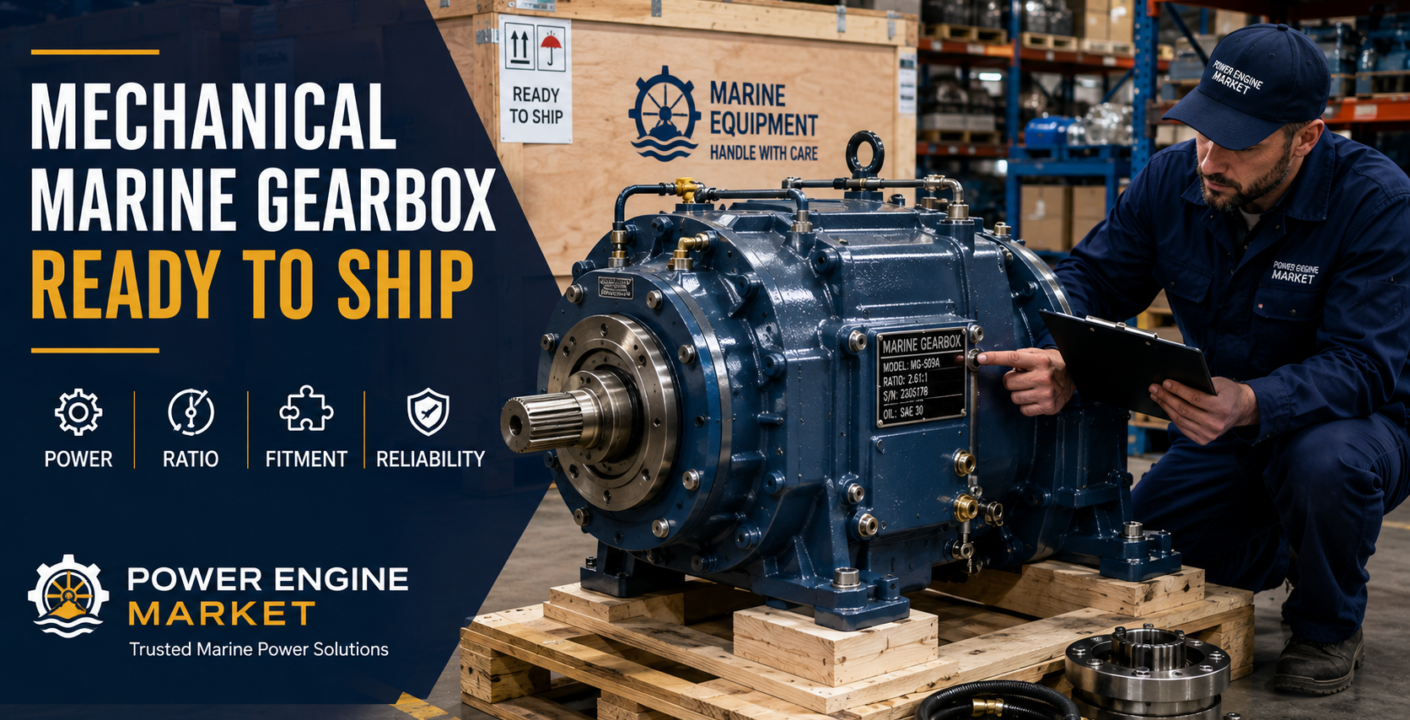
A mechanical marine gearbox ready to ship can make a major difference when a vessel is stuck in the yard, a repower project is waiting on parts, or an old gearbox has become too unreliable to keep in service. In marine work, downtime matters. A delayed gearbox can stop an engine installation, hold up a commercial schedule, keep a fishing boat out of operation, or delay a motor yacht, workboat, patrol vessel, or passenger craft from getting back on the water.
But fast availability is only one part of the decision.
A gearbox can be ready to ship and still be wrong for the vessel. It may have the wrong reduction ratio, incorrect rotation, incompatible input or output arrangement, unsuitable duty rating, wrong coupling size, or inadequate cooling setup. That is why the best gearbox decision is never based on availability alone.
At Power Engine Market, we treat a mechanical marine gearbox as a critical drivetrain component, not just a replacement part. The gearbox is responsible for transferring engine power to the propeller shaft, reducing engine RPM to usable shaft speed, providing forward, neutral, and reverse operation, and supporting reliable propulsion when it is properly matched and installed.
This guide explains what buyers should check before ordering a mechanical marine gearbox ready to ship, how to avoid common fitment mistakes, and why power, ratio, rotation, cooling, and duty rating matter just as much as speed of delivery.
What Is a Mechanical Marine Gearbox?
A mechanical marine gearbox is a marine transmission installed between an inboard engine and the propeller shaft. Its job is to transfer engine power into the shaft-drive system while allowing the vessel to move forward, shift into neutral, and reverse.
In most inboard marine propulsion systems, the engine runs at a higher RPM than the propeller should turn. The gearbox reduces that engine speed through a selected reduction ratio. This helps the propeller operate at a more efficient shaft speed for the hull, vessel load, and intended use.
A mechanical gearbox is often chosen for marine applications where direct, practical, and serviceable transmission operation is needed. Depending on the vessel and gearbox model, mechanical marine gearboxes may be used in smaller commercial boats, fishing boats, motor yachts, utility craft, sailboats with inboard diesel engines, and selected workboat applications.
The gearbox may not be the most visible component on the boat, but it is one of the most important. If the engine is the source of power, the gearbox is the part that decides how that power reaches the water.
That is why buyers searching for a mechanical marine gearbox ready to ship should ask more than, “Is it available?” The better question is, “Is it correct for my engine, shaft, propeller, and vessel duty?”
Why Ready-to-Ship Availability Matters
When a vessel is out of service, every delay feels bigger.
A private owner may be trying to finish a seasonal repair. A marine workshop may have a customer’s boat occupying space in the yard. A commercial operator may be losing working days. A fishing boat may be missing active operating time. A patrol vessel or passenger craft may need to return to service quickly.
In these situations, a ready to ship marine gearbox can help reduce waiting time and keep the project moving.
Availability matters because marine drivetrain parts are not always easy to source quickly. Some gearbox models, ratios, and configurations may require longer lead times. Older gearboxes may also have limited replacement options. In urgent cases, having a suitable unit available for dispatch can be the difference between a stalled project and a moving project.
However, availability should never replace verification. A gearbox that ships quickly but does not fit correctly can create more downtime than the original delay.
At Power Engine Market, we understand that customers often need fast solutions. But our vendor approach is simple: fast supply should be supported by correct specification checking. The goal is not just to ship a gearbox quickly. The goal is to help the customer receive a gearbox that has a realistic chance of working with the vessel.
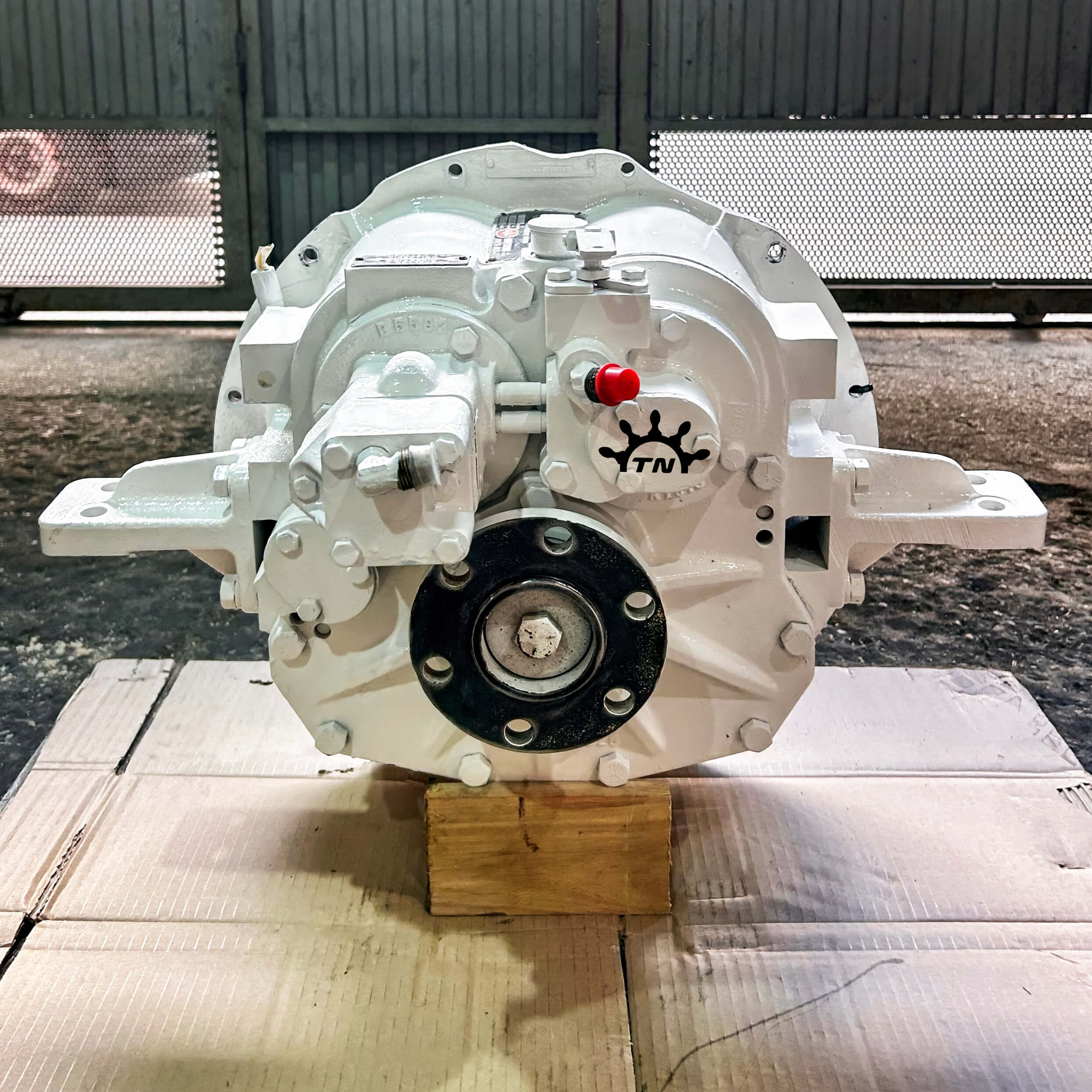
Ready to Ship Does Not Always Mean Ready to Install
One of the most important points in gearbox buying is this: ready to ship does not automatically mean ready to install.
A gearbox may be stocked, available, boxed, or prepared for dispatch, but that does not mean it matches your engine and drivetrain. Marine gearboxes are configuration-sensitive. Two gearboxes may look similar but have different ratios, ratings, input arrangements, output flanges, rotation behavior, mount positions, or cooling requirements.
Before buying a mechanical marine gearbox for sale, buyers should confirm the essential technical details:
Engine model
Engine horsepower
Engine torque
Rated engine RPM
Required reduction ratio
Input compatibility
Output flange or coupling
Shaft diameter
Rotation direction
Cooling setup
Control type
Duty rating
Vessel application
A mechanical marine gearbox ready to ship is valuable only when it is also properly matched to the vessel. If it is not, the buyer may face installation delays, extra adaptation costs, poor performance, or early failure.
In marine repower and repair work, taking time to verify compatibility before shipment is often faster than solving a mismatch after delivery.
When Your Boat May Need a Mechanical Gearbox Upgrade
A gearbox does not always fail suddenly. Many give warning signs before they become a serious problem.
Common signs that a vessel may need a mechanical marine transmission upgrade include delayed shifting, slipping during engagement, hard engagement into forward or reverse, unusual noise, oil leaks, overheating gearbox oil, metal particles in the oil, vibration, or visible wear around couplings and seals.
A gearbox may also need replacement when it is no longer correctly matched to the engine. This often happens during repower projects. A vessel owner may install a newer or more powerful engine, but the old gearbox may not have the correct torque capacity, duty rating, ratio, or fitment.
In other cases, an older gearbox may become difficult to maintain because parts are limited or unavailable. If seals, bearings, clutch components, or internal parts are hard to source, replacing the gearbox may become more practical than continuing to repair it.
From a vendor’s experience, one of the clearest signs is when the owner no longer trusts the gearbox. If the vessel operator is constantly watching for noises, checking for overheating, worrying about shifting, or planning trips around gearbox uncertainty, replacement may be worth considering.
A reliable drivetrain gives confidence. An unreliable gearbox removes it.
Mechanical Marine Gearbox for Repower Projects
A repower project is one of the most important times to review the gearbox.
Replacing the engine changes the way power enters the drivetrain. The new engine may have a different horsepower rating, torque curve, RPM range, flywheel housing, mounting height, electronic control arrangement, or cooling requirement. Even if the old gearbox still works, it may not be correct for the new engine.
A mechanical marine gearbox for repower must be matched to the complete propulsion system, not just to the engine name.
The main areas to review include:
Engine output
Gearbox torque capacity
Reduction ratio
Flywheel and drive plate compatibility
Output flange and shaft coupling
Shaft alignment
Propeller size
Cooling system
Control style
Duty cycle
A repower is also the right time to correct old drivetrain problems. If the previous setup had vibration, poor acceleration, overheating, or difficulty reaching rated RPM, simply copying the old gearbox configuration may repeat the same problem.
At Power Engine Market, we encourage buyers to treat the gearbox as part of the full repower system. The engine, gearbox, shaft, coupling, propeller, mounts, and vessel application must work together.
Power Matching: Horsepower and Torque Come First
Before recommending any mechanical marine gearbox ready to ship, the first thing to confirm is the engine it will be installed behind.
Horsepower is important, but it is not the only measurement that matters. Torque is also critical because marine engines operate under constant load. Unlike road vehicles, boats do not coast easily. They push through water resistance, vessel weight, current, wind, propeller load, and onboard equipment.
A gearbox that is technically close on horsepower may still be unsuitable if torque, duty rating, or operating load is higher than the gearbox can safely handle.
Buyers should also consider the vessel’s real application. Pleasure craft, commercial fishing boats, workboats, passenger vessels, patrol craft, sailboats, and motor yachts do not all place the same stress on a gearbox.
A lightly used pleasure vessel may have a different duty requirement from a commercial vessel running long hours under load. A patrol boat may need dependable engagement and response under variable speeds. A workboat may need a stronger duty rating because it operates under heavier load conditions.
The correct mechanical marine gearbox should be selected according to both engine output and vessel use.
Understanding Reduction Ratio
The reduction ratio determines how much the gearbox reduces engine RPM before power reaches the propeller shaft. A trusted marine product selection guide can help buyers understand why gearbox model, ratio, rating, and application must be reviewed together before choosing a replacement transmission. This is especially important when the vessel is being repowered or when the new gearbox must match a different engine, shaft speed, or duty requirement.
For example, a marine engine may operate at a rated speed of 2500 RPM, 2800 RPM, or 3000 RPM, but the propeller usually needs to turn at a lower speed to move water efficiently. The gearbox ratio creates that relationship between engine speed and shaft speed.
If the reduction ratio is correct, the engine and propeller can work together more effectively. The vessel has a better chance of accelerating properly, cruising efficiently, and allowing the engine to reach its intended operating range.
If the ratio is wrong, several problems can happen:
The engine may not reach rated RPM
The engine may become overloaded
Fuel consumption may increase
Acceleration may feel weak
The vessel may vibrate
The propeller may perform poorly
Gearbox and engine temperatures may rise
Overall performance may drop
That is why marine gearbox ratio selection is one of the most important technical checks before ordering.
Why the Old Ratio May Not Work After a Repower
A common assumption is that the old gearbox ratio should remain the same. Sometimes that is correct, but not always.
If the new engine has a different RPM range, horsepower rating, or torque curve, the old ratio may not suit the new setup. If the propeller is changed, the ratio may need to be reviewed again. If the vessel’s use has changed, the duty requirements may also be different.
A repower should not be treated as a simple replacement if the engine specification has changed. The ratio should be checked as part of the full propulsion match.
How Ratio Affects Propeller Performance
The gearbox ratio controls shaft speed, and shaft speed directly affects propeller performance.
If the propeller turns too fast or too slowly for the vessel and engine, performance can suffer. The boat may struggle to move efficiently, the engine may work harder than intended, and fuel use may increase.
A ready to ship marine gearbox should still be reviewed against the vessel’s propeller and engine combination. Fast availability is helpful only when the ratio supports the actual application.
Fitment Checks Before Ordering a Ready-to-Ship Gearbox
Fitment is one of the most practical areas of gearbox selection.
A gearbox can have the correct power rating and ratio but still fail fitment. It may not match the flywheel housing. The drive plate may be wrong. The input shaft may not suit the engine. The output flange may not match the shaft coupling. The gearbox may be too long, too tall, or positioned differently from the previous unit.
Before ordering a mechanical marine transmission, confirm:
Engine make and model
Flywheel housing size
SAE compatibility
Drive plate type
Input shaft configuration
Output flange size
Shaft coupling compatibility
Mounting position
Gearbox length and height
Drop angle or offset
Control type
Oil cooler connections
Rotation direction
Engine room access
Service clearance
For replacement projects, the gearbox data plate is extremely useful. Photos of the existing gearbox, shaft coupling, engine room, mounts, and oil cooler connections can help reduce guesswork.
At Power Engine Market, we always prefer more information before shipment. A few clear photos and correct measurements can prevent the wrong gearbox from being ordered.
Rotation Direction and Shaft Alignment
Rotation direction should never be guessed.
Marine propulsion systems depend on correct rotation between the engine, gearbox, shaft, and propeller. Rotation may be described from the flywheel end or another reference point, so buyers should confirm exactly how the rotation is being stated.
This is especially important for twin-engine vessels, where port and starboard systems may require specific rotation arrangements.
Before ordering a mechanical marine gearbox ready to ship, confirm:
Engine rotation
Gearbox input rotation
Gearbox output rotation
Propeller rotation
Single or twin-engine installation
Existing shaft direction
Shaft alignment is just as important. The engine, gearbox, coupling, shaft, and propeller line must be correctly aligned. Poor alignment can create vibration, seal wear, bearing damage, coupling stress, and gearbox strain.
Even a high-quality gearbox can perform poorly if alignment is incorrect.
After installation, alignment should be checked by a qualified marine technician. This is especially important after a repower because the new engine or gearbox may sit differently from the original setup.
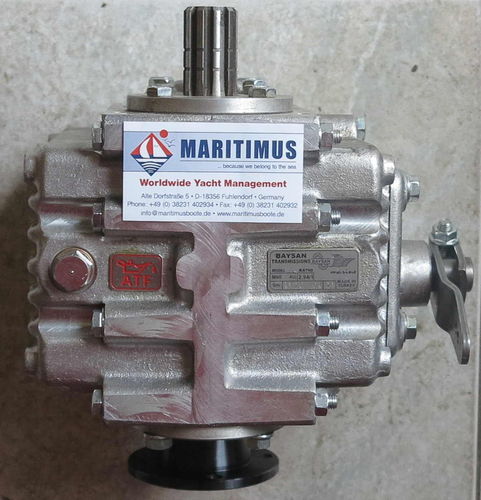
Mechanical vs Hydraulic Marine Gearbox
Buyers often compare mechanical marine gearboxes and hydraulic marine gearboxes when planning a replacement.
A mechanical marine gearbox can be suitable for many inboard propulsion systems where simplicity, direct operation, serviceability, and practical cost matter. It may be used in smaller and mid-range engine applications depending on the gearbox model and vessel requirements.
Buyers comparing mechanical gearbox options should look beyond the gearbox name and review ratio, engine compatibility, application, and installation layout. A gearbox that works well for one inboard diesel setup may not be the best match for another vessel with different load, shaft speed, or duty requirements.
A hydraulic marine gearbox may be preferred in some heavier-duty or larger propulsion applications. Hydraulic gearboxes are commonly selected where smooth engagement, higher load capacity, or specific commercial requirements are needed, depending on the model and application.
Neither option is automatically better in every case.
The correct choice depends on engine output, duty rating, vessel type, shaft-drive layout, control preference, operating load, and installation requirements.
Power Engine Market helps buyers focus on the application first. The question is not simply mechanical or hydraulic. The question is which gearbox is correct for the boat.
Vessel Types That Commonly Need Ready-to-Ship Marine Gearboxes
A mechanical marine gearbox ready to ship can be useful for many vessel types.
Fishing boats may need quick replacement before a season or trip. Motor yachts may need a reliable gearbox upgrade during scheduled maintenance or refit. Workboats may need fast supply to reduce operational downtime. Commercial vessels may need replacement transmissions to stay productive. Patrol craft may require dependable propulsion support for readiness. Passenger vessels may need reliable shifting and power transfer for safe operation.
Other possible applications include sailboats with inboard diesel engines, utility vessels, harbor craft, small commercial boats, and emergency repair projects.
However, each vessel type has different requirements. A gearbox for a sailboat auxiliary engine is not the same as one for a workboat. A gearbox for light pleasure use may not be suitable for continuous commercial operation.
That is why the phrase mechanical marine gearbox ready to ship should always be connected to proper technical matching.
Why Reliability Matters More Than Speed Alone
Fast shipping is important when a vessel is down, but reliability after installation is more important.
A gearbox that arrives quickly but fails early is not a solution. It creates more downtime, additional labor, more cost, and possible damage to connected parts.
Gearbox reliability depends on:
Correct horsepower rating
Correct torque capacity
Correct reduction ratio
Correct duty rating
Proper oil cooling
Correct installation
Accurate shaft alignment
Correct oil specification
Regular maintenance
Avoiding overload
A gearbox should be selected for the way the vessel will actually operate. If the boat runs commercially, the gearbox needs to be suitable for that duty. If the vessel carries heavy load, that must be considered. If the engine has been upgraded, the gearbox must match the new output.
Fast shipping gets the gearbox to the vessel. Correct matching keeps the vessel working.
Cooling and Oil Protection
Marine gearboxes operate under load, and load creates heat. Oil helps protect internal parts, but oil must remain within the proper operating range to do its job.
Many marine gearboxes require an oil cooler or heat exchanger to control oil temperature. A properly installed marine transmission oil cooler helps protect the gearbox oil, seals, bearings, clutch components, gears, and other internal parts during heavy or continuous-duty operation.
Cooling is especially important for commercial vessels, patrol craft, workboats, fishing boats, and passenger vessels because these applications may involve longer operating hours and heavier loads.
During a gearbox replacement or repower, buyers should inspect the oil cooler, hoses, fittings, seawater flow, and cooling circuit. Reusing old cooling components without checking them may put the replacement gearbox at risk.
A properly selected mechanical marine transmission should be supported by proper cooling and oil maintenance.
New vs Used Mechanical Marine Gearbox
A new gearbox usually provides the strongest confidence because its condition is known. There is less uncertainty about previous overheating, internal wear, corrosion, clutch damage, or poor maintenance history.
A new mechanical marine gearbox ready to ship may be the better choice for commercial vessels, workboats, patrol craft, high-value yachts, passenger vessels, and major repower projects.
A used gearbox can sometimes be considered for budget-sensitive repairs, emergency replacement, or older vessels where a matching unit is available. However, used gearboxes should be inspected carefully before installation.
Important used gearbox checks include:
Data plate verification
Oil condition
Signs of overheating
Leaks
Corrosion
Shift operation
Shaft play
Bearing noise
Service history
Cooling connections
Input and output condition
A low-cost gearbox can become expensive if it fails after installation. The best value is the gearbox that is correctly matched and reliable for the vessel’s use.
Common Mistakes Buyers Make When Ordering a Marine Gearbox
One common mistake is buying only because the gearbox is in stock. Availability helps, but it does not guarantee compatibility.
Another mistake is ignoring the reduction ratio. The wrong ratio can affect engine load, propeller performance, acceleration, cruising, and fuel efficiency.
Some buyers focus only on horsepower and forget torque. Marine torque loads can be demanding, especially in commercial or heavy-duty applications.
Another mistake is assuming the old gearbox specification is correct. If the previous setup had performance problems, copying the old gearbox may copy the same issue.
Other common mistakes include forgetting rotation direction, not checking output flange size, ignoring cooling requirements, overlooking duty rating, and ordering before confirming engine compatibility.
The safest approach is to verify before buying. In marine drivetrain work, a little confirmation before shipment can prevent major problems after installation.
How Power Engine Market Helps Buyers Source the Right Gearbox
Power Engine Market helps buyers source mechanical marine gearboxes, marine transmissions, shaft-drive gearboxes, and related marine repower accessories based on engine and vessel requirements.
When reviewing a gearbox request, important details include engine model, horsepower, rated RPM, torque if available, current gearbox model, reduction ratio, shaft size, propeller details, vessel type, rotation, control type, cooling setup, and intended application.
This information helps narrow the gearbox options and reduce the risk of a mismatch.
Power Engine Market can also help buyers compare related categories, including mechanical marine gearboxes, inboard marine transmissions, marine diesel engines, couplings, mounts, controls, oil coolers, cooling parts, shaft-drive components, and repower accessories.
For a boat owner, mechanic, or commercial operator, this support can help save time, reduce confusion, and avoid costly fitment mistakes.
The Product Category Power Engine Market Is Targeting
This article targets customers searching for mechanical marine gearboxes, mechanical marine gearbox ready to ship, marine gearbox replacement, marine transmission upgrade, inboard marine gearbox, and shaft-drive gearbox options.
These buyers may be replacing a failed gearbox, upgrading a tired transmission, planning a repower, or trying to reduce vessel downtime.
Power Engine Market’s relevant product categories include:
Mechanical marine gearboxes
Marine transmissions
Shaft-drive marine gearboxes
Inboard marine gearbox replacement options
Marine gearbox for repower projects
Marine repower accessories
Gearbox cooling components
Shaft couplings and drivetrain parts
This product category is important because buyers may describe the same need in different ways. One customer may ask for a mechanical gearbox. Another may ask for a marine transmission. Another may search for a ready-to-ship gearbox for a diesel repower. The goal is the same: find a gearbox that is available, correctly matched, and reliable for the vessel.
What to Provide Before Requesting a Gearbox Quote
To help Power Engine Market recommend the right mechanical marine gearbox ready to ship, provide as much technical information as possible.
Useful details include:
Engine brand and model
Engine horsepower
Engine rated RPM
Torque rating if available
Current gearbox model
Current gearbox ratio
Vessel type
Vessel length and approximate weight
Shaft diameter
Propeller size
Rotation direction
Control type
Cooling setup
Application type
Photos of the current gearbox plate
Photos of the coupling and shaft line
Photos of the engine room layout
Also mention how the vessel is used. Pleasure use, commercial fishing, patrol service, passenger operation, workboat duty, and yacht cruising may require different gearbox considerations.
Better information leads to better recommendations.
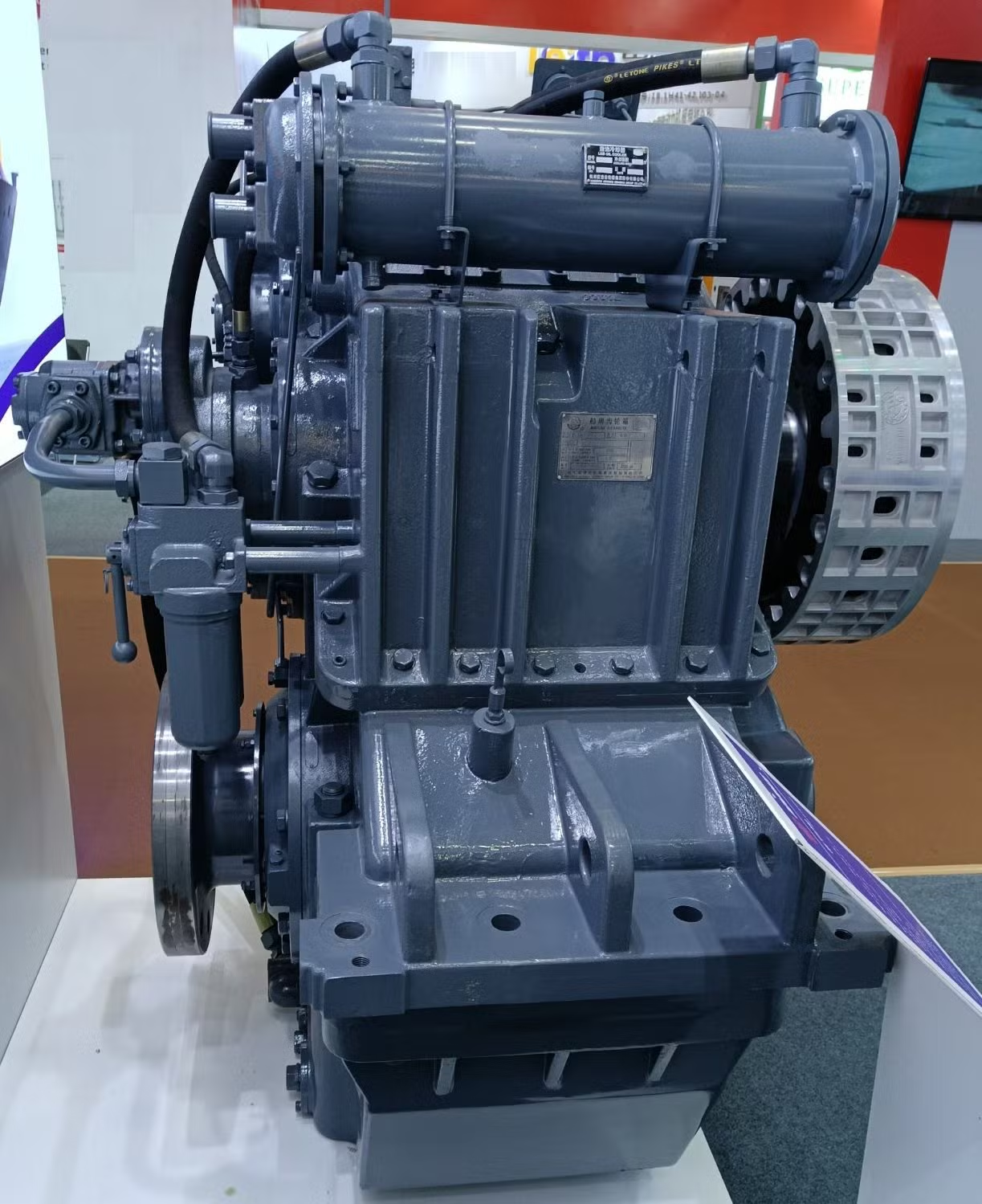
Mechanical Marine Gearbox Ready to Ship: What Buyers Should Prioritize
When buying a mechanical marine gearbox ready to ship, prioritize the technical match first.
Start with engine compatibility. Confirm that the gearbox is suitable for the engine brand, model, horsepower, torque, and rated RPM.
Next, confirm the reduction ratio. The ratio affects shaft speed and propeller performance.
Then confirm rotation direction. Do not guess.
Next, check shaft and coupling fitment. The output flange, coupling, shaft diameter, and alignment requirements must be correct.
After that, confirm control compatibility. Mechanical controls must suit the vessel setup.
Then review cooling requirements. The gearbox must have proper oil cooling for the application.
Next, confirm duty rating. Pleasure use and commercial use are not the same.
Finally, confirm real availability and supplier support. The best result is a gearbox that is technically correct and available quickly.
Frequently Asked Questions
What is a mechanical marine gearbox?
A mechanical marine gearbox is a marine transmission that transfers power from an inboard engine to the propeller shaft. It provides forward, neutral, and reverse operation while reducing engine RPM to a suitable shaft speed.
Why buy a mechanical marine gearbox ready to ship?
A mechanical marine gearbox ready to ship can help reduce downtime when a vessel is waiting on parts, undergoing a repower, or needing urgent gearbox replacement.
Is every ready-to-ship marine gearbox suitable for my boat?
No. A ready-to-ship gearbox must still match your engine horsepower, torque, RPM, reduction ratio, rotation, shaft setup, cooling requirement, control type, and vessel duty.
Can I replace my old gearbox with the same model?
Sometimes, but you should confirm the exact ratio, configuration, condition, rotation, and compatibility. If the engine has changed or the vessel had performance issues, copying the old setup may not be the best choice.
How do I know what gearbox ratio I need?
The correct gearbox ratio depends on engine RPM, propeller size, shaft speed, vessel weight, hull type, and intended use. During a repower, gearbox ratio and propeller selection should be reviewed together.
What happens if I choose the wrong gearbox?
The wrong gearbox can cause poor performance, overheating, vibration, slipping, hard shifting, early wear, oil leaks, engine loading problems, or drivetrain failure.
What information should I send Power Engine Market?
Send your engine model, horsepower, rated RPM, current gearbox model, current ratio, shaft size, vessel type, propeller size, rotation direction, cooling setup, control type, and photos of the current gearbox and engine room.
Does Power Engine Market supply mechanical marine gearboxes?
Yes. Power Engine Market helps buyers source mechanical marine gearboxes, marine transmissions, shaft-drive gearbox options, and related repower components based on engine and vessel requirements.
Conclusion: Fast Shipping Helps, Correct Matching Protects the Boat
A mechanical marine gearbox ready to ship can be the right solution when a vessel is down, a repower project is delayed, or an old transmission is no longer reliable. Fast availability can reduce downtime and help keep the project moving.
But speed should never replace proper matching.
The right gearbox must match the engine power, torque, RPM, reduction ratio, rotation, shaft coupling, control system, cooling setup, vessel duty, and installation layout. When those details are correct, the gearbox can support smooth shifting, efficient power transfer, reliable propulsion, and longer drivetrain life.
At Power Engine Market, our approach is straightforward: help customers source marine gearboxes and repower components based on real vessel requirements, not guesswork. Whether you are replacing a failed gearbox, upgrading an old transmission, repowering a fishing boat, maintaining a workboat, improving a motor yacht, or sourcing parts for a commercial vessel, the best move is simple.
Get the gearbox quickly, but make sure it is the right one.
Next Post: Marine Gearbox for Repower Projects Sale: Power, Fitment, and Reliability Explained


