

When you are buying a marine engine, the obvious questions usually come first.
How much horsepower do I need? Will it fit? Which gearbox should I use? How much does it cost? How quickly can I get it?
Those are all important questions.
But after years of dealing with marine propulsion equipment, there is another question I would put much higher on the list:
What happens when you need parts five years from now?
That question is easy to ignore when you are focused on getting a vessel back on the water. Yet once an engine is installed, ownership becomes a long-term relationship between the vessel, the engine manufacturer, the service network, and the availability of the correct replacement components.
That is why customers looking for a marine engine with OEM parts availability for sale should evaluate more than the engine’s headline horsepower.
At Power Engine Market, our marine product range includes marine diesel engines, marine outboard engines, marine generator sets, engine packages, and related propulsion equipment. When helping customers identify an engine, we look at the complete application: power requirement, installation, cooling, controls, propulsion arrangement, operating profile, and the practical requirements for future servicing.
The objective is simple.
Find an engine that makes sense not only on installation day, but throughout its service life.
What Does OEM Parts Availability Mean for a Marine Engine?
OEM means Original Equipment Manufacturer.
In the marine-engine industry, OEM parts are components associated with the original engine manufacturer and its specifications. Depending on the engine, these may include routine service items as well as components specifically designed for a particular engine family or configuration.
That distinction matters.
A marine engine is not simply a block producing horsepower. It is a complete mechanical and electrical system containing fuel, cooling, lubrication, exhaust, starting, charging, controls, instrumentation, and other components.
When something needs replacing, the correct part has to match the particular engine.
For example, identifying a replacement component based only on “200hp marine diesel” is usually not enough. There can be many different 200hp engines with different:
- Engine models
- Displacements
- Rated RPM
- Cooling arrangements
- Fuel systems
- Electrical systems
- Mounting arrangements
- Control systems
- Gearbox configurations
That is why OEM marine engine parts should always be identified against the actual engine model and, where applicable, serial number and specification.
Why Parts Availability Should Be Considered Before You Buy
Here is a simple way to look at it.
The engine purchase is the beginning of ownership, not the end.
A new marine engine may require routine servicing almost immediately after installation and throughout its operating life. Eventually, components will need attention simply because marine engines operate in demanding environments.
Filters get changed.
Belts wear.
Cooling systems need servicing.
Electrical components can eventually require replacement.
Seals and gaskets age.
Pumps, sensors, hoses and other components may eventually need attention.
That makes marine diesel engine parts availability a practical consideration when comparing engines.
It does not mean that every OEM component for every engine will always be sitting on a shelf ready to ship. Parts availability can vary by manufacturer, model, production year, market, specification, and supply conditions.
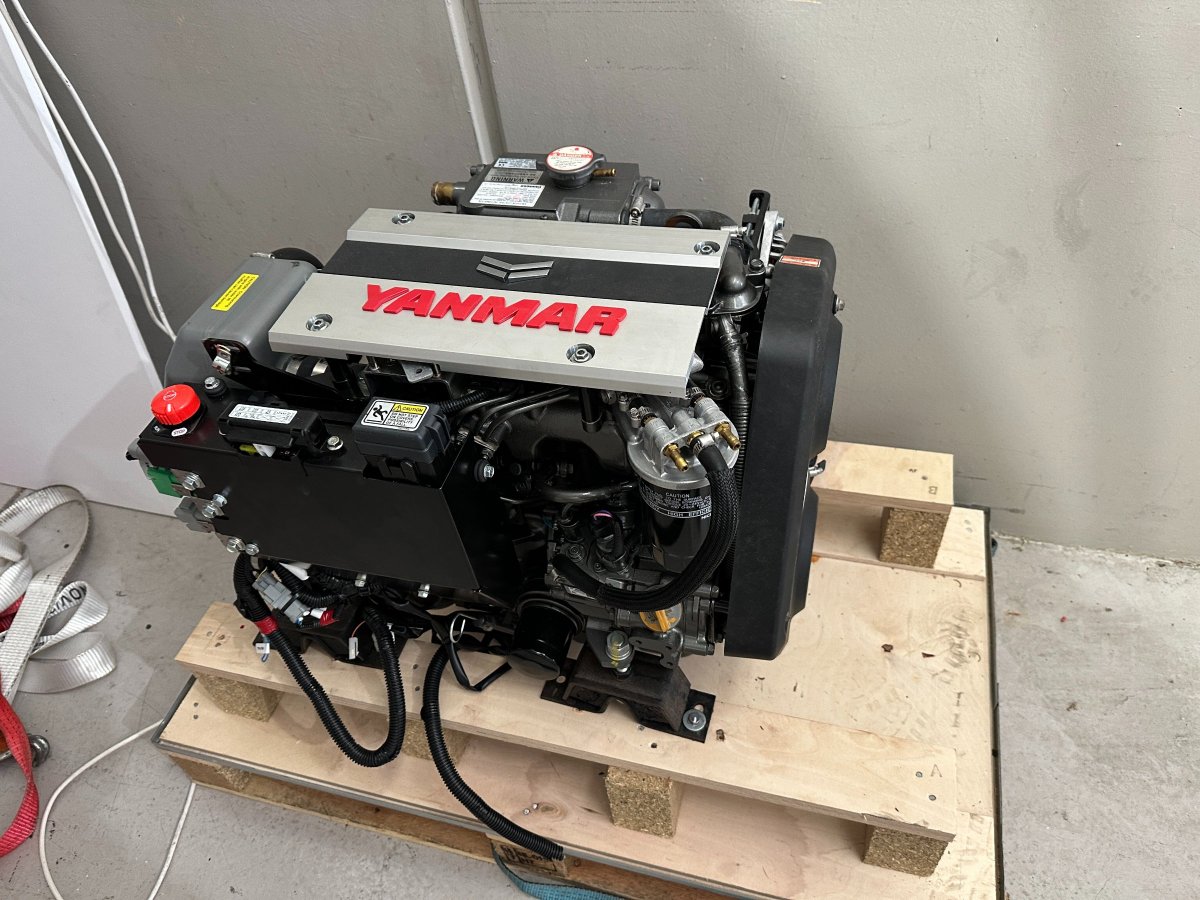
A trustworthy supplier should be willing to distinguish between what is confirmed and what needs to be checked. Manufacturer support can extend beyond the initial sale. YANMAR, for example, publishes information about its genuine parts portfolio, service network and support for current and previous engine models.
That is a much better approach than promising that “every part will always be available.”
The Exact Engine Model Is Critical
One of the most useful things a marine-engine buyer can do is keep accurate engine identification information.
If you eventually need a replacement part, the exact model can be far more useful than simply knowing the horsepower.
For example, Power Engine Market may supply engines from different manufacturers across a wide range of applications. A customer might tell us they need a 150hp marine diesel engine, but that information alone does not tell us which engine is appropriate.
We need to know what the engine is going into.
We may need to consider:
- Vessel type
- Existing engine
- Current horsepower
- Required horsepower
- Rated RPM
- Physical dimensions
- Weight
- Mounting arrangement
- Gearbox
- Cooling system
- Electrical voltage
- Controls
- Exhaust configuration
- Intended duty cycle
The same thinking applies to parts.
When ordering OEM marine diesel engine replacement parts, the engine model and identification details provide the foundation for determining what component is actually required.
What We Look At When Matching a Marine Engine to a Vessel
An experienced marine-engine supplier should not treat horsepower as the only matching criteria.
Here is the practical process.
1. Start With the Vessel
Before discussing a replacement engine, understand the vessel.
Is it a recreational boat?
A fishing vessel?
A workboat?
A commercial vessel?
A larger offshore craft?
The answer changes the conversation.
A leisure boat that operates occasionally may have very different requirements from a commercial vessel operating for long hours under substantial load.
2. Establish the Required Power
The engine needs to provide appropriate power for the vessel and its intended use.
But more power is not automatically better.
The vessel manufacturer’s specifications, hull design, propulsion arrangement, operating conditions, and intended duty cycle all need to be considered.
This is particularly important when customers are looking at a commercial marine diesel engine for sale.
3. Check the Installation Space
Before ordering any engine, measure the available space.
Check:
- Length
- Width
- Height
- Mounting points
- Clearance
- Access for servicing
- Exhaust routing
- Cooling connections
- Electrical connections
A powerful engine that physically cannot be installed or serviced properly is not a useful solution.
4. Check the Existing Propulsion System
If you are replacing an existing engine, the gearbox deserves serious attention.
Depending on the installation, you may need a compatible gearbox, adapter, coupling, or other components.
Some engine packages are supplied with gearboxes, while others can be configured for different propulsion arrangements.
This is one reason we recommend treating the marine engine and gearbox package as a complete system rather than buying the engine in isolation.
Marine Engine Repowering: Think Beyond the Engine
Repowering is one of the situations where parts and compatibility become particularly important.
Suppose you have an older marine diesel engine that has reached the point where continued repairs no longer make economic sense.
The natural thought is:
“Let’s replace it with something around the same horsepower.”
That is a reasonable starting point, but it is not enough.
The replacement engine needs to be evaluated against the existing installation.
You may need to address:
- Engine mounts
- Gearbox
- Propeller
- Shaft alignment
- Controls
- Instrumentation
- Exhaust
- Cooling
- Fuel system
- Electrical system
- Engine-room clearance
And then there is the future.
If you choose an engine with a well-supported parts ecosystem, future servicing can be easier to plan.
That is why customers searching for marine engine replacement with OEM parts support should make parts support part of the repower discussion from the beginning.
Why the Engine’s Duty Cycle Matters
This is an area where a basic product comparison can sometimes miss the bigger picture.
Not every marine engine operates under the same conditions.
A boat used for occasional recreational trips is different from a commercial vessel that spends hundreds or thousands of hours operating each year.
When evaluating a heavy duty marine diesel engine, consider how the engine will actually be used.
Ask:
- How many hours will it operate annually?
- Will it run continuously?
- What loads will it typically carry?
- Will it operate at high load for extended periods?
- Is the vessel commercial or recreational?
- What operating environment will it experience?
The answers can influence which engine rating and configuration should be considered.
This is why an experienced supplier should ask questions before simply pointing a customer toward the engine with the highest horsepower.
OEM Parts vs. Aftermarket Parts
Another common question is whether OEM parts are always necessary.
The answer depends on the component, engine, application, manufacturer requirements, and the specific alternative being considered.
OEM components are associated with the original manufacturer’s specifications. Aftermarket components are produced by other manufacturers and can range from high-quality, properly specified replacements to products that may not be appropriate for a particular application. For example, Mercury provides an official parts catalog that allows owners to identify parts using the engine model or serial number.
The important thing is compatibility.
If a replacement part is being considered, verify that it is suitable for the specific engine.
For model-specific components, the safest starting point is usually the engine’s identification information.
If you are searching for OEM marine engine replacement parts, do not rely solely on a generic description such as “marine diesel fuel pump” or “200hp engine filter.”
The exact engine specification matters.
Common Marine Engine Parts Buyers Should Think About
When customers talk about parts availability, they sometimes mean only major components.
In reality, long-term support covers a much wider range of requirements.
Depending on the engine, you may eventually need:
Service Parts
These can include items such as:
- Oil filters
- Fuel filters
- Air filters
- Belts
- Gaskets
- Service fluids
- Other scheduled-maintenance components
Cooling-System Components
Marine cooling systems can include numerous components that require inspection or replacement over time.
These can include pumps, hoses, thermostatic components, seals, and other cooling-system parts depending on the engine design.
Fuel-System Components
Modern marine engines can use sophisticated fuel systems.
Correct component identification is important because fuel-system components can be specific to the engine model and configuration.
Electrical and Electronic Components
Today’s marine engines may include electronic controls, sensors, engine-management systems, instrumentation, and other electrical components.
This makes accurate engine identification even more important.
Keep Your Engine Documentation
This is one of the simplest pieces of advice we can give any marine-engine owner:
Keep your documentation.
Do not throw the manuals into a drawer and forget about them.
Keep the engine model, serial number, specification information, installation documentation, and service records together.
If the engine changes hands later, pass the information to the next owner.
Good documentation makes future maintenance and parts identification much easier.
It also helps a supplier understand exactly what equipment you have.
Marine Outboard Engines Have Their Own Compatibility Requirements
OEM parts support is not limited to inboard diesel engines.
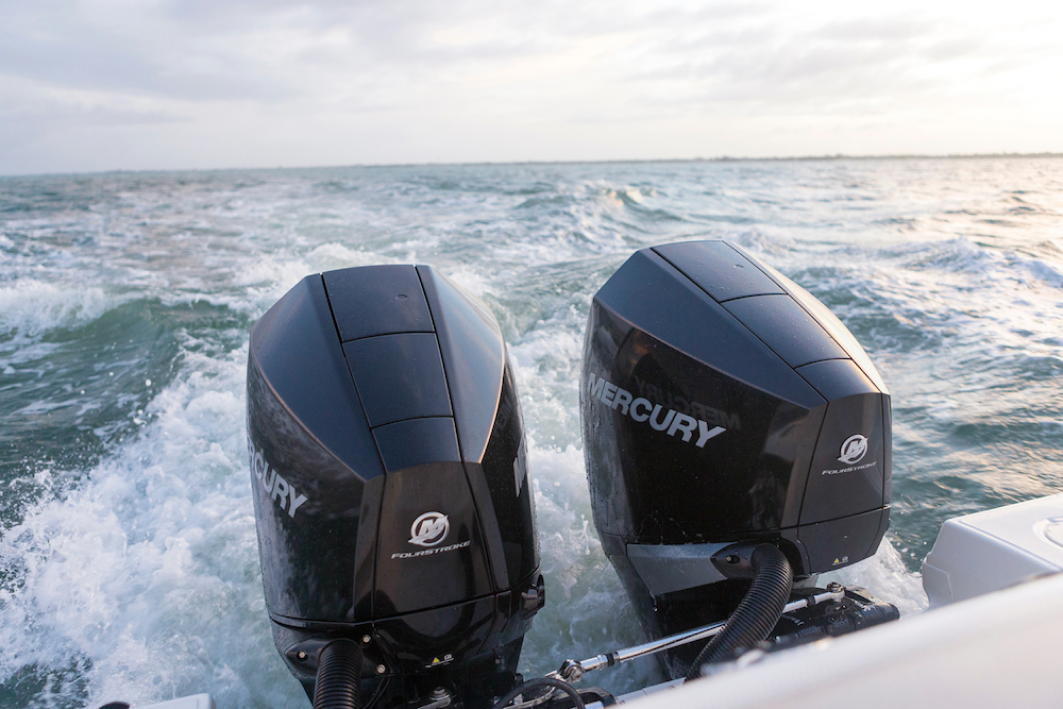
Power Engine Market also works with the broader marine outboard engine category.
Outboards have their own set of specifications that buyers need to consider.
These include:
- Horsepower
- Shaft length
- Control type
- Starting system
- Trim and tilt
- Rotation
- Steering configuration
- Electrical requirements
For example, an outboard advertised as 250hp is not automatically interchangeable with every other 250hp outboard.
A 250hp outboard for sale may have a different shaft length, control system, rotation, or installation specification from another model with the same horsepower.
That is why the complete product specification matters.
Shaft Length Is a Real Installation Issue
Outboard buyers should pay particular attention to shaft length.
Common configurations can include short, long, extra-long, or other manufacturer-specific shaft lengths.
Choosing the wrong configuration can create an installation problem.
When evaluating a marine outboard engine for sale, measure the vessel’s transom and compare it with the manufacturer’s specified shaft length.
This is a simple check that can prevent a very frustrating mistake.
Why Manufacturer and Model Support Matter
A recognizable manufacturer is only the starting point.
The more important question is whether the specific engine model is properly supported for your application and market. Manufacturer support networks can be an important part of long-term ownership; for example, Volvo Penta describes its global dealer network and support for engines, parts, accessories and service.
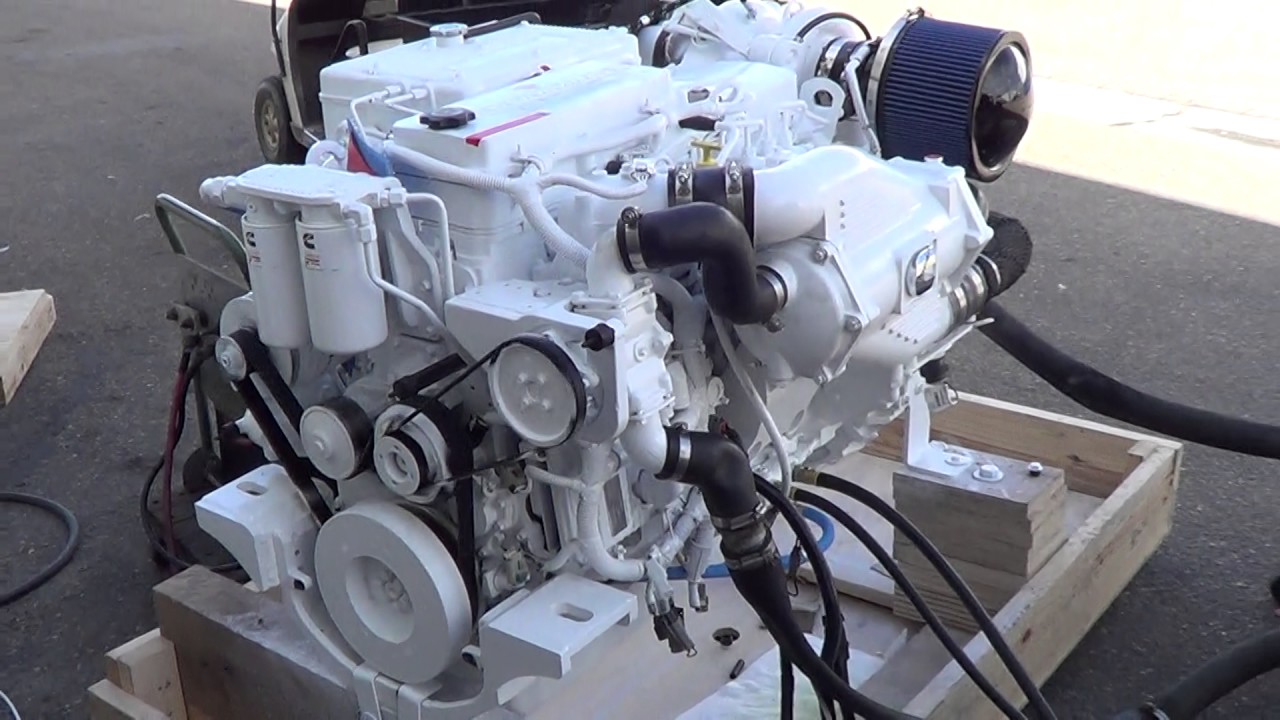
Power Engine Market’s marine product range can include products from manufacturers such as Volvo Penta, Cummins, FPT, Doosan, Baudouin, Yanmar, Lombardini, FNM, and others, depending on current availability.
Different manufacturers and engine families have different specifications and support structures.
That is why we avoid treating every engine as if it were identical.
The correct question is not simply:
“Which brand is best?”
It is:
“Which engine and configuration are appropriate for this vessel, and what support will I need throughout ownership?”
Questions to Ask a Marine Engine Supplier
Before purchasing a marine engine, I recommend getting clear answers to the following.
Is the engine new, used, rebuilt, or remanufactured?
The condition should be clearly established before purchase.
What is the exact model?
Get the complete model designation rather than relying on a general horsepower description.
What is the rated horsepower and RPM?
These specifications help establish how the engine is intended to operate.
What cooling system does it use?
Cooling configuration affects installation and operation.
What gearbox options are available?
If you are repowering, this question is particularly important.
Are genuine OEM parts available?
Ask specifically about routine service parts and model-specific components.
Can the supplier identify parts using the engine model or serial number?
This can become extremely valuable later.
What documentation is supplied?
Ask about manuals, specifications, installation information, and other relevant documentation.
What warranty applies?
Warranty terms can vary according to manufacturer, application, market, and use.
What exactly is included in the engine package?
Do not assume that every photograph or description represents the exact package being supplied.
Confirm whether items such as mounts, controls, harnesses, instrumentation, exhaust components, and gearbox are included.
Be Careful With Claims About Parts Availability
This is important enough to say directly.
If a supplier tells you that every possible OEM part will always be available immediately, ask how that claim is being supported.
A trustworthy marine-engine supplier should be transparent.
Parts availability can change.
Manufacturers discontinue older products. Production changes. Supply chains change. Certain components may have longer lead times than others.
The responsible approach is to verify availability for the particular engine and component you need.
That is particularly important for older engines.
If you own an older marine diesel engine and need a replacement component, provide the manufacturer, model, serial number, and any part number available.
That gives the supplier the information needed to investigate the requirement properly.
What Makes a Good Marine Engine Purchase?
After considering all of this, the answer becomes fairly simple.
A good marine-engine purchase should make sense in four areas:
It should fit the vessel.
The physical dimensions, power, mounting, cooling, electrical and propulsion requirements need to be appropriate.
It should suit the application.
A commercial workboat and a recreational cruiser do not necessarily need the same type of engine configuration.
It should be supportable.
Future servicing and replacement parts deserve consideration before the purchase is made.
It should be clearly specified.
You should know exactly what engine, equipment, options, and documentation you are purchasing.
How Power Engine Market Approaches Marine Engine Selection
At Power Engine Market, the goal is not simply to put an engine in front of a customer and say, “Here is a 300hp engine.”
That does not tell us whether it is right for the vessel.
A proper conversation starts with the application.
What vessel is it?
What engine is currently installed?
What horsepower does the vessel require?
What gearbox is being used?
What are the physical dimensions?
What controls are required?
What is the intended duty cycle?
Is the vessel recreational or commercial?
Are there specific installation constraints?
Those details help narrow down the appropriate engine category and configuration.
Our product categories include marine diesel engines, marine outboard engines, marine generators, engine packages, gearboxes, and related marine propulsion equipment.
For customers planning a repower, the existing engine information is particularly useful.
A photograph of the engine identification plate, for example, can sometimes provide valuable information that a general description cannot.
What Information Should You Send When Requesting a Marine Engine?
If you want a faster and more accurate response from a supplier, provide as much technical information as possible.
A useful enquiry can include:
- Vessel make and model
- Vessel type
- Existing engine manufacturer
- Existing engine model
- Existing horsepower
- Engine serial number
- Gearbox model
- Current shaft or propulsion arrangement
- Available engine-room dimensions
- Required horsepower
- Intended application
- Approximate annual operating hours
- Leisure or commercial use
- Preferred delivery location
If you have photographs, include them.
If you have the existing engine’s data plate, include a clear photograph of it.
That information can save considerable back-and-forth and makes it easier to determine what needs to be checked.
Shipping and Delivery Matter Too
A marine engine is not a small parcel.
Depending on the product, shipment may require freight transportation, specialist handling, crating, or other arrangements.
Before placing an order, confirm:
- Shipping method
- Shipping cost
- Estimated dispatch time
- Estimated transit time
- Delivery location
- Whether unloading equipment is required
These details should be confirmed for the specific order rather than assumed.
At Power Engine Market, shipping arrangements can vary according to the engine, equipment, destination, and order configuration.
The Long-Term Question: Can You Maintain the Engine?
This is ultimately what OEM parts availability comes down to.
You are not buying an engine simply to own an engine.
You are buying a propulsion system that needs to perform its job repeatedly.
Whether that means moving a recreational boat across the water, powering a commercial vessel, supporting a workboat, or providing propulsion for another marine application, maintenance will eventually be part of ownership.
That is why marine engine parts availability deserves a place in the buying conversation.
Not because OEM parts are a magic solution to every maintenance problem.
But because knowing how an engine will be supported can help you make a more informed purchasing decision.
Find the Right Marine Engine With Reliable Parts Support
If you are looking for a marine engine with OEM parts availability for sale, start with the complete application rather than the horsepower number.
Identify the vessel.
Understand the operating conditions.
Determine the required power.
Check the physical installation.
Review the gearbox and propulsion system.
Confirm the controls and electrical requirements.
Then ask the long-term question:
How will this engine be maintained and supported after it is installed?
That approach can help you avoid choosing an engine simply because it looks attractive on a product page.
At Power Engine Market, we supply a broad selection of marine diesel engines, marine outboard engines, marine generator sets, engine packages, and marine propulsion equipment for different applications.
If you are planning a repower or replacing an existing engine, send us the details of your vessel and current installation. The more technical information you can provide, the easier it is to evaluate the appropriate engine configuration and identify the parts-support considerations that matter for your application.
Because the best marine engine purchase is not necessarily the one that looks best on day one.
It is the one that makes sense when you look at the entire ownership journey.
Frequently Asked Questions
What is a marine engine with OEM parts availability?
A marine engine with OEM parts availability is an engine for which the original manufacturer or its authorized supply network can provide appropriate replacement components, subject to the specific model, market, production status, and current availability.
Why is OEM parts availability important for marine engines?
It can make future servicing and replacement-component sourcing more straightforward. It is particularly relevant when buying an engine that you expect to operate for many years.
How do I find OEM parts for my marine diesel engine?
Start with the manufacturer, exact engine model, serial number, and specification. If you have a part number, provide that as well.
Is an OEM part always better than an aftermarket part?
Not necessarily in every situation. What matters is that the replacement component is appropriate for the engine and meets the relevant requirements. Buyers should verify compatibility rather than assuming that any aftermarket replacement will work.
Should parts availability influence a marine repower?
Yes, it is a reasonable factor to consider alongside horsepower, dimensions, duty cycle, installation requirements, warranty, and propulsion compatibility.
What information does Power Engine Market need for a repower enquiry?
Useful information includes the vessel details, existing engine model, horsepower, serial number, gearbox, installation dimensions, intended application, and any photographs or identification-plate information available.
Can Power Engine Market supply marine diesel engines?
Power Engine Market’s product range includes marine diesel engines and related marine propulsion products. Availability and configuration depend on the specific manufacturer, model, and application.
Does Power Engine Market supply marine outboard engines?
Yes, the product category includes marine outboard engines alongside inboard marine engines and other propulsion equipment.
What should I check before buying a marine engine?
Check horsepower, rated RPM, dimensions, weight, cooling system, electrical requirements, mounting arrangement, gearbox compatibility, controls, intended duty cycle, warranty, documentation, and future parts-support considerations.
How important is the exact engine model for replacement parts?
It is extremely useful. Horsepower alone is generally insufficient to identify a model-specific replacement component. The exact model and, where applicable, serial number and specification provide much more useful identification information.
Final Advice From a Marine Engine Supplier
If there is one thing I would encourage every marine-engine buyer to do, it is this:
Slow down before you order.
Take the time to identify exactly what you have, exactly what you need, and exactly what the proposed replacement includes.
Ask questions.
Request the technical specifications.
Confirm compatibility.
Ask about OEM parts support.
Clarify what is included in the package.
Confirm shipping arrangements.
And keep the documentation once the engine is installed.
Those simple steps can make a major difference over the life of a marine propulsion system.
Whether you are looking for a marine diesel engine for sale, a marine engine replacement, a commercial marine diesel engine, a marine outboard engine, or a complete repower package, Power Engine Market can help you evaluate the available options based on the actual requirements of your vessel.
Choose the engine for the whole journey—not just the day it arrives.
Next Post: Marine Engine Extended Warranty Sale: What’s Covered, What’s Not & How to Choose


