

Buying a new inboard marine diesel engine is a major investment. Whether you operate a fishing boat, commercial workboat, passenger vessel, yacht, or recreational boat, the engine you choose will influence your vessel’s performance, operating costs, maintenance requirements, and long-term reliability.
Naturally, one of the first questions buyers ask is: How much does a new inboard marine engine cost?
The answer depends on several factors. Horsepower, engine displacement, manufacturer, duty rating, configuration, and included equipment all influence the final quotation. A compact diesel engine for a smaller recreational vessel is not comparable to a high-output propulsion engine designed for demanding commercial operation.
There is another important distinction: the price of the engine itself is not always the total cost of getting it installed and ready for operation. A gearbox, engine mounts, controls, propeller modifications, exhaust components, and other installation requirements may need to be considered.
At Power Engine Market, buyers exploring new marine propulsion equipment can use these factors to narrow down suitable options before requesting a quotation. This guide explains what affects the new inboard marine engine price, how major manufacturers and engine specifications compare, and what you should verify before committing to a purchase.
The objective is straightforward: help you understand what you are paying for and choose an engine that matches your vessel rather than simply buying the cheapest or most powerful option.
What Determines the Price of a New Inboard Marine Engine?
Two marine diesel engines can have similar horsepower ratings and still differ in price. That is because horsepower is only one part of the specification.
The engine’s design, operating rating, dimensions, fuel system, electronic controls, cooling arrangement, and supplied accessories can all affect its configuration and cost.
When comparing new inboard marine diesel engine prices, start with these factors.
1. Horsepower and Rated Power Output
Horsepower is one of the first specifications buyers examine. It indicates the engine’s rated power output, but the number needs context.
A marine engine may be offered at different power ratings depending on its intended application and operating conditions. Buyers should therefore check the exact rating, rated RPM, and duty classification rather than comparing advertised horsepower alone.
For example, Cummins publishes several power and duty-rating options for its B4.5L marine engine. Its official product information lists a range of 102–250 hp, depending on configuration and rating. The same engine family is therefore not represented by one universal power or application specification.
This illustrates why a quotation should identify the exact engine model and rating.
Higher horsepower can influence the engine’s price, but it may also require a different gearbox, propeller, shaft arrangement, or supporting installation components.
The important buying question is not simply, “How much horsepower can I get?” It is, “What power rating is appropriate for my vessel and how I operate it?”
2. Engine Displacement and Cylinder Configuration
Displacement is the combined swept volume of an engine’s cylinders. It is commonly expressed in litres.
Marine diesel engines are available in different configurations, including two-cylinder, three-cylinder, four-cylinder, and six-cylinder designs. Larger propulsion engines may use additional cylinders or different engine architectures.
Displacement and cylinder configuration can influence:
- Engine dimensions and weight.
- Power and torque characteristics.
- Cooling requirements.
- Maintenance access.
- Installation space.
- Manufacturing complexity.
However, displacement should not be used as a substitute for checking the engine’s actual performance specifications.
A larger-displacement engine does not automatically provide a better solution for every boat. The appropriate choice depends on the vessel’s displacement, hull design, operating profile, and required power.
For a useful example of how manufacturers publish these details, Cummins identifies its B4.5L marine engine as an inline four-cylinder, four-stroke diesel with 4.5 litres of displacement. Its product documentation also provides dimensions, weight, aspiration, and power information.
These details are important when evaluating inboard boat engine prices because they help establish what is actually being supplied.
3. Naturally Aspirated and Turbocharged Engines
Another specification buyers should understand is aspiration.
A naturally aspirated diesel engine draws air into its cylinders without a turbocharger. A turbocharged engine uses exhaust energy to drive a turbine that compresses incoming air.
Turbocharging can help an engine produce greater power relative to its displacement, depending on the design. Some marine engines also incorporate aftercooling to manage the temperature of compressed intake air.
These configurations may differ in performance characteristics, components, maintenance requirements, and installation considerations.
However, it would be misleading to say that every turbocharged engine is automatically better or more expensive than every naturally aspirated engine.
When comparing new marine diesel engine prices, examine the manufacturer’s specifications, power rating, application, and complete configuration.
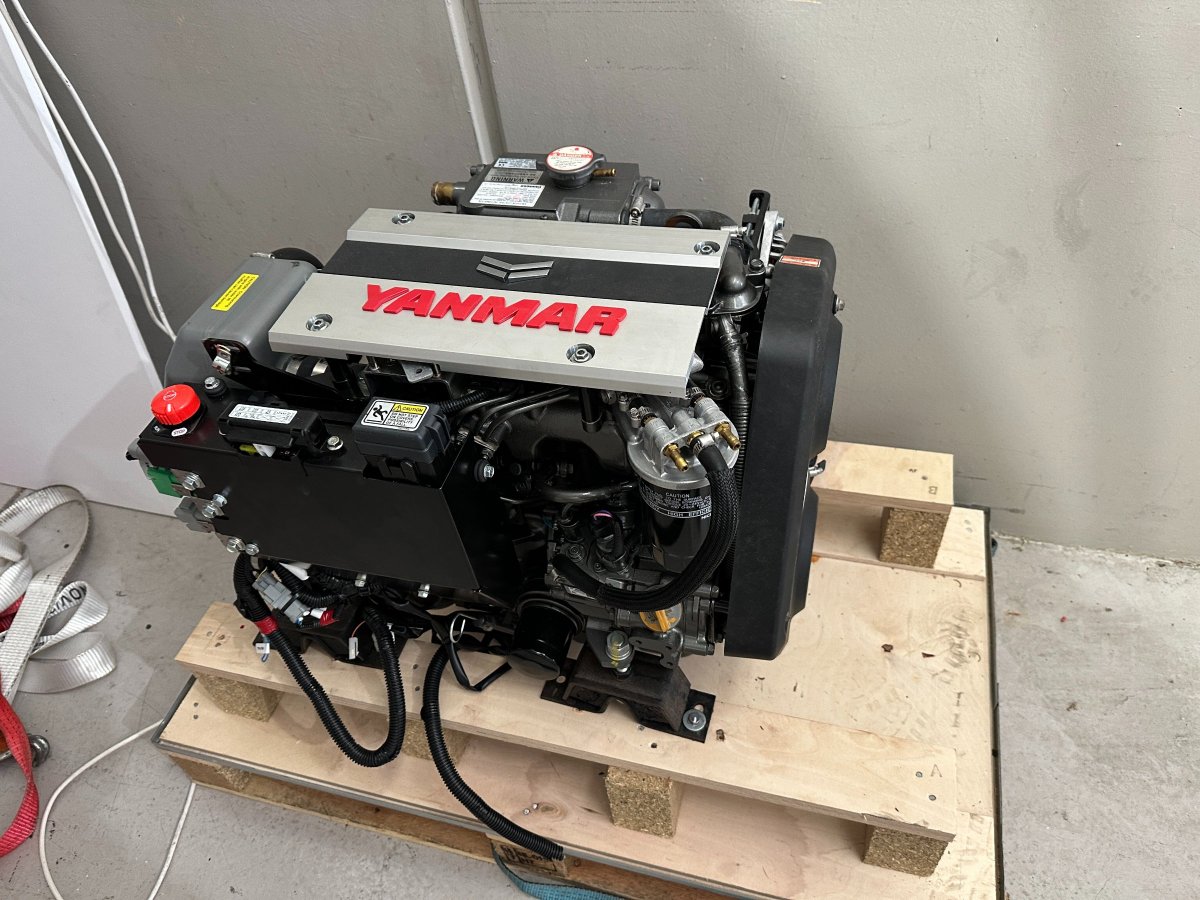
4. Recreational and Commercial Duty Ratings
This is one of the most important considerations for anyone purchasing a marine engine for professional use.
A recreational boat that operates occasionally does not necessarily place the same demands on its engine as a commercial fishing vessel or workboat operating for extended periods.
Manufacturers use duty ratings to describe the operating conditions for which particular engine ratings are intended.
Cummins, for example, identifies marine rating categories that include:
- High Output (HO).
- Intermittent (INT).
- Medium Continuous (MCD).
- Heavy Duty (HD).
- Continuous Duty (CON).
These are Cummins-specific classifications, not universal labels that can be applied identically to every engine manufacturer.
The distinction matters. Cummins describes its High Output rating as intended for recreational vessels and infrequent full-power operation. Its Continuous Duty rating is intended for applications involving sustained operation and higher average load factors.
For commercial buyers, selecting an engine based only on advertised horsepower can therefore be a costly mistake.
Consider a workboat that operates for long periods under a substantial load. An engine rating intended for occasional recreational use may not be appropriate simply because its horsepower appears sufficient.
Before purchasing, establish:
- How many hours the vessel will operate.
- Whether the engine will run continuously or intermittently.
- The typical load carried by the vessel.
- How frequently full power will be required.
- Whether the intended use falls within the manufacturer’s rating and warranty conditions.
You can consult Cummins Marine Ratings and Definitions for an example of how a manufacturer defines its operating classifications.
5. Manufacturer, Technology and Engine Configuration
The manufacturer is another part of the purchasing equation.
Different marine engine manufacturers offer different engine families, power ranges, electronic systems, fuel technologies, and installation arrangements.
For buyers researching new inboard marine engine prices, Power Engine Market’s product selection can be explored alongside manufacturer documentation from brands such as Yanmar, Cummins, Volvo Penta, Perkins, and Doosan.
It is important to compare specific models rather than assuming every engine from one manufacturer has the same price or application.
A suitable comparison should consider the exact model, power rating, duty classification, dimensions, weight, cooling system, gearbox arrangement, and supplied equipment.
Understanding the Main Inboard Marine Engine Brands and Models
Once you understand the factors influencing price, the next step is comparing manufacturers and identifying engine families that may suit your vessel.
The following brands provide useful starting points for research. Actual availability, specifications, and configurations should be confirmed for the particular model being considered.
Yanmar Inboard Marine Diesel Engines
Yanmar offers marine diesel engines across a wide range of power outputs.
Its published marine engine portfolio includes several families, such as the GM, YM, JH-CR, 4LV, 8LV, 6LY, 6LF, and 6LT series.
These families cover different vessel requirements, from smaller marine propulsion applications to higher-output powerboat installations.
When comparing Yanmar inboard marine engine prices, identify the exact model before requesting a quotation.
Check:
- Rated output in horsepower or kilowatts.
- Rated engine speed.
- Number of cylinders.
- Engine displacement.
- Dimensions and weight.
- Cooling arrangement.
- Gearbox or drive configuration.
- Intended vessel application.
For example, Yanmar’s published product information identifies the 4LV family in several power ratings, while its smaller YM-series engines have different configurations and intended applications.
These are not interchangeable products. The correct choice depends on the vessel and its propulsion requirements.
Yanmar also provides official product information and a dedicated repowering resource for owners considering engine replacement.
For a closer look at available models, power outputs and configurations, consult the official YANMAR marine diesel engine range.
Cummins Inboard Marine Diesel Engines
Cummins offers marine propulsion and auxiliary engines for different recreational and commercial applications.
Its B4.5L marine engine provides a useful example of why buyers should review complete model specifications rather than relying on horsepower alone.
Cummins describes the B4.5L as an inline four-cylinder, four-stroke diesel engine with 4.5 litres of displacement. Its published specifications include turbocharging and aftercooling, a high-pressure common-rail fuel system, and model-specific dimensions and weight.
The product is offered with different commercial and recreational ratings.
When comparing Cummins marine engine prices, pay particular attention to:
- Exact model designation.
- Rated horsepower and RPM.
- Duty rating.
- Displacement.
- Fuel system.
- Engine dimensions and weight.
- Cooling and exhaust configuration.
- Included accessories.
- Gearbox compatibility.
One important point: the same engine family may have different ratings and configurations. A buyer should therefore request the specific rating and configuration required for the vessel.
Because these classifications determine how an engine is intended to operate under different loads, buyers should review the manufacturer’s Cummins marine engine ratings and definitions before selecting a model.
Volvo Penta Inboard Marine Engines
Volvo Penta is another established manufacturer of marine propulsion systems.
When considering Volvo Penta inboard marine engine prices, buyers should compare the specific engine and drive configuration rather than making decisions based on the manufacturer name alone.
Important specifications include:
- Rated power.
- Engine speed.
- Displacement.
- Dimensions and weight.
- Cooling arrangement.
- Transmission configuration.
- Electronic controls.
- Application and installation requirements.
If you are replacing an existing Volvo Penta engine, verify whether the proposed replacement is compatible with the current drivetrain.
A similar horsepower rating does not guarantee that an engine will fit the existing engine beds or work with the current gearbox and propeller arrangement.
Manufacturer reference: Volvo Penta.
Perkins Marine Diesel Engines
Perkins is a diesel engine manufacturer with products used in different industrial and power applications, including marine configurations.
For buyers considering Perkins marine diesel engines for sale, the important step is to identify the exact marine model and confirm its intended application.
Do not assume that an industrial diesel engine configuration is automatically suitable for marine propulsion.
Check:
- Marine application approval and configuration.
- Rated power and RPM.
- Engine dimensions and weight.
- Cooling and exhaust requirements.
- Transmission compatibility.
- Manufacturer documentation.
- Parts and service arrangements.
Manufacturer reference: Perkins.
Doosan Marine Diesel Engines
Doosan marine diesel engines may also be considered when comparing suitable propulsion options.
As with other manufacturers, the correct approach is to evaluate the particular model and its specifications.
Confirm the rated power, displacement, operating speed, dimensions, weight, duty rating, and intended marine application.
If you are considering a Doosan engine as a replacement, also compare its physical and drivetrain requirements with those of the existing installation.
A manufacturer’s name alone is not enough to establish whether an engine is suitable for a particular vessel.
How Much Horsepower Does Your Boat Need?
Horsepower has a direct influence on engine selection, but determining the correct power output requires more than knowing the length of your boat.
Two vessels of similar length may have different displacement, hull shapes, loading conditions, and operating requirements.
These differences can result in very different propulsion needs.
Start With Vessel Displacement and Hull Design
Vessel displacement, hull type, and expected loading conditions are important starting points.
A heavily loaded displacement-hull workboat may require a different propulsion arrangement from a lighter planing-hull recreational vessel.
You should also consider:
- Normal operating weight.
- Passenger or cargo capacity.
- Desired cruising speed.
- Operating environment.
- Expected time underway.
- Number of engines.
- Propeller and gearbox arrangement.
Yanmar’s repowering guidance highlights the importance of vessel type and engine-room space when identifying a replacement engine. It also notes that displacement-hull vessels will normally require a like-for-like power output, while planing hulls can be more sensitive to engine weight and power-to-weight ratio.
This is why engine selection should begin with the vessel’s requirements rather than an arbitrary horsepower target.
Match the Engine to the Vessel’s Application
Different applications place different demands on a marine propulsion system.
Recreational boats: These may prioritise comfortable cruising, suitable acceleration, and dependable operation.
Fishing vessels: Engine requirements depend on displacement, operating range, equipment loads, fishing conditions, and time spent underway.
Commercial workboats: These may require engines capable of operating regularly under demanding loads and within the appropriate duty rating.
Passenger vessels: Passenger capacity, route conditions, operating hours, and applicable requirements influence the propulsion decision.
Yachts: Hull design, displacement, cruising speed, engine-room space, and drivetrain configuration are important considerations.
A marine propulsion professional should help verify the appropriate power requirement before an engine is ordered.
Why More Horsepower Is Not Always Better
It is easy to assume that a higher-powered engine will always provide a better result.
But additional horsepower can bring additional requirements.
A more powerful replacement engine may require a different marine gear, stronger engine beds, a larger propeller shaft, a different propeller, increased fuel capacity, or changes to the air intake and exhaust systems.
Yanmar specifically identifies these considerations in its repowering guidance.
An engine with insufficient power can also be unsuitable if it cannot achieve the vessel’s required operating performance.
The objective is to choose an engine that is correctly matched to the vessel, not simply the engine with the largest horsepower number.
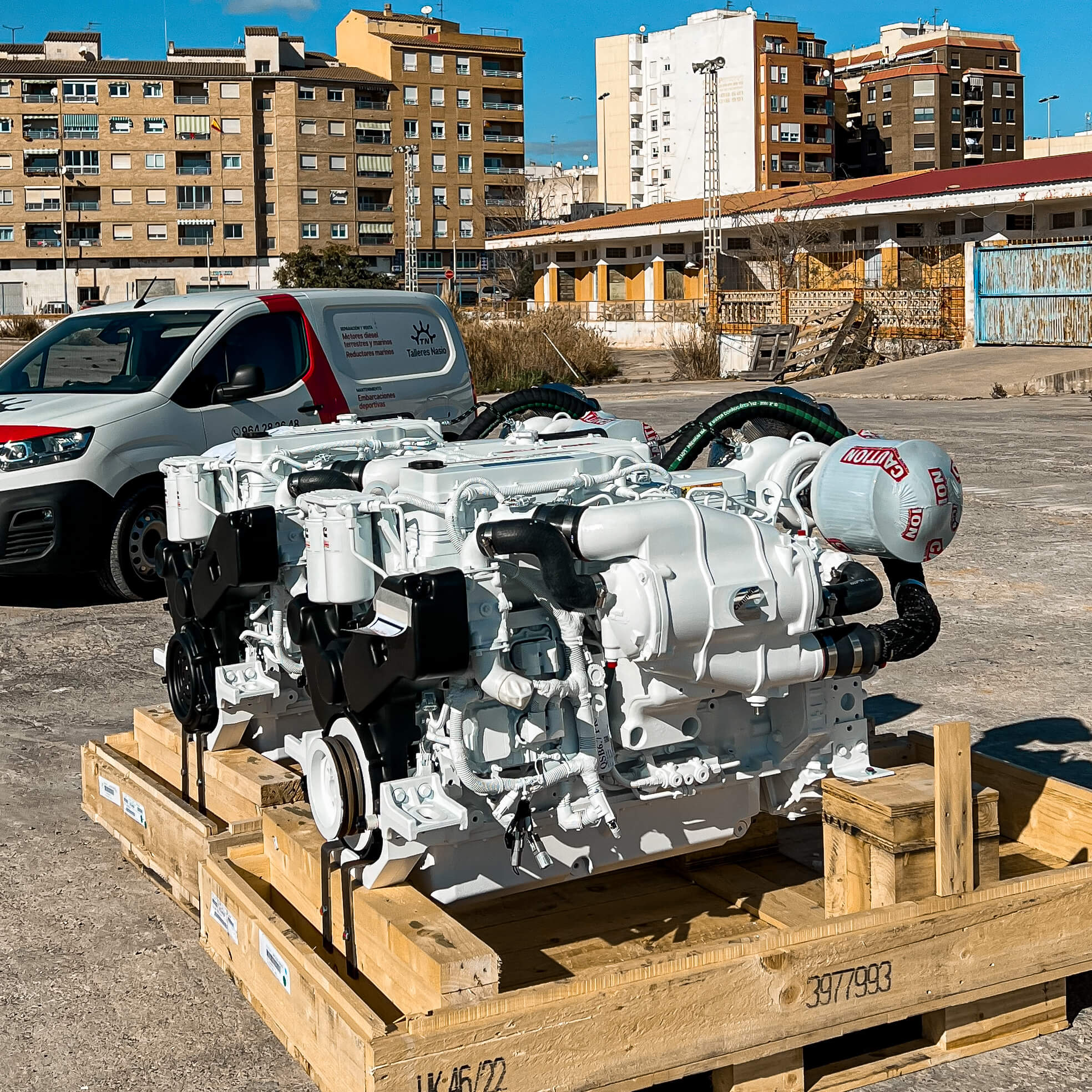
Comparing New Inboard Marine Engine Prices: What Should Buyers Examine?
When you begin receiving quotations, compare the actual engine packages rather than looking only at the final price.
A supplier quoting a basic engine configuration may not be offering the same package as another supplier including a marine gearbox, controls, instrumentation, and accessories.
The difference matters.
Compare Similar Engine Ratings
Start by comparing engines with similar power output and intended operating applications.
Then check the rated RPM and duty classification.
For commercial use, pay particular attention to whether the rating permits the operating hours and loading conditions expected from your vessel.
Two engines with the same advertised horsepower may not be rated for the same operating profile.
Check the Complete Supply Configuration
Ask the supplier to confirm exactly what is included.
Depending on the model and quotation, the package may include or exclude:
- Complete marine diesel engine.
- Marine gearbox.
- Engine control system.
- Instrumentation and control panel.
- Starting and charging components.
- Engine mounts.
- Cooling and exhaust accessories.
- Technical documentation.
- Applicable warranty coverage.
Do not assume that every component shown in a product photograph is included in the quoted package.
Request a written equipment breakdown.
Compare Technical Specifications
Use a consistent specification checklist when comparing quotations.
| Specification | What to verify |
|---|---|
| Manufacturer | Exact manufacturer |
| Model | Full model designation |
| Horsepower | Rated output |
| Kilowatts | Equivalent power rating |
| Rated RPM | Engine speed at specified rating |
| Cylinders | Number and arrangement |
| Displacement | Total engine displacement |
| Aspiration | Naturally aspirated or turbocharged |
| Cooling | Manufacturer-specified cooling arrangement |
| Dimensions | Length, width, and height |
| Weight | Weight of the quoted configuration |
| Duty rating | Intended operating profile |
| Gearbox | Included or separately supplied |
| Warranty | Coverage, exclusions, and conditions |
For instance, Cummins publishes detailed B4.5L marine specifications, including its four-cylinder configuration, 4.5-litre displacement, dimensions, and weight. This is the kind of model-specific information that should be used when evaluating a quotation.
Understanding the Total Cost of a New Inboard Marine Engine
The purchase price of the engine is not necessarily the total cost of the propulsion project.
If you are installing an engine in a new vessel, the supporting systems must be designed around the selected engine.
If you are replacing an existing engine, some of the original equipment may be reusable, but compatibility must be checked.
Marine Gearbox and Transmission
The marine gearbox transfers power from the engine to the propeller shaft and establishes the relationship between engine speed and propeller speed.
Important considerations include:
- Gear ratio.
- Input power rating.
- Rated input speed.
- Rotation direction.
- Mounting arrangement.
- Compatibility with the propeller shaft.
A replacement engine may require a different gearbox arrangement from the original installation.
If the gearbox is not included in the quotation, ask for a separate price for a suitable unit.
Do not select a gearbox based only on whether it physically fits. Its rating and configuration must be suitable for the engine and propulsion system.
Engine Installation and Mounting
Engine installation involves more than placing the engine inside the engine room.
The engine must be supported correctly, aligned with the drivetrain, and installed according to manufacturer requirements.
Depending on the vessel, the project may involve:
- Checking engine-bed dimensions.
- Replacing or modifying mounts.
- Confirming shaft alignment.
- Assessing structural support.
- Checking maintenance access.
- Reviewing ventilation and cooling arrangements.
Installation requirements should be assessed before the purchase is finalised.
Propeller Shaft and Propeller Compatibility
The propeller shaft and propeller must be appropriate for the engine and gearbox configuration.
A change in engine power, weight, rotation, or gearbox ratio may require a reassessment of the existing drivetrain.
Yanmar’s repowering guide explains that some replacement installations may require a larger propeller shaft, shaft log, or strut. It also notes that a new propeller may be needed on planing-hull vessels when the power or weight of the new system differs significantly from the old one.
This is an important reason not to treat every engine replacement as a direct swap.
Cooling, Exhaust and Fuel Systems
The engine’s supporting systems must match the manufacturer’s installation specifications.
Depending on the model, these may include:
- Raw-water intake and strainer.
- Seawater pump.
- Heat exchanger and coolant arrangement.
- Exhaust manifold and exhaust elbow.
- Fuel supply and filtration.
- Air intake and ventilation.
Yanmar’s repowering documentation specifically discusses the importance of a suitable raw-water intake, seacock, and strainer.
A qualified installer should inspect the existing systems before confirming that they can be reused.
Controls, Instrumentation and Electrical Components
Modern marine engines may use electronic controls and engine monitoring systems.
Depending on the engine, additional equipment may include control panels, wiring harnesses, sensors, gauges, alarms, and electronic interfaces.
Ask whether these components are included in the quotation and whether they are compatible with the vessel’s existing control arrangement.
Buying a New Inboard Marine Engine vs. Replacing an Existing Engine
The right purchasing approach depends partly on whether the engine is for a new vessel or a repowering project.
Purchasing for a New Vessel
A new vessel gives the designer and installer an opportunity to plan the propulsion system around the selected engine.
This includes:
- Engine-room dimensions.
- Mounting arrangement.
- Gearbox selection.
- Shaft and propeller design.
- Cooling and exhaust systems.
- Controls and instrumentation.
- Access for future maintenance.
The engine must still be correctly matched to the vessel’s design and intended operating conditions.
Replacing an Existing Marine Engine
Replacing an existing engine can involve more compatibility checks because the vessel already has an established propulsion arrangement.
Before ordering a replacement, collect the existing engine’s manufacturer, model, serial number, rated power, and available installation measurements.
Then assess:
- Engine dimensions and weight.
- Engine-bed and mounting positions.
- Gearbox ratio and rotation direction.
- Propeller shaft arrangement.
- Propeller specifications.
- Cooling and exhaust systems.
- Fuel supply and air intake.
- Controls and instrumentation.
Yanmar recommends considering the boat type, engine-room space, and existing engine footprint when assessing repowering options.
Its guide also highlights that a more powerful replacement may require supporting drivetrain and installation changes.
For this reason, request a compatibility assessment rather than assuming that similar horsepower guarantees a direct replacement.
How to Choose the Right New Inboard Marine Engine for Your Budget
You do not need to become a marine engineer to make a more informed purchasing decision. However, you do need the right information before requesting a quotation.
Here is a practical process.
Step 1: Gather Your Vessel Information
Prepare the following details:
- Vessel make and model.
- Vessel length.
- Displacement or operating weight.
- Hull type.
- Intended application.
- Expected operating hours.
- Existing engine details, if applicable.
If you are replacing an engine, photographs of the identification plate and installation may also help establish the existing configuration.
Step 2: Establish the Required Power and Duty Rating
Use the vessel manufacturer’s recommendations and consult a qualified marine propulsion professional to establish the appropriate horsepower and operating rating.
Commercial buyers should explain their expected operating hours, load conditions, and working profile.
Step 3: Identify Compatible Engine Models
Compare suitable models from manufacturers such as Yanmar, Cummins, Volvo Penta, Perkins, and Doosan.
Check the exact model specifications, dimensions, weight, duty rating, cooling arrangement, and transmission requirements.
Step 4: Request a Detailed Quotation
Give the supplier enough information to identify the correct engine configuration.
A useful enquiry should include the preferred manufacturer, model, horsepower requirement, vessel application, existing engine details, and gearbox requirements.
If you are unsure which model is appropriate, provide the vessel details rather than guessing at an engine size.
Step 5: Compare the Complete Package
When quotations arrive, examine:
- Engine model and rating.
- Included accessories.
- Gearbox configuration.
- Warranty conditions.
- Technical documentation.
- Availability and delivery arrangements.
- Compatibility and installation requirements.
A clear quotation should make it possible to understand exactly what is being supplied and what must be purchased separately.
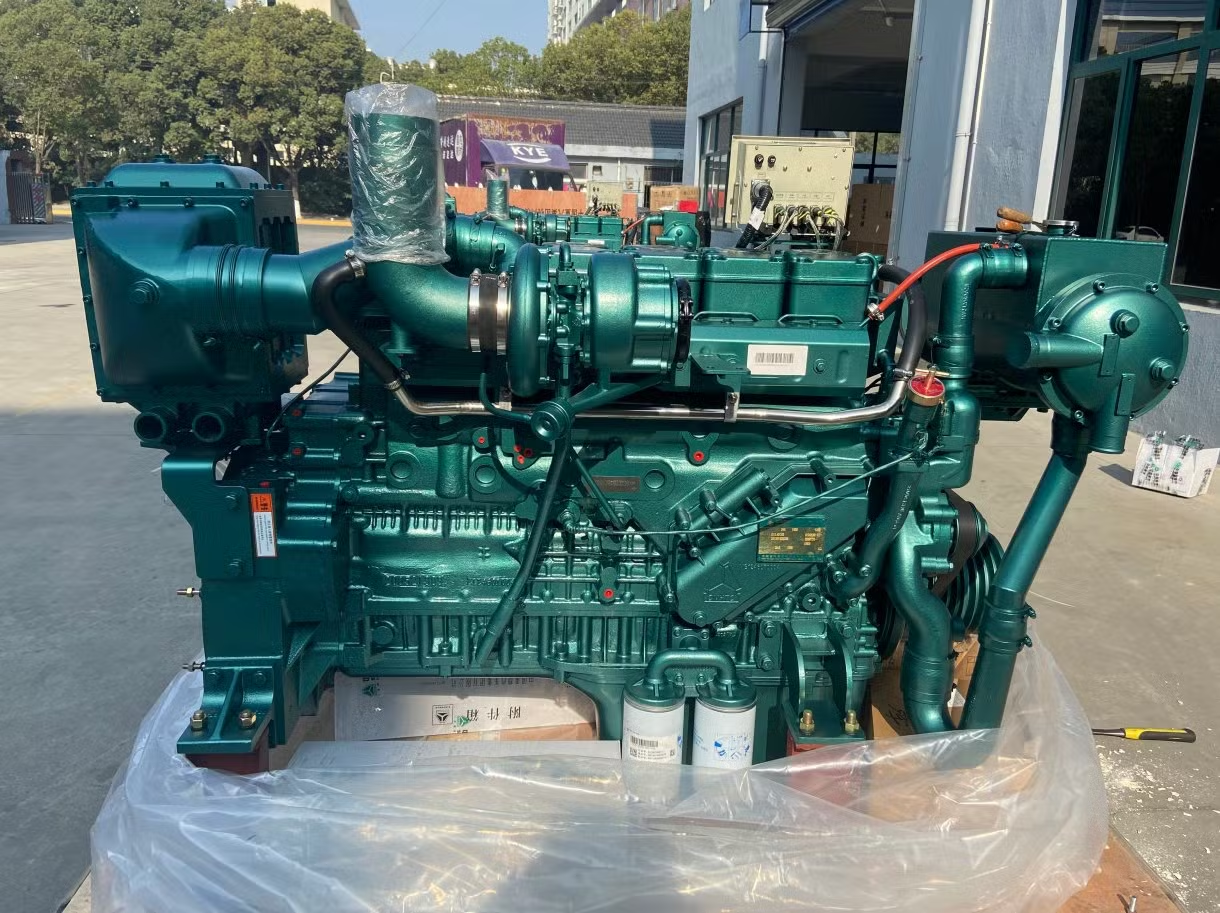
Where to Buy New Inboard Marine Diesel Engines
Once you understand the pricing factors and technical requirements, you can begin comparing available engines.
Power Engine Market provides an online destination for buyers exploring marine engine products, including its Inboard Marine Engines category.
Whether you are sourcing an engine for a new vessel or researching a replacement for an existing installation, start by identifying the model and configuration that meet your requirements.
Before making an enquiry, prepare the following information:
- Preferred manufacturer and model, if known.
- Required horsepower.
- Vessel type and application.
- Existing engine details, if replacing.
- Gearbox requirements.
- Any relevant installation measurements.
These details make it easier to identify the product you are looking for and clarify what should be included in a quotation.
Explore the Inboard Marine Engines category at Power Engine Marketto review available options and identify an engine that matches your vessel’s requirements.
If you already have a preferred model, enquire using its full model designation. If you are still comparing options, provide your vessel information so that suitable specifications can be considered.
Before placing an order, confirm the exact product configuration, included components, availability, warranty conditions, and delivery arrangements.
Frequently Asked Questions About New Inboard Marine Engine Prices
1. How much does a new inboard marine diesel engine cost?
The price depends on the manufacturer, model, horsepower, displacement, duty rating, configuration, and included equipment.
A compact recreational engine and a high-output commercial propulsion engine have different specifications and pricing.
For an accurate quotation, identify the exact engine model and confirm the complete supply configuration.
2. What is the cheapest new inboard marine diesel engine?
There is no single cheapest engine that is suitable for every vessel.
Smaller engines may have lower purchase prices, but the correct selection depends on vessel displacement, hull design, required power, and intended operation.
Compare compatible models rather than choosing solely on the lowest advertised price.
3. Does horsepower affect the price of an inboard marine engine?
Yes. Horsepower is one factor influencing engine design and pricing.
However, manufacturer, displacement, duty rating, electronic systems, and included equipment also influence the final quotation.
4. Are Yanmar inboard marine engines expensive?
Yanmar engine prices vary according to the model, power rating, configuration, and market availability.
Compare specific models and their supplied equipment rather than relying on a general price estimate for the brand.
5. Are Cummins marine engines suitable for commercial vessels?
Certain Cummins marine engines are offered with commercial ratings. Suitability depends on the exact model, rating, and operating conditions.
Commercial buyers should review the manufacturer’s duty-rating definitions and confirm that the intended application is covered by the relevant rating and warranty conditions.
6. Does a new inboard marine engine come with a gearbox?
Not necessarily. Some engine packages include a marine gearbox, while others may require it to be selected or purchased separately.
Confirm whether the gearbox is included and check that its ratio, rating, and rotation are appropriate for the vessel.
7. What information is needed to get a marine engine quotation?
Ideally, provide the vessel make and model, length, displacement, intended application, required horsepower, existing engine details, and gearbox requirements.
If you do not know the required horsepower, provide your vessel information and consult a qualified marine propulsion professional.
8. Is a new marine engine better than rebuilding an old one?
It depends on the condition of the existing engine, repair requirements, parts availability, compatibility, and expected future operating costs.
A rebuild may be suitable when the engine is in a condition that allows a technically and economically sound repair. A new engine may be worth considering when repair requirements are extensive or the existing engine no longer meets the vessel’s needs.
Compare the complete costs and obtain a professional assessment before deciding.
9. Can I replace my existing inboard engine with a different brand?
In some cases, yes, but a different brand does not guarantee a direct replacement.
You must assess engine dimensions, mounting positions, power output, gearbox ratio, shaft alignment, propeller requirements, cooling, exhaust, and controls.
A qualified marine propulsion professional should verify compatibility before the replacement engine is ordered.
10. What is the difference between engine price and total installed cost?
The engine price refers to the amount charged for the engine or specified engine package.
The total installed cost may also include a gearbox, mounting work, shaft and propeller modifications, controls, electrical connections, cooling and exhaust work, labour, and other installation requirements.
Ask for a clear breakdown so you can distinguish the engine purchase price from the complete project cost.
Conclusion: Understand the Specifications Before You Compare the Price
Purchasing a new inboard marine diesel engine is not simply about finding the lowest price or the highest horsepower rating.
The right decision depends on the vessel, operating profile, manufacturer specifications, duty rating, gearbox configuration, and installation requirements.
A lower-priced engine may not represent better value if it is unsuitable for the vessel or requires extensive modifications. Likewise, a more powerful engine is not necessarily the right choice if its output and operating rating do not match the application.
Take time to compare exact models, review manufacturer documentation, confirm what is included in each quotation, and assess compatibility before ordering.
If you are researching new inboard marine engines for sale, explore the Inboard Marine Engines category at Power Engine Market. Identify the models that meet your requirements and request information using your preferred engine model or vessel specifications.
The best engine is not simply the one with the lowest price. It is the one with the correct power, configuration, and operating rating for the work your vessel needs to perform.
Next Post: Inboard Marine Diesel Engines for Sale: How to Choose the Right Engine for Your Boat


