
Description
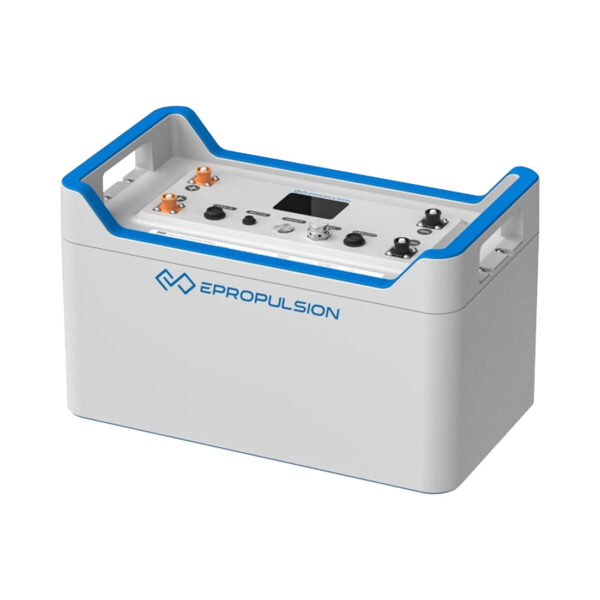
ePropulsion E-Series E60 Battery – Professional Overview
The ePropulsion E-Series E60 Battery is a dedicated lithium iron phosphate energy-storage solution for ePropulsion’s 48V-class electric propulsion systems. It is designed to provide consistent DC power while integrating battery monitoring and communication functions into the overall propulsion system.
With 3,072 Wh / 60 Ah capacity and a nominal voltage of 51.2V, the E60 provides a substantial energy reserve while maintaining a compact footprint. ePropulsion identifies the E60 as compatible with products across its Spirit, Navy and POD ranges, with the current product database listing compatible Spirit, Navy Evo and Pod Drive models.
The battery uses LiFePO4 chemistry, a lithium battery technology widely used where stability, durability and cycle life are important. ePropulsion specifies up to 3,000 cycles at 80% state of health for the E-Series platform.
Designed for Electric Marine Propulsion
The E60 is intended specifically for electric boating rather than serving as a generic recreational battery. Its electrical characteristics and communication interfaces allow it to work as part of a compatible ePropulsion propulsion system.
A single E60 can support the ePropulsion Navy 3.0 Evo at full output according to ePropulsion’s current product information. The manufacturer’s compatibility database also lists the E60 for compatible Spirit 1.0, Spirit 2, Navy 3.0 Evo, Navy 6.0 Evo and Pod Drive systems.
This makes the battery particularly relevant for electric outboard boats, small recreational craft, tenders, dinghies and electric pod-drive installations using compatible ePropulsion equipment.
Compact Installation for Space-Limited Boats
Marine battery installation can be challenging when available space is limited. The E60 addresses this with a relatively compact enclosure measuring 512 × 290 × 300 mm.
Its 300 mm height allows it to be installed beneath suitable boat seating or within other appropriately ventilated and secured compartments. ePropulsion specifically highlights the E60’s low profile as an advantage for flexible marine installation.
At 33 kg, the E60 is also considerably easier to handle than many conventional high-capacity marine battery arrangements. Its enclosure and integrated design make it suitable for installations where weight and available space must both be considered.
Long-Term Battery Performance
The E60 uses lithium iron phosphate (LiFePO4) cells and is specified for up to 3,000 cycles at 80% state of health. This provides a substantial cycle-life rating for regular electric boating use.
The battery is also designed around controlled charging and discharging parameters. Its maximum continuous discharge current is 70 A, while the specified final charging voltage is 57.6V and the cut-off voltage is 41.6V.
These characteristics allow the E60 to operate as part of a properly matched electric propulsion system while maintaining defined electrical operating limits.
Intelligent Battery Management and System Integration
An integrated Battery Management System (BMS) continuously monitors battery operation and provides protection for the battery during use. ePropulsion describes the intelligent BMS as a core part of the E-Series design.
The E60 also includes communication interfaces for integration with compatible ePropulsion equipment. Current ePropulsion documentation identifies CAN-Bus and RS485 communication functions within the E-Series platform, supporting communication between batteries and compatible propulsion systems.
This system-level integration is important because the battery is designed to work alongside the motor, controls and charging equipment rather than functioning as an isolated power source.
Flexible Battery Configuration
For installations requiring additional energy capacity, ePropulsion specifies that up to 16 E-Series batteries of the same model can be connected in parallel, subject to the manufacturer’s system requirements. The E60 does not support series connection.
This provides flexibility for appropriately designed electric propulsion installations where additional battery capacity is required. The correct number of batteries depends on the propulsion system, electrical architecture, expected operating requirements and manufacturer’s installation specifications.
Technical Specifications
| Specification | Details |
|---|---|
| Product | ePropulsion E-Series E60 Battery |
| Battery Chemistry | Lithium Iron Phosphate (LiFePO4) |
| Rated Voltage | 51.2V |
| Nominal System Class | 48V |
| Capacity | 3,072 Wh / 60 Ah |
| Battery Life | Up to 3,000 cycles at 80% state of health |
| Maximum Charging Current | 60A |
| Maximum Continuous Discharge Current | 70A |
| Cut-Off Voltage | 41.6V |
| Final Charging Voltage | 57.6V |
| Weight | 33 kg |
| Dimensions | 512 × 290 × 300 mm |
| Parallel Connection | Up to 16 E-Series batteries of the same model |
| Series Connection | Not supported |
| Cell Configuration | 16S4P |
| Charging Temperature | 0–55°C |
| Discharging Temperature | -10–60°C |
| Communication | CAN-Bus / RS485 |
| Recommended Mounting | Upright, display facing upward |
| Compatible Charger | ePropulsion E-Series battery charger |
| Shipping Classification | UN3480, Class 9, UN38.3 certified |
| Approvals | CE, UKCA, FCC |
Specifications are based on ePropulsion’s published E60 documentation and current product information.
Who the E60 Is Best Suited For
The ePropulsion E-Series E60 Battery is designed for boat owners and operators using compatible ePropulsion electric propulsion systems.
It is particularly relevant for electric outboard installations, small recreational boats, tenders, dinghies and POD Drive applications where compact dimensions, manageable weight and integrated battery communication are important.
The E60 is also a practical option for installations where conventional lead-acid battery systems would occupy excessive space or add unnecessary weight. ePropulsion states that the E-Series offers higher energy density and substantially lower weight compared with equivalent lead-acid capacity.
Ordering and Compatibility Considerations
Before purchasing, buyers should confirm that the E60 matches their specific ePropulsion motor, charging equipment and electrical configuration. Compatibility can vary between propulsion models and generations.
The manufacturer’s current compatibility database lists the E60 for several Spirit, Navy Evo and Pod Drive products, including Spirit 1.0 Plus, Spirit 1.0 Evo, Spirit 2, Navy 3.0 Evo, Navy 6.0 Evo and Pod Drive Evo models.
For larger electric propulsion installations, buyers should also confirm whether multiple E60 batteries are appropriate and whether the required charging and communication components are included in their intended system.
Frequently Asked Questions
What type of battery is the ePropulsion E60?
The E60 is a lithium iron phosphate (LiFePO4) marine battery designed for compatible ePropulsion electric propulsion systems. It has a nominal voltage of 51.2V and provides 3,072 Wh / 60 Ah of capacity.
How much does the ePropulsion E60 battery weigh?
The E60 weighs 33 kg. Its compact enclosure measures 512 × 290 × 300 mm, making it suitable for marine installations where battery weight and available space are important considerations.
How long does the E60 battery last?
ePropulsion specifies the E60 for up to 3,000 cycles at 80% state of health. Actual service life depends on charging practices, operating conditions, storage and overall system use.
Which ePropulsion motors work with the E60?
The E60 is compatible with a range of ePropulsion products. The manufacturer’s current database lists compatible Spirit, Navy Evo and Pod Drive models, including Spirit 1.0, Spirit 2, Navy 3.0 Evo, Navy 6.0 Evo and Pod Drive Evo products.
Can multiple E60 batteries be connected together?
Yes. ePropulsion documentation specifies that up to 16 E-Series batteries of the same model can be connected in parallel. Series connection is not supported. The final configuration must follow the requirements of the specific propulsion system.
Is the E60 suitable for installation under a boat seat?
The E60’s 300 mm height allows flexible installation, and ePropulsion specifically identifies installation beneath a boat seat or in other suitable spaces as an application. The battery must still be installed according to the manufacturer’s mounting and operating requirements.
What charger does the E60 use?
The E60 is designed to use an ePropulsion E-Series battery charger. Charging specifications and charging times depend on the charger configuration and electrical supply.



Reviews
There are no reviews yet.