Buying a marine generator is one of those purchases that looks straightforward until you actually start comparing models.
A buyer will often contact us knowing roughly what they want:
“I need around 10 kW.”
That sounds specific.
But from our side of the counter, it is only the beginning.
We still need to know whether the vessel requires 50 Hz or 60 Hz, the correct voltage, whether the electrical system is single phase or three phase, what equipment will run simultaneously, how much starting load the air-conditioning compressors create, how much installation space is available, whether quiet operation is a priority, and how the generator will actually be used.
Two generators can have similar kW ratings and still be completely different buying decisions.
That is why this marine generator buying guide with prices does more than show you a list of models.
We are going to help you understand what you are actually paying for, how to choose the correct generator size, which specifications deserve your attention, where buyers commonly make mistakes, and how popular Cummins Onan, Fischer Panda, Paguro, Vetus, and Lombardini marine generators compare.
If you remember only one thing from this guide, make it this:
Buy the generator your vessel needs—not the generator with the most impressive specification sheet.
How Much Does a Marine Generator Cost?
Let’s deal with price first because that is where most buyers naturally start.
There is no meaningful single answer to “How much does a marine generator cost?”
A small onboard genset and a higher-output generator for a large yacht or commercial vessel aren’t really competing products.
Current Power Engine Market listings demonstrate the range. Our Marine Generators catalog contains options from manufacturers including Cummins Onan, Fischer Panda, Paguro, Vetus, and Lombardini, with pricing varying substantially by model, output, technology, and configuration.
For example, current listings include:
| Marine Generator | Approx. Output | Listed Price* |
|---|---|---|
| Lombardini LMG4000 | 4 kVA | About $6,905 |
| Fischer Panda 4000s.Neo PMS | 3.4 kW / 4.0 kVA | About $8,118 |
| Fischer Panda 10000i PMS | 8.0 kW / 10.0 kVA | About $18,118 |
| Cummins Onan QD 17.5MDKDR-8202A | 17.5 kW | About $22,300 |
| Fischer Panda 15000x PMS | 12.7 kW / 15.0 kVA | About $29,118 |
*Prices are examples from Power Engine Market listings checked in August 2026. Availability, configuration, specification, shipping, taxes where applicable, and future catalog updates can affect the final purchase price. Always verify the individual product page or quotation before ordering.
What should you learn from those numbers?
Not that one brand is “cheap” and another is “expensive.”
The useful lesson is that marine generator price is tied to far more than output alone.
Why Two 10 kW Marine Generators Can Have Very Different Prices
This confuses buyers all the time.
You might find two units that appear to be around the same output, yet one costs several thousand dollars more.
Before assuming the more expensive unit is overpriced—or that the cheaper unit is automatically the better deal—look deeper.
The final cost of a marine diesel generator can be influenced by:
- Engine and alternator design
- Rated kW and kVA
- Fixed-speed versus variable-speed technology
- Voltage configuration
- 50 Hz or 60 Hz output
- Single-phase or three-phase construction
- Sound enclosure
- Cooling arrangement
- Control and monitoring equipment
- Physical size
- Weight
- Emissions equipment
- Included accessories
- Manufacturer and product family
- Serviceability
- Warranty terms
The Fischer Panda FPMA1005 10000i PMS, for example, is currently listed as an 8.0 kW / 10.0 kVA generator operating across a 2200–2800 RPM range and using Permanent Magnet System technology.
That is a different technical proposition from simply saying:
“It’s a 10 kVA generator.”
Specifications matter.
And as a buyer, understanding those specifications keeps you from comparing products that only look equivalent on the surface.
What Size Marine Generator Do I Need for My Boat?
If we were helping you choose a generator directly, one of the first things we would want to understand is your actual onboard electrical load.
Not just the boat length.
Not just what another owner with a similar boat installed.
Your electrical load.
A proper marine generator sizing calculation should consider the equipment you expect to operate at the same time.
That can include:
- Air-conditioning systems
- Refrigerators
- Freezers
- Battery chargers
- Water heaters
- Watermakers
- Bilge pumps
- Freshwater pumps
- Navigation equipment
- Communication equipment
- Lighting
- Galley appliances
- Microwaves
- Electric cooking equipment
- Entertainment systems
- Washer/dryer systems
- Other AC loads
Don’t Size a Boat Generator From Vessel Length Alone
You will sometimes see recommendations such as:
“A 40-foot boat needs X kW.”
That can be a convenient starting point, but we would never rely on that number alone for an actual purchase.
Two 40-foot boats can have completely different electrical systems.
One may be a relatively simple cruising sailboat.
Another may have multiple air conditioners, refrigeration, a watermaker, large battery chargers, electric cooking appliances, entertainment systems, and significantly more hotel load.
Same length.
Very different generator requirement.
That is why the better question is:
“What will my generator actually need to power?”
Running Watts vs Starting Loads
This is one of the areas where buyers can accidentally undersize a generator.
Some electrical equipment consumes more power while starting than it needs once operating normally.
Compressors and electric motors deserve particular attention.
Think about equipment such as:
- Air conditioners
- Refrigerators
- Freezers
- Pumps
- Certain motors
Imagine your generator is comfortably carrying the vessel’s normal load.
Then another air-conditioning compressor starts.
That temporary demand can matter.
So when someone asks us, “What size marine generator do I need to run boat air conditioning?”, the answer cannot responsibly be based only on the air conditioner’s normal running consumption.
You need to consider the complete electrical system and the equipment’s startup characteristics.
Bigger Is Not Automatically Better
Here is another mistake that sounds logical at first:
“If 10 kW is enough, I’ll buy 20 kW so I have plenty of reserve.”
More capacity can be useful when there is a genuine reason for it.
But arbitrary oversizing isn’t a buying strategy.
A larger generator can mean:
- Higher purchase cost
- More weight
- More installation space
- Different fuel consumption
- Higher service costs
- Operation at unnecessarily light loads
Your objective should be a generator that handles normal demand, relevant startup loads, and sensible reserve capacity while operating appropriately for its design.
You aren’t trying to win a kW competition.
You are trying to power your boat reliably.
Diesel vs Gasoline Marine Generators
For many yachts, cruising vessels, and commercial applications, diesel marine generators receive most of the attention.
There are practical reasons for that.
If the vessel’s propulsion engines already run on diesel, a diesel generator may allow the auxiliary power system to use the same general fuel type rather than introducing another fuel requirement onboard.
Diesel gensets are also widely used in applications where generators may accumulate substantial operating hours.
That does not mean a diesel generator is universally correct.
Smaller gasoline-powered vessels may have different requirements.
The best decision comes back to:
fuel system + electrical demand + duty cycle + installation + vessel application.
For buyers searching for a diesel generator for a boat or yacht, Cummins Onan, Fischer Panda, Paguro, Vetus, and Lombardini are among the product families worth comparing in the Power Engine Market marine-generator catalog.
Best Marine Generator Brands to Compare
We don’t believe there is a responsible answer to:
“What is the best marine generator brand?”
Not without knowing the boat.
A manufacturer can build excellent equipment and still have a model that is wrong for your particular electrical system.
Instead, here is how we recommend thinking about some of the major product families.
Cummins Onan Marine Generators
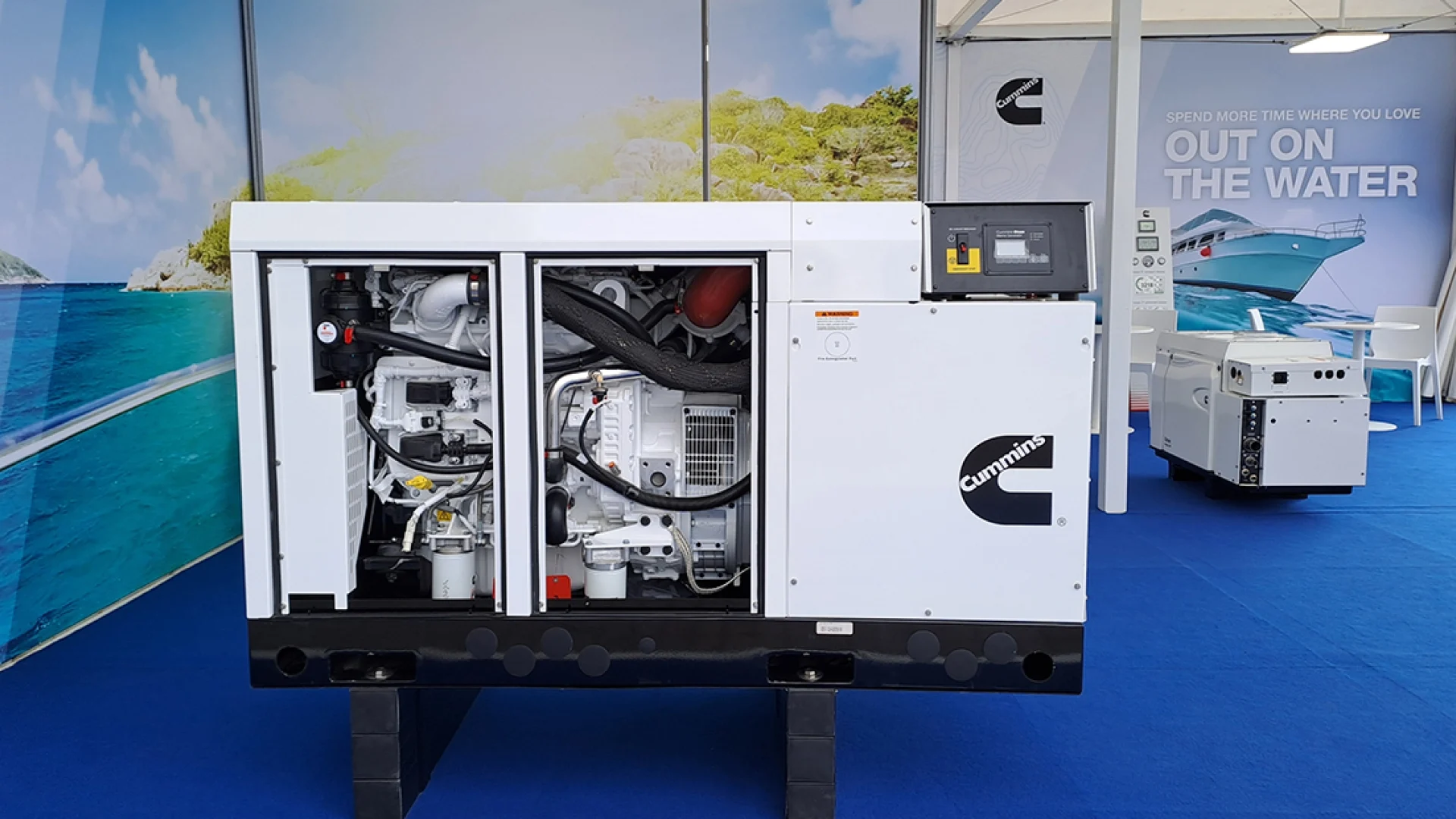
Cummins Onan marine generators are a natural starting point for many buyers because the Quiet Diesel range covers multiple onboard power requirements. Cummins’ official Onan marine generator specifications also document model-dependent differences in output, voltage, frequency, phase, RPM, dimensions, and other configuration details, which is why we recommend checking the complete specification rather than selecting a generator by kW alone.
Power Engine Market currently lists dozens of Cummins Onan generator products and configurations.
One model we regularly consider when discussing higher onboard electrical demand is the Cummins Onan Marine QD 17.5MDKDR-8202A.
The current listing identifies it as a 17.5 kW marine diesel generator intended to provide quiet, stable onboard electrical power.
For a buyer, however, “17.5 kW Cummins Onan” still isn’t enough information.
The exact specification matters.
Different MDKDR suffix/spec versions can differ in configuration.
That is why we strongly recommend ordering by full model and specification number, not merely by generator family.
If someone sends us:
“I need an Onan 17.5.”
our next question should be:
“Which electrical configuration?”
That small conversation can prevent a very expensive mistake.
Fischer Panda Marine Generators
Fischer Panda marine generators deserve consideration when compact design and specialized onboard power arrangements are important.
The current Power Engine Market catalog includes a broad Fischer Panda range.
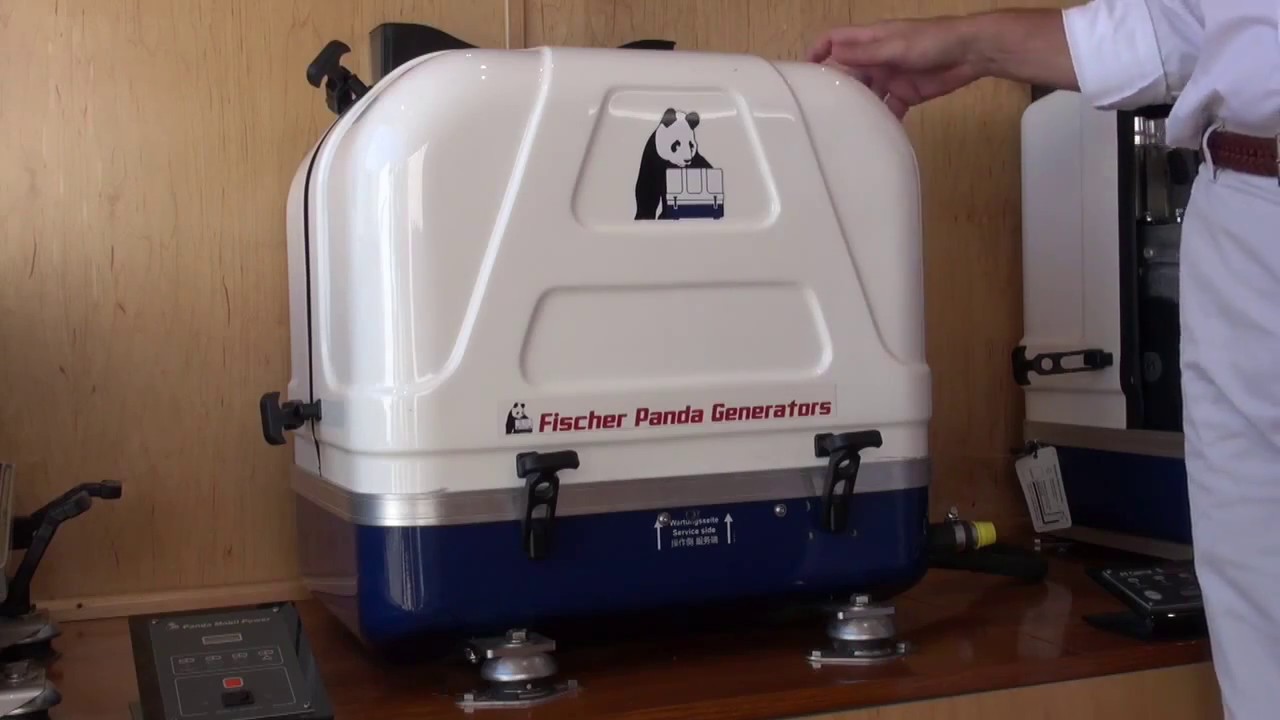
One useful example is the Fischer Panda FPMA1005 10000i PMS.
It is listed at 8.0 kW / 10.0 kVA, uses a two-cylinder diesel engine, and operates within a 2200–2800 RPM range.
Another smaller option is the Fischer Panda 4000s.Neo PMS, currently listed at 3.4 kW / 4.0 kVA.
What does that mean from a buying perspective?
It means Fischer Panda gives us options at several output levels rather than forcing a buyer into one large generator.
That becomes useful for installations where space and electrical demand need to be balanced carefully.
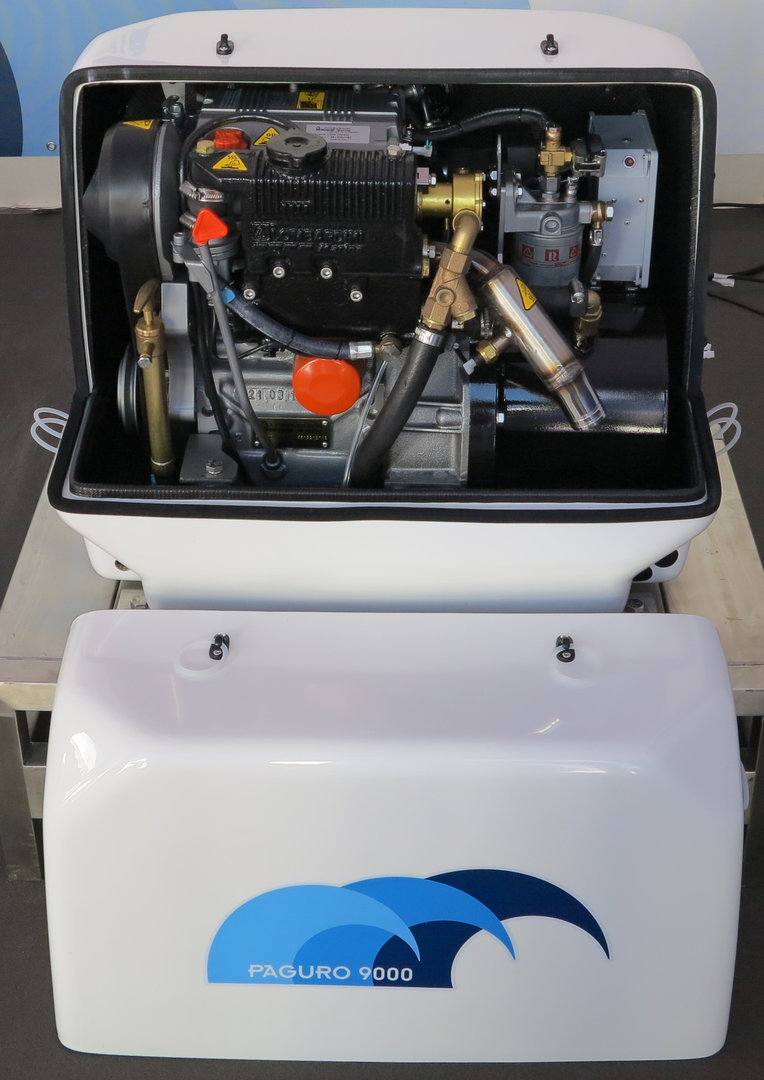
Paguro Marine Generators
If a buyer tells us that noise and installation space matter, Paguro marine generators deserve to enter the conversation.
Power Engine Market’s Paguro category includes compact marine diesel generator options designed for yachts, sailboats, and other onboard applications.
Noise matters more than some buyers expect.
It is easy to focus on kW, price, and dimensions while shopping.
Then you anchor for the night.
The propulsion engine is off.
The boat is quiet.
Suddenly the generator becomes one of the most noticeable pieces of machinery onboard.
For commercial operators, the noise tradeoff may be acceptable depending on the vessel’s role.
For cruising yachts, charter vessels, or liveaboard applications, it can become a major quality-of-life consideration.
That is why quiet marine generator searches are not simply marketing language.
They reflect a real ownership concern.
Vetus Marine Generators
The Vetus marine generator range is another category worth considering for recreational and light commercial applications.
Power Engine Market currently maintains a dedicated Vetus marine-generator category focused on compact onboard power for marine installations.
With Vetus—or any compact generator—we recommend looking beyond headline power output.
Pay attention to:
- Installation dimensions
- Service access
- Cooling requirements
- Exhaust routing
- Ventilation
- Weight
- Noise management
A generator isn’t really “compact” if you cannot service it after installation.
That brings us to one of the most practical pieces of advice in this guide.
Measure Your Generator Space—Then Measure the Access Route
We’ve seen how easily buyers focus on the engine-room dimensions while forgetting a simpler question:
How will the generator actually get into the engine room?
The generator may fit perfectly once installed but still be too large to pass through a hatch, companionway, door, or service opening.
Before ordering, confirm:
- Generator dimensions
- Installation footprint
- Access opening dimensions
- Clearance for lifting/positioning
- Space for exhaust and cooling connections
- Space for wiring
- Space for routine maintenance
Think about the technician who will eventually change filters, inspect belts, service pumps, or troubleshoot electrical connections.
Leave that person some room.
Future you will appreciate it.
50 Hz vs 60 Hz Marine Generators
This specification deserves more respect than it sometimes gets.
50 Hz and 60 Hz marine generators are not interchangeable simply because their kW output is similar.
The exact relationship between frequency, voltage, phase and engine speed depends on the generator configuration. Manufacturer data is therefore more reliable than assuming two units are interchangeable from their power rating alone. For example, the official Cummins Marine QD generator specifications list individual 50 Hz and 60 Hz configurations together with their corresponding voltage, amperage, phase and RPM information.
Your generator needs to suit the vessel’s electrical system and the connected equipment.
You will commonly encounter marine configurations involving:
- 50 Hz marine generators
- 60 Hz marine generators
- 120 V
- 230 V
- 240 V
- 400 V
- Single phase
- Three phase
The wrong frequency can create compatibility problems with equipment designed for another electrical standard.
So before purchasing, check the vessel.
Do not assume.
Do not order based solely on the generator’s kW rating.
1500 RPM vs 1800 RPM Marine Generators
Traditional four-pole AC generator configurations are commonly associated with 1500 RPM at 50 Hz and 1800 RPM at 60 Hz.
However, that should not be turned into a universal shopping rule.
Modern marine generator systems can use different technologies and operating strategies.
The Fischer Panda 10000i PMS discussed earlier, for example, is listed with a variable operating range of 2200–2800 RPM rather than fitting neatly into the conventional fixed-speed comparison.
So if you’re comparing 1500 RPM vs 1800 RPM marine generators, look at the complete generator design rather than deciding that one RPM is inherently superior.
Single Phase vs Three Phase
Another specification that becomes increasingly important as electrical demand grows is phase.
Smaller recreational vessels commonly use single-phase AC systems, while larger yachts and commercial vessels may use three-phase equipment depending on their electrical architecture.
Never assume what your vessel needs from the generator’s size alone.
A 20 kW generator with the wrong phase configuration is still the wrong generator.
Before purchasing, confirm:
Voltage + frequency + phase + output.
Those four belong together.
Sound-Enclosed vs Open Marine Generators
Should you pay more attention to a sound-enclosed marine generator?
For many yacht owners, yes.
A sound enclosure can substantially improve onboard comfort when the generator runs for long periods.
But it is important to understand what the enclosure can—and cannot—do.
Generator noise isn’t created only by the engine block.
The installation also involves:
- Exhaust noise
- Structural vibration
- Mounting
- Airflow
- Compartment construction
- Hose routing
- Installation quality
A quiet generator installed poorly may still create an unpleasant experience.
Think of noise control as a complete system rather than one specification.
What to Check Before Buying a Marine Generator
When evaluating a generator listing, we recommend building a checklist rather than relying on the headline description.
Generator output is only one part of a safe, properly planned marine electrical installation. The vessel’s AC and DC system, wiring, overcurrent protection, grounding and related installation requirements also need to be considered. For buyers who want to understand the recognized technical framework behind recreational boat electrical systems, the ABYC AC and DC Electrical Systems standard is an important industry reference. Final generator selection and installation should follow the generator manufacturer’s instructions and the applicable standards and regulations for the vessel and operating region.Generator output is only one part of a safe, properly planned marine electrical installation. The vessel’s AC and DC system, wiring, overcurrent protection, grounding and related installation requirements also need to be considered. For buyers who want to understand the recognized technical framework behind recreational boat electrical systems, the ABYC AC and DC Electrical Systems standard is an important industry reference. Final generator selection and installation should follow the generator manufacturer’s instructions and the applicable standards and regulations for the vessel and operating region.
Rated Output
Confirm the continuous/rated output appropriate for your application.
Voltage
Make sure it matches the vessel’s electrical system.
Frequency
Confirm 50 Hz or 60 Hz.
Phase
Confirm single phase or three phase.
RPM and Generator Technology
Understand whether the generator uses a conventional fixed-speed arrangement or another design.
Dimensions
Check both the installed space and the access route.
Weight
Make sure the vessel structure and installation plan can accommodate it appropriately.
Cooling
Confirm the generator’s cooling and seawater requirements as specified by the manufacturer.
Sound Enclosure
Determine whether it is included, optional, or not applicable.
Control System
Understand what monitoring and protection functions come with the exact configuration.
Service Access
Ask yourself a very practical question:
Can somebody actually reach the filters, pumps, belts, wiring, and service points once this generator is installed?
Included Components
Never assume every product photograph represents everything supplied.
Verify the bill of equipment or quotation.
Warranty
Check the warranty that applies to the specific product and purchase arrangement.
That last point deserves emphasis.
Warranty statements should be tied to documented terms, not assumptions.
New vs Used Marine Generators
A used generator can sometimes look extremely attractive when you compare the purchase prices side by side.
But you aren’t only buying a machine.
You are buying its history.
With used equipment, investigate:
- Running hours
- Service records
- Corrosion
- Cooling-system history
- Electrical output
- Previous load profile
- Water exposure
- Engine condition
- Alternator condition
- Control-system condition
- Availability of replacement parts
The problem is not that every used generator is bad.
It isn’t.
The problem is uncertainty.
A lower purchase price may make perfect sense when service records and condition are excellent.
But if the history is unclear, build that uncertainty into your buying decision.
For buyers who prioritize a known starting condition, Power Engine Market focuses its current catalog on new marine engines, generators, and related marine equipment.
The Cheapest Marine Generator Isn’t Always the Cheapest Generator
This is where purchase price and ownership cost separate.
Imagine Generator A costs less initially.
Generator B costs more.
If Generator A is poorly matched to the vessel, difficult to service, or causes recurring downtime, the cheaper invoice may become irrelevant pretty quickly.
A more useful way to think is:
Purchase price + installation + fuel + scheduled maintenance + service parts + repairs + downtime = ownership cost
For a recreational boat owner, downtime can ruin a trip.
For a commercial vessel operator, downtime can affect operations and revenue.
That is why we would rather help a buyer choose the right generator than simply push the cheapest available model.
Common Marine Generator Buying Mistakes We Recommend Avoiding
Mistake #1: Shopping Only by Price
A cheap marine generator is expensive if it doesn’t match your electrical system.
Mistake #2: Shopping Only by kW
The generator also needs the right voltage, frequency, phase, configuration, and installation characteristics.
Mistake #3: Ignoring Starting Loads
Air-conditioning compressors and motors can change the sizing calculation.
Mistake #4: Oversizing “Just to Be Safe”
Reserve capacity can be sensible.
Randomly doubling your requirement usually isn’t.
Mistake #5: Ordering the Wrong Frequency
Always verify 50 Hz vs 60 Hz.
Mistake #6: Forgetting the Phase
Single-phase and three-phase requirements matter.
Mistake #7: Measuring the Engine Room but Not the Hatch
Yes, this deserves to be repeated.
Mistake #8: Ignoring Maintenance Access
Installation doesn’t end when the generator fits.
Someone has to service it for years afterward.
Mistake #9: Assuming Similar Model Names Mean Similar Specifications
With product families such as Cummins Onan Quiet Diesel, the complete model/specification matters.
Mistake #10: Buying Before Confirming the Exact Configuration
When in doubt, stop and verify.
Marine generators cost too much to rely on assumptions.
Best Marine Generator for a Small Boat
There isn’t one universal winner, but smaller-output equipment makes more sense when your electrical load is genuinely modest.
Options within the smaller Fischer Panda marine generator range or compact Lombardini marine generators may deserve consideration depending on your voltage, frequency, space, and load requirements.
For example, the Fischer Panda catalog includes products around the 3.4–4.0 kW range, while Power Engine Market also carries smaller Lombardini units.
Start with the load calculation.
Then shortlist models.
Not the other way around.
Best Marine Generator for a Cruising Yacht
Cruising yachts often create a more complicated load profile.
You may have:
- Air conditioning
- Refrigeration
- Battery charging
- Water heating
- Watermaking
- Galley appliances
- Electronics
- Lighting
- Entertainment systems
Depending on simultaneous demand, the right choice could come from Cummins Onan Quiet Diesel generators, Fischer Panda, Paguro, Vetus, or another properly configured marine genset.
This is where noise, compactness, and serviceability become particularly important.
Best Marine Generator for Larger Yachts
As vessel electrical demand increases, models such as the Cummins Onan Marine QD 17.5MDKDR-8202A become relevant candidates.
The important word is “candidate.”
A 17.5 kW generator does not become the correct generator merely because the yacht is large.
We still need to confirm the electrical load and system specification.
Higher-output generator families should be selected from an actual load assessment, not vessel prestige.
Best Marine Generator for Commercial Vessels
Commercial buyers tend to place more weight on:
- Duty cycle
- Serviceability
- Reliability
- Parts support
- Electrical capacity
- Installation practicality
- Downtime risk
Comfort and sound still matter, but operational considerations may take priority.
In these applications, we recommend comparing the generator against what the vessel actually does every day rather than how it is marketed.
Questions to Ask Before Ordering
Before paying for any marine generator for sale online, get clear answers to the following:
What is the complete model and specification number?
What is the rated output?
What voltage does it produce?
Is it 50 Hz or 60 Hz?
Is it single phase or three phase?
What is the operating RPM or speed range?
What are the dimensions?
What is the dry weight?
What cooling arrangement does it require?
Is a sound enclosure included?
Which controls are included?
What accessories are included?
What warranty applies?
What installation details need to be confirmed before shipment?
If you cannot confidently answer those questions yet, you probably aren’t ready to order.
That isn’t a sales obstacle.
That is good purchasing discipline.
How to Choose a Marine Generator From Power Engine Market
At Power Engine Market, our marine generator category includes product families such as Cummins Onan Generators, Fischer Panda Generators, Paguro Generators, Vetus Generators, and Lombardini Generators, alongside other marine power equipment.
If you’re asking us to help narrow the selection, the most useful information you can provide is:
- Vessel type
- Required kW or known electrical loads
- Voltage
- 50 Hz or 60 Hz
- Single phase or three phase
- Major equipment being powered
- Available installation dimensions
- Preferred brand or model, if any
- Recreational or commercial application
Those details turn:
“I need a boat generator.”
into:
“I need a generator that actually fits my boat.”
That is where a useful recommendation begins.
Frequently Asked Questions About Marine Generators
How much does a marine generator cost?
Marine generator prices vary substantially according to output, brand, generator technology, electrical configuration, enclosure, and application. Current Power Engine Market examples span from smaller units below $10,000 to higher-output and specialized systems exceeding $20,000–$30,000. Always verify current model pricing before ordering.
What size generator do I need for my boat?
Calculate the loads likely to operate simultaneously, then account for equipment with higher startup demand such as compressors and motors. Vessel length alone should not determine generator size.
What is the best marine generator brand?
There is no single best brand for every vessel. Cummins Onan, Fischer Panda, Paguro, Vetus, and Lombardini marine generators offer different output ranges, designs, and installation characteristics. Select by application and exact specification.
Can a marine generator power air conditioning?
Yes, when the generator is properly sized for the air-conditioning equipment’s running and starting requirements along with other simultaneous onboard loads.
Should I buy a 50 Hz or 60 Hz marine generator?
Buy the frequency required by your vessel’s electrical system and connected equipment. Do not choose based simply on availability.
Is 1500 RPM better than 1800 RPM?
Neither is automatically better. Conventional configurations commonly use different speeds for 50 Hz and 60 Hz operation, while some modern generators use variable-speed technology. Follow the exact generator specification.
Should I oversize my boat generator?
Allowing appropriate reserve capacity may be sensible, but excessive oversizing can add unnecessary purchase cost, weight, and operating disadvantages. Size around real demand.
Are quiet marine generators worth it?
For cruising yachts, charter vessels, liveaboards, and other applications where people spend long periods aboard, generator sound and vibration can significantly affect comfort.
What should I check before buying a marine generator online?
Verify the exact model/specification, kW/kVA, voltage, frequency, phase, dimensions, weight, cooling requirements, RPM, included components, condition, and warranty terms before placing the order.
Final Verdict: Which Marine Generator Should You Buy?
After all the specifications and comparisons, our recommendation is actually very simple:
Start with the vessel, not the generator catalog.
Determine:
- Your actual electrical load
- Your starting loads
- Required kW
- Voltage
- Frequency
- Phase
- Installation space
- Access dimensions
- Noise requirements
- Expected operating hours
- Serviceability
- Budget
Then compare models.
A compact Fischer Panda or Lombardini marine generator may make sense for a vessel with lighter electrical demand.
A cruising yacht may lead you toward Cummins Onan Quiet Diesel, Fischer Panda, Paguro, or Vetus depending on its electrical system and installation priorities.
A larger yacht or commercial application may justify higher-output equipment such as a Cummins Onan Marine QD 17.5MDKDR or another generator in the appropriate output class.
But the “best” generator isn’t determined by the logo on the enclosure.
It isn’t the generator with the most kW.
And it isn’t automatically the cheapest one.
The best marine generator is the correctly specified generator that can reliably support your vessel’s actual electrical demand, fit the installation, match the onboard electrical system, and remain practical to operate and maintain over the long term.
That is how we recommend buying marine power equipment at Power Engine Market.
Browse our Marine Generators for Sale collection to compare Cummins Onan, Fischer Panda, Paguro, Vetus, Lombardini, and other marine generator options, or contact Power Engine Market with your vessel specifications so we can help narrow the available configurations before you order.
Next Post: Mechanical Marine Gearbox Ready to Ship: The Transmission Upgrade Your Boat May Need Now


