
If you are searching for a portable marine generator for sale, there is a good chance you already know the problem you want to solve.
You need power away from shore.
Maybe you want to keep your batteries charged. Maybe you need refrigeration, pumps, electronics, tools, or air conditioning. Maybe you simply want a backup source of power in case shore power is unavailable.
That part is easy.
The difficult part is deciding what kind of generator actually belongs on your boat.
At Power Engine Market, this is where we see buyers get caught out most often.
Someone starts by asking for a small portable generator. Then, once we look at their electrical loads, vessel type, voltage, frequency, and expected runtime, it becomes clear that what they actually need is not a portable unit at all.
They need a compact installed marine generator.
That distinction matters.
A generator can be small without being portable.
It can be portable without being suitable for marine installation.
And it can be designed for marine use without being intended to sit loosely on deck.
So before you buy anything, we want to help you separate those categories properly.
This guide covers the best portable and compact marine generator options, what to look for before buying, common mistakes we see, and when a permanently installed genset makes more sense than a portable one.
The goal is not to sell you the biggest generator.
The goal is to help you buy the right one.
What Is a Portable Marine Generator?
The phrase portable marine generator gets used very loosely online.
In practice, buyers are usually referring to one of two things:
- A genuinely portable generator intended for temporary use.
- A compact marine generator that is physically small but permanently installed.
Those are not the same product.
A true portable generator is designed to be moved and operated according to the manufacturer’s instructions.
A compact marine genset, on the other hand, is engineered as part of the vessel’s onboard electrical system.
That usually means integrated considerations for:
- Fuel supply
- Cooling
- Exhaust
- Electrical output
- Mounting
- Ventilation
- Noise control
- Service access
This is why we would never describe every small marine generator as portable just because it looks compact.
If a manufacturer designs it to be permanently installed, that is how it should be treated.
Portable Generator vs Installed Marine Genset
Here is the simplest comparison.
| Feature | Portable Generator | Installed Marine Generator |
|---|---|---|
| Intended use | Temporary/mobile | Permanent onboard power |
| Mounting | Not permanently installed | Fixed installation |
| Cooling | Depends on design | Marine-specific system common |
| Exhaust | Open-air operating requirements | Integrated marine exhaust |
| Fuel supply | Unit-specific | Often tied into vessel systems |
| Typical output | Lower | Low to very high |
| Noise control | Model dependent | Sound enclosures common |
| Best suited for | Limited appropriate applications | Regular onboard power |
If you need a generator occasionally for a limited task, portable power may be sufficient.
If you regularly need to run air conditioning, refrigeration, chargers, pumps, and other onboard loads, a marine diesel genset will often be the more appropriate long-term solution.
What We Ask Buyers Before Recommending a Generator
Before we recommend a generator, we want to know more than one number.
“5 kW” is not enough.
Neither is “40-foot boat.”
We usually want to understand:
- Vessel type
- Main electrical loads
- Voltage
- 50 Hz or 60 Hz
- Single phase or three phase
- Expected daily runtime
- Fuel type
- Available installation space
- Required noise level
- Whether the unit must truly be portable
Why?
Because two boats of the same size can have completely different electrical demands.
We have seen situations where one vessel only needed charging, lighting, and refrigeration, while another similarly sized vessel required air conditioning, water heating, watermaking, cooking, large battery chargers, and multiple pumps.
Same boat length.
Very different generator requirement.
That is why boat length alone should never determine generator size.
Best Portable and Compact Marine Generators to Consider in 2026
There is no single model we would recommend to every buyer.
The better approach is to compare generator families by intended application.
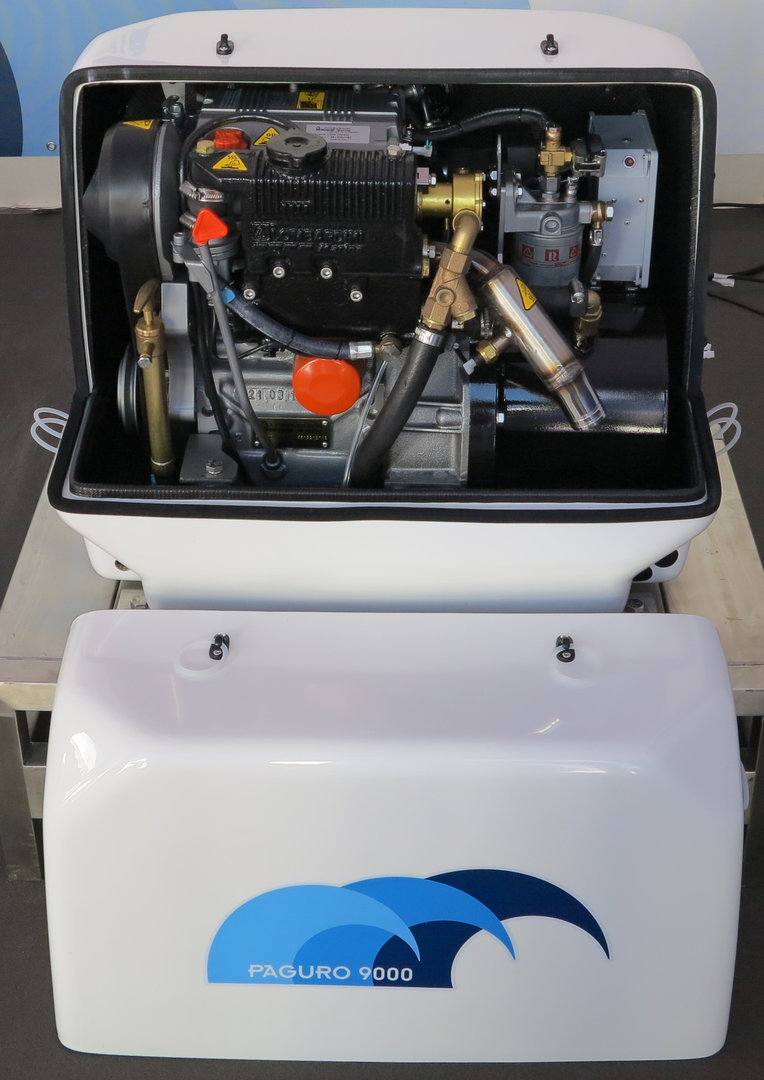
Paguro 4SY 3.5 kW: Compact Power for Smaller Boats
The Paguro 4SY 3.5 kW is a useful example of a compact marine generator for smaller vessels.
This type of generator suits buyers who need more than temporary power but still have limited installation space.
It can be appropriate for:
- Sailboats
- Small yachts
- Weekend cruisers
- Boats with moderate onboard loads
- Owners who value quieter operation
The key thing to remember is this:
Compact does not mean portable.
The Paguro 4SY belongs in the compact installed Paguro marine generators category.
That makes it a much better fit for regular onboard use than trying to treat a general-purpose portable generator as if it were a marine genset.
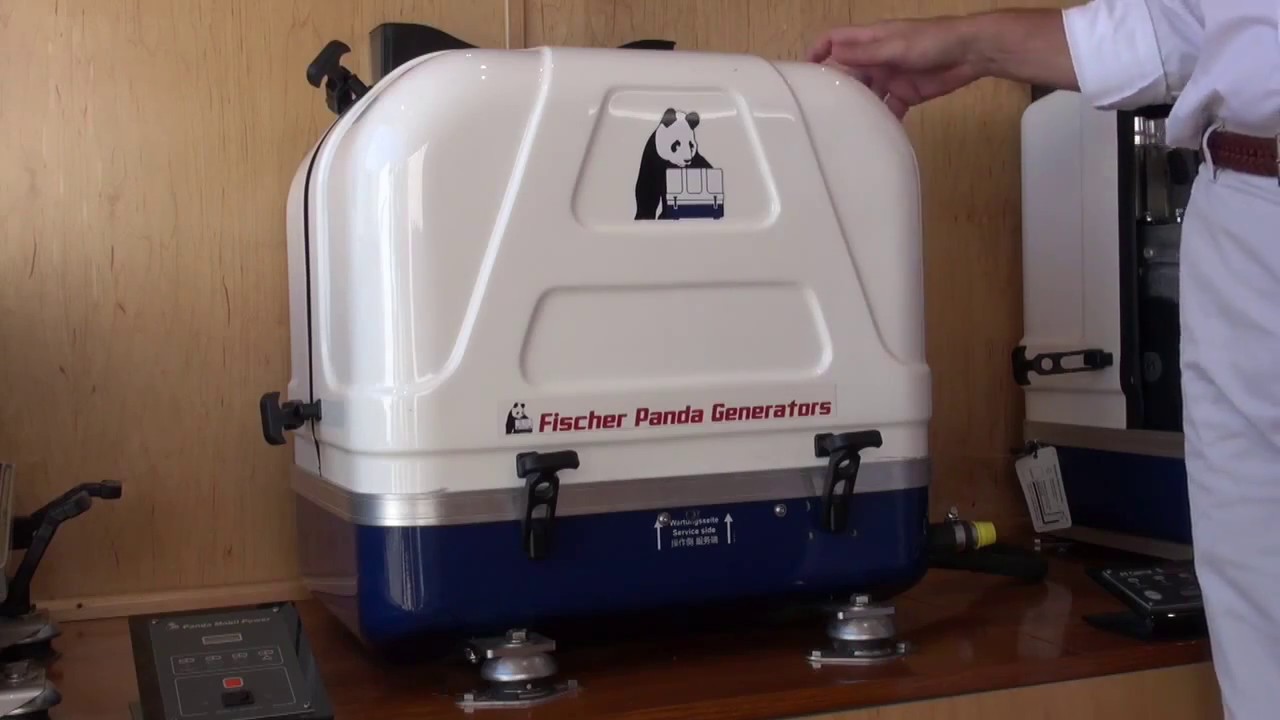
Fischer Panda Compact Marine Generators
Fischer Panda marine generators are especially relevant where space, sound, and weight matter.
Smaller Fischer Panda models can fit well into applications where owners need reliable onboard power but do not have room for a large conventional genset.
One model worth comparing is the Fischer Panda 5000i range.
This class of generator makes sense for buyers searching for:
compact marine generator for yacht
small diesel generator for boat
quiet marine generator for sailboat
Fischer Panda also offers larger units, which allows a buyer to move up in output without automatically jumping into a completely different generator architecture.
That matters because the correct answer is often not:
“Buy the biggest unit.”
It is:
“Buy the smallest unit that comfortably meets your actual load.”
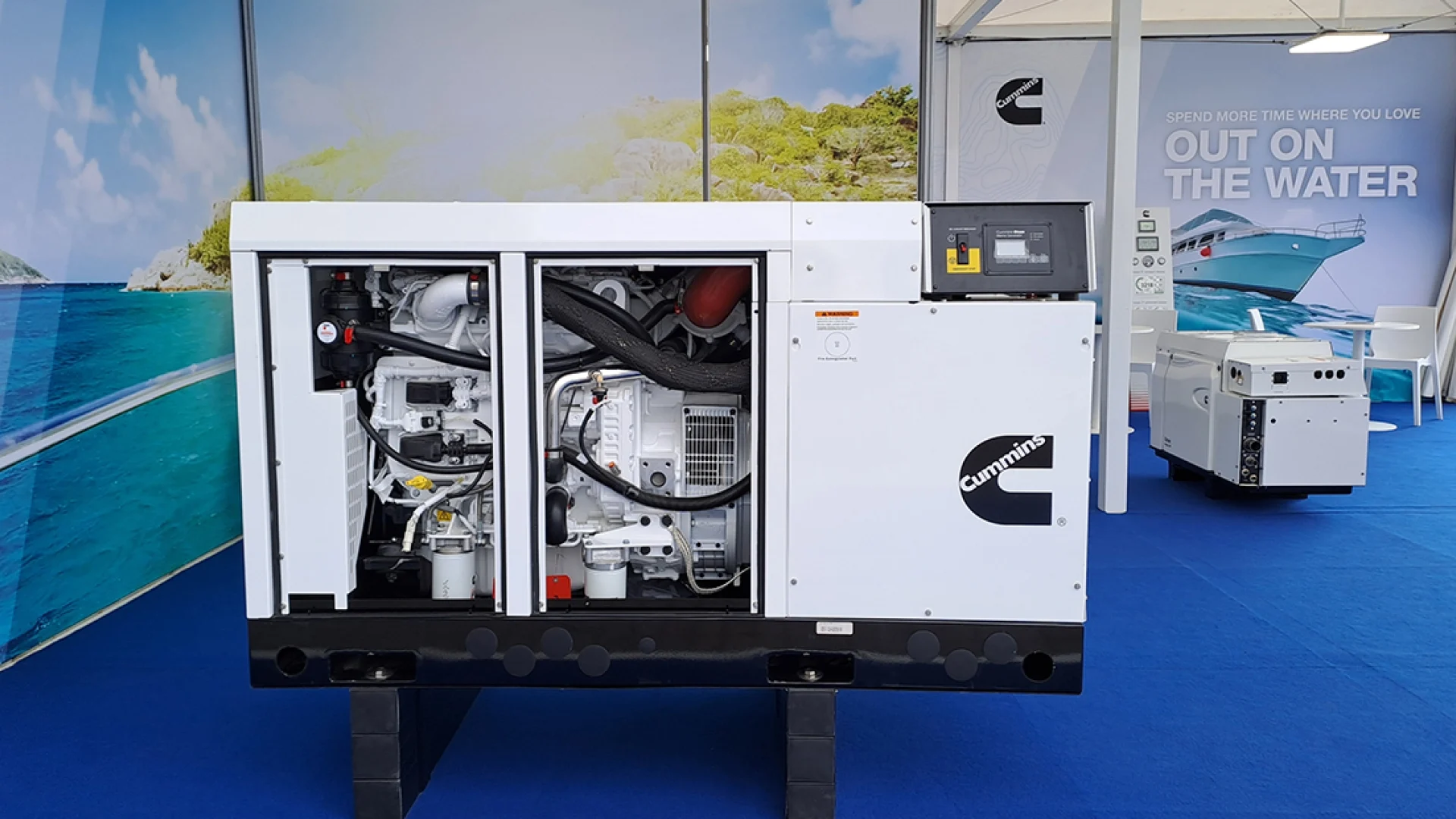
Cummins Onan Marine QD: When Portable Stops Making Sense
The Cummins Onan Marine QD range is where the conversation changes.
These are not conventional portable generators.
They are purpose-built installed marine gensets.
If your boat needs dependable power for:
- Multiple air conditioners
- Refrigeration
- Charging systems
- Galley equipment
- Water heaters
- Pumps
- Entertainment systems
- Commercial loads
then a proper installed generator may make more sense than trying to make a portable solution do a job it was never designed to do.
A model such as the Cummins Onan Marine QD 6MDKBJ gives buyers a useful step into lower-output installed marine power.
What matters most with Cummins Onan is the complete model and specification.
We do not recommend buying from the kW rating alone.
For example, if someone says:
“I need a 6 kW Onan.”
our response should be:
“Which voltage, frequency, phase, and spec?”
That one question can prevent a costly mistake.
Lombardini Marine Generators
Lombardini marine generators are another option worth comparing in the compact diesel segment.
These can appeal to boat owners looking for:
small diesel generator for boat
compact yacht generator
marine diesel generator for sale
The advantage of a broad generator range is that buyers can select around actual electrical demand rather than simply choosing between “tiny portable” and “oversized permanent generator.”
That middle ground is often where the best fit exists.
Vetus Marine Generators
The Vetus marine generator range is also worth considering for recreational and light commercial applications.
When evaluating Vetus or any compact marine genset, we recommend looking at the entire installation, not simply the advertised output.
Check:
- Generator dimensions
- Access dimensions
- Weight
- Cooling requirements
- Exhaust routing
- Voltage
- Frequency
- Phase
- Control system
- Service clearance
A generator that fits into the engine room but cannot be serviced afterward is not a good installation.
What Size Generator Do I Need for My Boat?
Sizing starts with the loads.
List every electrical device the generator may need to operate.
That might include:
- Refrigerator
- Freezer
- Battery charger
- Navigation equipment
- Lighting
- Pumps
- Microwave
- Coffee maker
- Water heater
- Watermaker
- Air conditioner
- Entertainment systems
- Tools
Then identify which loads are likely to operate simultaneously.
That is the number that matters.
Running Load vs Starting Load
Some equipment draws more power when it starts than after it is already running.
Air-conditioning compressors are a good example.
So if you are searching for a portable generator for boat air conditioner, the normal running wattage is not the only number you should care about.
You also need to consider startup demand.
The same applies to pumps, refrigerators, freezers, and other motor-driven equipment.
This is one of the most common reasons buyers undersize a generator.
The generator looks fine on paper.
Then a compressor starts.
And suddenly it is not fine anymore.
Can a Portable Generator Run Boat Air Conditioning?
Sometimes.
But it depends entirely on the air conditioner and the rest of the electrical load.
You need to know:
- Air-conditioner running load
- Startup demand
- Generator continuous output
- Generator surge capability
- Other simultaneous loads
- Voltage
- Frequency
If you have several air conditioners plus refrigeration, battery charging, pumps, and galley loads, you may quickly move beyond what a portable solution can realistically handle.
That is usually when a compact installed marine diesel generator becomes the better answer.
Can You Safely Use a Portable Generator on a Boat?
This is one section where we would rather be overly careful than overly promotional.
Any fuel-burning generator can create an exhaust hazard, which is why generator placement, exhaust management and ventilation should never be treated casually aboard a vessel. The CDC’s carbon monoxide boating safety guidance explains that boat engines and onboard generators can produce carbon monoxide and that CO can accumulate around areas of a vessel depending on exhaust location, airflow and operating conditions. Always follow the generator manufacturer’s instructions and applicable marine safety requirements.
Carbon monoxide is particularly dangerous because it is colorless and can accumulate in enclosed or poorly ventilated spaces.
A portable generator should never be operated in a cabin, engine room, enclosed cockpit, or any inadequately ventilated area.
Always follow the manufacturer’s operating instructions and applicable marine safety requirements.
This is one reason installed marine gensets exist.
They are engineered around a complete onboard system that can include:
- Controlled exhaust routing
- Cooling
- Fuel integration
- Fixed mounting
- Ventilation
- Electrical integration
Marine generator installation also sits within a broader framework of fuel, ventilation, electrical and carbon-monoxide considerations. Buyers and installers can consult the ABYC marine safety standards for the applicable technical standards and information reports covering areas such as gasoline and diesel ventilation, fuel systems and carbon monoxide.
A permanently installed system can be the better option when you need dependable onboard power regularly.
Gasoline vs Diesel Marine Generator
There is no universal winner.
Gasoline portable generators can suit certain limited applications.
Diesel generators are common on yachts and commercial vessels because many of those boats already use diesel propulsion.
Using the same general fuel type can simplify onboard fuel management.
Diesel marine gensets also tend to be used where longer operating hours and higher duty cycles are expected.
If you are looking for a portable diesel marine generator, make sure you confirm whether the product is truly portable or simply compact.
That distinction matters.
Portable Marine Generator vs Inverter Generator
A lot of buyers assume inverter equals marine.
It does not.
An inverter generator uses electronic power conversion and often adjusts engine speed according to load.
That can help with:
- Noise
- Fuel efficiency
- Electrical stability
But a general portable inverter generator does not automatically become suitable for marine use.
The marine environment brings additional concerns:
- Salt exposure
- Ventilation
- Exhaust
- Fuel storage
- Electrical integration
- Weather exposure
- Corrosion
- Mounting
So if you are comparing a portable inverter generator for boat use against a purpose-built marine generator, make sure you are comparing the intended application, not just the wattage.
50 Hz vs 60 Hz Marine Generators
Frequency is one of the easiest specifications to overlook.
It is also one of the most important.
If your vessel uses a 50 Hz electrical system, you need equipment that matches that requirement.
If it uses 60 Hz, you need a compatible configuration.
Do not assume two generators are interchangeable because they have the same output. Manufacturer specifications show why this matters. For example, the official Cummins Onan Marine QD specifications list individual generator configurations by frequency, voltage, amperage, output, phase and RPM. That is why we recommend confirming the complete electrical specification—not simply the advertised kW—before ordering a marine generator.
You also need to confirm:
- Voltage
- Frequency
- Phase
The four minimum electrical details we recommend checking are:
kW + voltage + frequency + phase
If you do not know those four, you are not ready to order.
That is not a problem.
It just means you need to verify the vessel first.
1500 RPM vs 1800 RPM
Traditional fixed-speed generators often use different operating speeds depending on frequency and alternator design.
But it is important not to turn that into a universal buying rule.
Some compact generators operate at other speeds.
Some modern systems use variable-speed technology.
So rather than asking:
“Is 1500 RPM better than 1800 RPM?”
ask:
“Is this generator engineered for the electrical system and duty cycle I need?”
That is a much better question.
Single Phase vs Three Phase
Smaller recreational vessels often use single-phase AC systems.
Larger yachts and commercial vessels may use three-phase equipment.
The generator phase must match the vessel’s electrical architecture.
Again, this is why buying only by kW is risky.
A generator can have the perfect output and still be completely wrong electrically.
Quiet Marine Generators: Why Noise Matters More Than You Think
Noise often feels unimportant while shopping.
Then you use the generator at anchor.
The propulsion engine is off.
The marina is quiet.
Everyone is trying to sleep.
Now you notice every vibration and every exhaust pulse.
That is why quiet marine generator for boat is such a common search.
Sound enclosures, vibration mounts, exhaust design, airflow, and installation quality all contribute to perceived noise.
Compact generator families such as Paguro and Fischer Panda are often compared by buyers who place a high value on noise control.
But the generator itself is only part of the equation.
Even a quiet generator can become unpleasant if installed badly.
Portable Generator vs Shore Power vs Installed Marine Genset
Each power source serves a different purpose.
Shore Power
Best when docked.
You get electrical power without running an onboard generator.
The obvious limitation is that it disappears when you leave the dock.
Portable Generator
Can work for limited temporary applications where safe operation and manufacturer requirements are satisfied.
Its biggest advantage is mobility.
Its biggest limitation is lack of integration with the vessel.
Installed Marine Generator
Best for regular onboard power.
It costs more to install, but it becomes part of the boat.
For serious cruising and commercial operation, that integration is often exactly what the owner needs.
New vs Used Marine Generator
A used marine generator for sale may look attractive.
Sometimes it is.
Sometimes the low purchase price hides expensive problems.
Before buying used, inspect:
- Running hours
- Service records
- Corrosion
- Cooling system
- Alternator output
- Fuel system
- Control system
- Storage history
- Water exposure
- Parts availability
The biggest advantage of new equipment is certainty.
You know the starting condition.
You know the specification.
You have documentation.
That matters when the generator may be responsible for essential onboard systems.
Common Mistakes We See Buyers Make
Calling Every Compact Generator Portable
This is probably the most common terminology mistake.
Small does not equal portable.
Buying Only by Price
A cheaper generator is not cheaper if it does not fit the vessel.
Buying Only by Wattage
Output is just one part of the specification.
Ignoring Starting Loads
This often causes undersizing.
Buying the Wrong Frequency
Always confirm 50 Hz or 60 Hz.
Forgetting Voltage
Do not assume.
Ignoring Phase
Especially important on larger systems.
Ignoring Dimensions
Measure the generator.
Then measure the access path.
Forgetting Service Clearance
A generator has to be maintained for years after installation.
Assuming Land-Based Equipment Is Marine Equipment
The marine environment is different.
Buying Before Confirming the Exact Model and Spec
This is where many avoidable problems begin.
Questions to Ask Before Buying
Before ordering a portable marine generator for sale online, ask:
- Is this actually portable?
- Is it designed for the intended marine application?
- What is the continuous output?
- What fuel does it use?
- What voltage?
- What frequency?
- What phase?
- What are the dimensions?
- What is the weight?
- What cooling system does it require?
- How is exhaust handled?
- What controls are included?
- What accessories are included?
- What warranty applies?
- What does the manufacturer require for installation or operation?
If the seller cannot answer those questions, that is a warning sign.
How to Choose a Generator From Power Engine Market
At Power Engine Market, our Marine Generators for Sale category includes options from:
- Cummins Onan Generators
- Fischer Panda Generators
- Paguro Generators
- Lombardini Marine Generators
- Vetus Marine Generators
These product families cover different vessel sizes, electrical loads, installation spaces, and operating requirements.
The best way to narrow your selection is to provide:
- Vessel type
- Electrical loads
- Required kW
- Voltage
- Frequency
- Phase
- Fuel preference
- Installation space
- Expected runtime
- Whether portability is genuinely required
If the correct answer is:
“You do not need a portable generator. You need a compact installed marine genset.”
we would rather tell you that before you spend money.
That is better for you.
And frankly, it is better business for us too.
Frequently Asked Questions
What is the best portable marine generator for a boat?
There is no single best option. The correct choice depends on load, voltage, frequency, fuel, available space, and whether the generator must truly be portable.
Is a compact marine generator the same as a portable generator?
No. Many compact marine generators are designed for permanent installation.
Can I use a portable generator on a boat?
Only when the manufacturer’s operating requirements and applicable safety rules are satisfied. Never operate a fuel-burning generator in an enclosed or poorly ventilated space.
Can a portable generator run boat air conditioning?
Possibly, but you need to account for both running load and compressor startup demand.
What size generator do I need for a small boat?
Calculate your simultaneous electrical loads and startup requirements. Do not rely on boat length alone.
Is diesel better than gasoline?
It depends on the vessel’s existing fuel system, expected runtime, power demand, and generator design.
What is a good quiet generator for a yacht?
Compact sound-shielded generator families such as Paguro and Fischer Panda are worth comparing when quiet operation is important.
What is the smallest diesel marine generator?
Small diesel gensets exist in low-kW ranges, including compact Paguro, Fischer Panda, Lombardini, and similar marine-generator families.
Do I need 50 Hz or 60 Hz?
You need the frequency required by your vessel’s electrical system.
Where can I buy marine generators online?
Power Engine Market offers a dedicated Marine Generators for Sale category with new marine generators for recreational, yacht, commercial, fishing, and offshore applications.
Final Verdict: Which Portable Marine Generator Should You Buy in 2026?
If you came here searching for a portable marine generator for sale, the best thing you can do is stop thinking about portability for a moment.
Start with your power requirement.
Ask:
What do I need to run?
How often will I run it?
What voltage does my boat use?
50 Hz or 60 Hz?
Single phase or three phase?
How much installation space do I have?
Is noise important?
What fuel is already onboard?
Do I genuinely need a portable unit?
A small-boat owner with modest temporary power requirements may need one solution.
A cruising yacht running air conditioning, refrigeration, battery chargers, pumps, and galley equipment may need something completely different.
For smaller installed applications, compact options from Paguro, Fischer Panda, Lombardini, and Vetus may deserve consideration.
For higher continuous loads, Cummins Onan Marine QD and larger marine-generator families may make more sense.
The best generator is not the one that appears first when you search “portable.”
It is the one that matches your vessel’s electrical system, load, fuel, space, duty cycle, and safety requirements.
That is the standard we recommend using at Power Engine Market.
Browse our Marine Generators for Sale collection or contact Power Engine Market with your vessel specifications so we can help narrow the available options before you order.
Next Post: Marine Generator Buying Guide With Prices: Best Models Compared


