

If you’re searching for a marine engine with fast start EFI technology for sale, you’re probably looking for more than an engine that simply has electronic fuel injection.
You want an engine that starts conveniently, delivers dependable power, fits your boat correctly, and makes sense for the way you actually use the vessel.
That is where marine engine buying gets interesting.
After years of working with marine propulsion buyers, one lesson consistently stands out: the best marine engine is not necessarily the engine with the highest horsepower or the lowest advertised price. It is the engine that is correctly matched to the boat, propulsion system, operating conditions, and owner’s priorities.
That is particularly important when comparing EFI marine engines.
Electronic fuel injection can offer precise electronic control of fuel delivery, but EFI alone does not tell you whether an engine is appropriate for your boat. Shaft length, weight, controls, starting system, horsepower, operating RPM, propeller selection, mounting requirements and manufacturer specifications still matter.
At Power Engine Market, our marine engine range includes outboard and inboard propulsion options from established manufacturers. Our inboard category, for example, covers engines intended for commercial vessels, yachts, workboats, fishing boats, patrol craft and passenger vessels, while our outboard range includes smaller recreational and utility applications.
So let’s approach this the way we would approach an actual engine purchase—not by chasing the biggest specification on the page, but by asking what the boat really needs.
What Is a Marine Engine With Fast Start EFI Technology?
EFI stands for Electronic Fuel Injection.
In a conventional carbureted engine, fuel is metered mechanically through the carburetor. An EFI system instead uses electronically controlled injectors and engine-management components to regulate fuel delivery.
That difference can be significant.
Modern EFI systems can use information from engine sensors and control modules to adjust fuel delivery according to operating conditions. The result is a more electronically managed fuel system than a traditional carbureted arrangement.
When someone searches for a fast start marine engine, however, there is an important distinction to make.
EFI does not automatically mean that every engine has identical starting characteristics.
The starting experience depends on the complete engine design, including the fuel system, electronic controls, ignition system, starter arrangement, battery or electrical requirements, engine temperature and condition.
For that reason, we recommend looking at the exact model specification rather than assuming that every engine marketed as EFI provides the same features.
How Electronic Fuel Injection Works
An EFI marine engine uses electronic controls to manage the quantity and timing of fuel delivered to the engine.
Depending on the engine design, the system can take information from sensors monitoring operating conditions and use that information to adjust fuel delivery.
That matters because an engine does not require exactly the same fuel-management strategy at idle as it does under heavy acceleration or sustained load.
Yamaha, for example, describes its Precision Multi-Point Electronic Fuel Injection systems as delivering the amount of fuel required for engine performance and efficiency, with EFI used across multiple outboard families.
The important point for a buyer is not simply that an engine has EFI.
The question is what the complete engine system offers.
What Buyers Usually Mean by “Fast Start”
Most people searching for a marine engine with fast starting technology aren’t interested in the technical terminology.
They want an engine that is convenient to start and ready to operate without unnecessary fuss.
That makes sense.
A fishing boat used several mornings a week, a tender that gets started repeatedly throughout the day, or a recreational boat used for short trips benefits from convenient engine operation.
Some manufacturers specifically promote starting characteristics alongside EFI. Yamaha, for example, states that its F30 and F40 combination of multi-point EFI and a vapor-reducing fuel-return system supports dependable starting in hot or cold conditions.
That is a useful example of why we prefer model-specific evidence over generic EFI claims.
Why Are Buyers Choosing EFI Marine Engines?
EFI has become a major feature in modern marine propulsion because it allows fuel delivery to be electronically controlled.
But the reason a buyer chooses EFI should depend on the application.
Starting Convenience
Starting is one of the most noticeable differences for many owners.
If your engine is used frequently, convenient starting can make the entire boating experience easier.
For smaller outboards in particular, manufacturers have developed EFI systems designed to simplify operation. Yamaha’s smaller F25 platform, for example, uses battery-less EFI on applicable models and specifically promotes easy starting as one of its features.
That is the kind of manufacturer-specific information worth checking when comparing engines.
More Controlled Fuel Delivery
EFI allows the engine’s control system to regulate fuel delivery electronically.
That can support consistent engine operation across different conditions.
However, don’t interpret this as a guarantee that every EFI engine will automatically consume less fuel than every carbureted engine.
Actual fuel consumption depends on the entire operating situation.
Boat weight, hull design, propeller selection, engine load, cruising speed, sea conditions and throttle position can all have a substantial effect.
Responsive Throttle Operation
A marine engine needs to respond predictably when the operator changes throttle position.
This becomes particularly noticeable when:
- Getting a boat onto plane
- Accelerating away from a dock
- Maneuvering in confined areas
- Changing cruising speed
- Carrying different loads
EFI can contribute to precise fuel management, but throttle response is ultimately a product of the engine’s complete design.
Yamaha’s current F75/F90 range, for example, combines multi-point EFI with intake-system design intended to support torque and acceleration.
Again, the lesson is simple: evaluate the complete engine rather than one technology label.
Best Marine Engines With EFI Technology to Consider
There is no single “best” EFI marine engine for every boat.
A 25 HP outboard and a 300 HP outboard may both use electronic fuel injection, but they serve completely different applications.
The better approach is to divide the market by vessel and operating requirements.
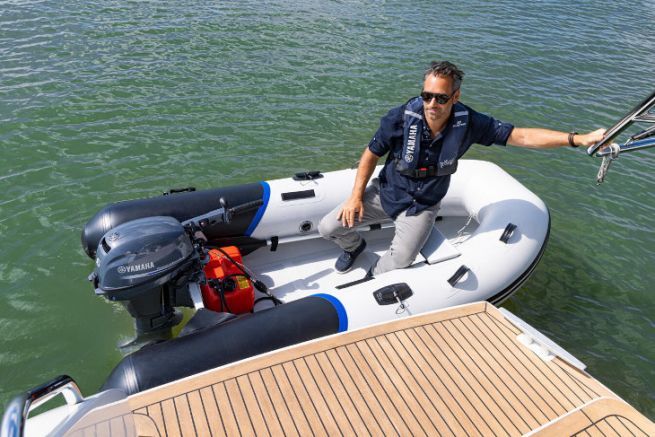
Smaller EFI Outboards
Smaller EFI outboards are commonly considered for:
- Fishing boats
- Tenders
- Dinghies
- Small recreational boats
- Utility vessels
- Lightweight craft
At this size, buyers should pay close attention to:
- Engine weight
- Shaft length
- Starting method
- Tiller versus remote control
- Charging capability
- Trim configuration
- Propeller options
For example, Yamaha’s 25 HP High Thrust outboard is specified with no-battery-required Electronic Fuel Injection, electric and manual starting, and 20- and 25-inch shaft options.
That is exactly why simply searching “25 HP EFI” isn’t enough.
Two engines can produce similar horsepower while having substantially different installation characteristics.
Mid-Range EFI Outboards
The 30–115 HP range covers a much broader collection of boats.
Applications can include:
- Center consoles
- Fishing boats
- Family boats
- Pontoons
- Utility craft
- Recreational vessels
Yamaha’s F30 and F40, for example, combine EFI with a three-cylinder configuration and features designed around starting, throttle control and fuel management.
At this level, weight becomes increasingly important.
A buyer repowering a lightweight hull may prefer a different engine than a buyer pushing a heavily loaded workboat.
Higher-Power EFI Outboards
Once you’re considering 150 HP, 200 HP, 250 HP, 300 HP or higher, the selection process becomes more involved.
Boat weight, hull design, transom rating, rigging, steering, propeller selection and intended cruising profile all become critical.
Yamaha’s current 150/200 HP inline-four range, for example, uses multi-point EFI and offers compatibility with different control and steering configurations depending on the model.
At this level, “more horsepower” is not a substitute for proper fitment.
EFI and Electronically Controlled Inboard Diesel Engines
Electronic fuel management isn’t limited to outboards.
Modern marine diesel engines also use sophisticated electronic control systems.
Power Engine Market’s current inboard inventory includes heavy-duty engines from manufacturers such as Baudouin, with examples ranging from large commercial propulsion packages to engines intended for demanding workboat, fishing and passenger-vessel applications.
These engines belong to a completely different category from portable EFI outboards.
For an inboard repower, the conversation must include the transmission, engine mounts, shaft alignment, cooling arrangement, exhaust, engine-room dimensions and propeller system.
That is why we don’t recommend choosing an inboard engine by horsepower alone.
How to Choose the Right EFI Marine Engine for Your Boat
Here’s the approach we recommend before you request a quote.
Start with the vessel.
Not the engine. Before ordering, compare the manufacturer’s published shaft length and engine specifications with the vessel’s actual installation requirements.
Identify the Boat
Collect:
- Make and model
- Length
- Approximate operating weight
- Maximum rated horsepower
- Current engine
- Number of engines
- Typical passenger or cargo load
- Primary use
If you’re replacing an existing engine, take photographs.
A photograph of the current engine’s identification plate can be particularly useful because model numbers often reveal information that a general description doesn’t.
Match Horsepower to the Vessel
Horsepower is important, but it has to be appropriate.
The boat manufacturer’s recommended or maximum horsepower rating should be one of the first specifications you check.
Do not assume that installing a more powerful engine automatically improves the boat.
The hull, transom and propulsion system were designed around particular operating requirements.
Verify Shaft Length
For outboards, shaft length is one of the easiest specifications to overlook.
A boat requiring a 25-inch shaft shouldn’t receive a 20-inch shaft simply because both engines produce the same horsepower.
Measure the transom correctly and compare it against the manufacturer’s installation requirements.
Check Engine Weight
Weight affects the boat.
A heavier engine can change transom loading and the boat’s balance.
This is particularly important when replacing an older engine with a modern model.
The question isn’t:
“Can I afford this engine?”
It is:
“Can my boat properly carry and operate with this engine?”
That is a much better question.
EFI Marine Engine Specifications Buyers Should Compare
Before buying an electronic fuel injection marine engine, compare the complete specification sheet.
Horsepower and RPM
Horsepower tells you the engine’s rated output.
RPM tells you the operating range associated with that output.
Both matter when considering propulsion matching.
Displacement
Two engines with similar horsepower can have different displacement, configurations and torque characteristics.
Don’t use displacement as a standalone measure of quality, but don’t ignore it either.
Engine Weight
Weight can affect installation and vessel balance.
Always compare the manufacturer’s published weight for the exact configuration you’re purchasing.
Shaft Length
For outboards, confirm the shaft length before ordering.
Starting System
This is particularly important when searching for a fast start EFI marine engine.
Don’t assume EFI means electric start.
Check the exact model.
Some engines offer electric starting, some offer manual starting, and some configurations offer both.
Controls
Determine whether the engine is designed for:
- Tiller operation
- Remote mechanical controls
- Electronic controls
- A manufacturer-specific control system
Compatibility matters during repower projects.
Trim and Tilt
For outboards, check whether the exact configuration includes power trim and tilt, manual trim, or another arrangement.
Fuel System
Verify the engine’s fuel requirements and fuel-system configuration.
Propeller
The engine and propeller need to work together.
Propeller pitch and diameter influence engine RPM, acceleration and load.
A correctly specified engine can still perform poorly if the propeller is inappropriate.
EFI Marine Engine vs. Carbureted Marine Engine
The EFI-versus-carburetor question comes up frequently.
There isn’t a universal answer that makes one system correct for every application.
Where EFI Has an Advantage
EFI can offer:
- Electronic fuel management
- Convenient starting characteristics
- Modern engine control
- Precise fuel delivery
- Integrated electronic monitoring on applicable systems
Where Simplicity May Matter
Carbureted systems can appeal to owners who value mechanical simplicity and are familiar with traditional fuel systems.
The choice depends on the engine, boat, application and maintenance resources available to the owner.
For a new repower, however, EFI is often attractive because it is integrated into many current marine engine platforms.
The important thing is not to buy EFI simply because it sounds more advanced.
Buy it because the specific EFI engine fits the boat and provides the operating characteristics you need.
What to Check Before Buying a Marine Engine With Fast Start EFI Technology
Before placing an order, verify these details.
Exact Model Number
Never rely solely on a product title such as “100 HP EFI.”
The exact model can determine shaft length, controls, starting system, trim configuration and other specifications.
Manufacturer Specifications
Use the manufacturer’s documentation for final technical verification.
This is especially important when a product name contains marketing terminology such as “fast start.”
If the manufacturer has a specific technology or feature by that name, verify what it actually means for the exact model.
Fitment
Confirm:
- Horsepower
- Weight
- Shaft length
- Mounting arrangement
- Controls
- Steering
- Electrical connections
- Fuel requirements
Included Equipment
Don’t assume that everything shown in a product photograph is included.
Ask whether the quoted engine includes:
- Propeller
- Controls
- Rigging
- Harness
- Gauges
- Mounting hardware
- Remote control components
- Other accessories
The exact inclusions depend on the product.
Warranty
Review the warranty applicable to the exact manufacturer and model.
Warranty coverage should never be inferred from another engine in the same brand family.
New vs. Used EFI Marine Engines
When price becomes the deciding factor, buyers often start looking at used engines.
That can make sense in certain circumstances, but you need more information.
Why New Engines Can Be Attractive
A new engine gives you a known configuration and, where applicable, manufacturer-backed warranty coverage.
Power Engine Market’s inboard category currently states that its listed inboard marine engines are supplied as new units and supported by manufacturer-backed warranty coverage according to applicable brand and model terms.
That predictability can matter considerably during a repower.
What to Ask About a Used EFI Engine
If you’re considering used equipment, investigate:
- Engine hours
- Service history
- Previous application
- Corrosion exposure
- Maintenance records
- Diagnostic information
- Reason for removal
- Exact model number
- Included components
A used engine isn’t necessarily a bad engine.
An undocumented used engine is simply a higher-information-risk purchase.
How Much Does an EFI Marine Engine Cost?
The price of an EFI marine engine for sale varies dramatically.
A compact outboard and a heavy-duty commercial diesel engine aren’t remotely comparable purchases.
Even within the same horsepower class, pricing can vary because of:
- Manufacturer
- Displacement
- Configuration
- Shaft length
- Starting system
- Controls
- Trim system
- Accessories
- Availability
- New or used condition
For example, current Power Engine Market inventory spans from smaller outboards to large inboard marine diesel packages, illustrating why a single “EFI marine engine price” isn’t particularly useful without knowing the application.
Compare Total Project Cost
Don’t stop at the engine price.
Your actual project can include:
Engine + controls + rigging + propeller + installation + accessories + shipping
For an inboard repower, the list may also include:
Engine + marine gearbox + mounts + alignment + exhaust + cooling connections + installation
That is the number worth comparing.
Shipping an EFI Marine Engine
Marine engines are heavy mechanical equipment, so transportation needs to be planned accordingly.
Shipping cost can depend on:
- Weight
- Package dimensions
- Origin
- Destination
- Packaging
- Freight method
- Delivery requirements
Power Engine Market’s inboard category states that worldwide shipping and export documentation assistance are available for international buyers.
For international orders, don’t wait until the engine is ready to ship before asking about documentation.
Confirm the delivery destination, packaging, freight arrangements and applicable import requirements early in the purchasing process.
That reduces the chance of a last-minute surprise.
Common Mistakes Buyers Make With EFI Marine Engines
Choosing the Highest Horsepower
The largest engine isn’t automatically the best engine.
Match output to the vessel.
Treating EFI as a Complete Performance Specification
EFI tells you about fuel delivery technology.
It doesn’t tell you everything about horsepower, torque, weight, starting, controls or installation.
Ignoring Engine Weight
A powerful engine that is too heavy for the application is not an upgrade.
Forgetting Shaft Length
This can turn a seemingly good outboard purchase into an installation problem.
Ignoring the Propeller
The engine generates power.
The propeller converts that power into thrust.
Both need to work together.
Assuming Accessories Are Included
Always confirm what comes with the exact product.
Buying Before Confirming Fitment
This is the mistake we most strongly encourage buyers to avoid.
If you can provide the current engine model, boat model, shaft length and photographs before ordering, the purchasing conversation becomes much more precise.
Why Power Engine Market Takes a Fitment-First Approach
Marine engines are not universal replacement parts.
The same horsepower can be used in very different vessels, and two engines with similar output can have very different installation requirements.
That is why Power Engine Market‘s marine engine range is organized across different propulsion categories and manufacturers rather than treating every engine as interchangeable. The current inboard catalog, for example, includes applications ranging from recreational vessels to commercial and industrial marine operations.
For buyers, that means the conversation should begin with the vessel.
Tell us what you’re replacing.
Tell us what you’re powering.
Tell us where the engine is going.
Then we can narrow the product search around the specifications that actually matter.
Frequently Asked Questions
What is a marine engine with fast start EFI technology?
It generally refers to a marine engine using electronic fuel injection with an emphasis on convenient starting. However, “fast start” should be verified against the exact manufacturer’s specifications because EFI itself does not define every starting-system feature.
Are EFI marine engines easier to start?
EFI can provide electronically controlled fuel delivery that supports convenient starting, but starting performance depends on the complete engine design, starting system, electrical condition, fuel system and operating conditions.
Is EFI better than a carburetor?
EFI offers electronic fuel management and is standard across many modern marine engine platforms. However, the best system depends on the specific vessel, application and owner’s requirements.
Do EFI marine engines save fuel?
EFI can support precise fuel management, but actual fuel consumption depends on the engine, boat, load, propeller, speed, hull design and operating conditions.
What horsepower EFI marine engine do I need?
Start with your boat manufacturer’s recommended horsepower range. Then consider vessel weight, passenger load, intended use, hull design and operating conditions.
Can I replace a carbureted marine engine with an EFI engine?
A replacement may be possible, but it should be treated as a complete repower evaluation. Controls, electrical systems, fuel delivery, mounting, steering, exhaust, cooling and other components may need to be compatible.
Does EFI mean electric start?
No. EFI and electric starting describe different systems. Always check the starting system listed for the exact engine model.
What should I check before buying an EFI marine engine?
Verify the exact model, horsepower, RPM, weight, shaft length, controls, starting system, fuel requirements, propeller compatibility, installation requirements, warranty and shipping arrangements.
Where can I buy a marine engine with fast start EFI technology?
Power Engine Market offers marine propulsion equipment across outboard and inboard categories. The appropriate model should be selected based on the boat’s specifications, intended use and the exact manufacturer’s configuration.
Find the Right Marine Engine With Fast Start EFI Technology
A good marine engine purchase starts with a simple principle:
Don’t buy the engine first. Define the application first.
Know your boat.
Know your current engine.
Know your horsepower requirements.
Know your shaft length.
Know your controls.
Know your operating conditions.
Then compare the engines that actually fit those requirements.
If you’re looking for a marine engine with fast start EFI technology for sale, Power Engine Market can help you narrow the options across its marine propulsion range.
Whether you’re replacing a small outboard, upgrading a fishing boat, repowering a recreational vessel, or sourcing a larger inboard diesel engine, provide the vessel and existing-engine details before you order.
Because the smartest marine engine purchase isn’t the one with the most impressive specification sheet.
It’s the one that fits the boat, performs the job, and makes sense for the way you’ll actually use it.
Next Post: Marine Engine Shipping to Europe for Sale: Best Engines & Shipping Guide


