

Buying a marine engine for delivery to Europe is a much bigger decision than choosing a horsepower number from an online catalog.
The engine has to suit the vessel. The RPM has to work with the propulsion system. The transmission needs to handle the engine’s output. The physical dimensions have to make sense for the engine room. And once you are buying internationally, the shipping, documentation, customs and destination requirements become part of the project too.
That is why buyers searching for marine engine shipping to Europe for sale should look beyond the product price.
At Power Engine Market, we supply new marine engines across a range of manufacturers and power classes, including Cummins, Yanmar, Volvo Penta, Baudouin, FPT, Perkins and Vetus. Our inboard marine engine category is intended for applications including yachts, fishing vessels, workboats, patrol craft, commercial vessels and other marine propulsion projects. We also provide worldwide shipping and export-documentation assistance for international buyers.
The right way to approach an international marine-engine purchase is straightforward:
Identify the vessel requirement → select the appropriate engine → verify the drivetrain → confirm installation requirements → calculate the shipping and import picture → place the order.
Skip those steps and a seemingly simple engine purchase can turn into an expensive repower problem.
This guide explains how we recommend approaching the process.
Why European Buyers Look Beyond Local Marine Engine Suppliers
A marine engine is not an ordinary replacement component.
If you need a specific engine model, horsepower rating, RPM range or configuration, local availability may be limited. International sourcing can open up a much wider selection.
For example, Power Engine Market’s current inboard catalog covers multiple marine-engine manufacturers and configurations rather than limiting buyers to a single brand.
That matters when a vessel is being repowered.
You may be replacing an older engine that is no longer supported, looking for additional power, moving to a newer electronic engine, or sourcing a propulsion package for a new vessel build.
International Sourcing Gives You More Models to Compare
A European buyer might be comparing:
- Cummins marine diesel engines
- Yanmar marine engines
- Volvo Penta marine engines
- Baudouin marine engines
- FPT marine engines
- Perkins marine engines
- Vetus marine engines
These manufacturers cover very different power classes and applications.
The objective isn’t to determine which brand is universally “best.”
The objective is to determine which specific engine and configuration makes sense for your vessel.
The Cheapest Engine Is Not Necessarily the Cheapest Repower
This is one of the most important points in marine-engine purchasing.
Suppose one engine has a lower purchase price but requires substantial changes to:
- Engine mounts
- Exhaust
- Cooling
- Controls
- Wiring
- Transmission
- Shaft alignment
Another engine might cost more initially but require fewer changes.
The second engine may ultimately be the more economical project.
That is why we recommend evaluating total project cost, not just the number shown beside the engine.
What Marine Engines Can Be Shipped to Europe?
The phrase “marine engine” covers a huge range of equipment.
A 40 HP auxiliary diesel for a sailboat is obviously different from a 550 HP propulsion engine for a larger sportfishing boat or commercial vessel.
Power Engine Market’s current inboard category includes engines intended for different vessel types and operating requirements, with products ranging from lower-power marine propulsion systems through substantially larger commercial engines.
Inboard Marine Diesel Engines
An inboard marine diesel engine is installed within the vessel and normally connects to a marine transmission or gearbox and then to the propulsion system.
That means the engine cannot be selected in isolation.
The engine’s:
- Horsepower
- RPM
- Torque
- Mounting
- Dimensions
- Cooling system
- Exhaust arrangement
- Electrical system
- Controls
all need to work with the installation.
For that reason, an inboard marine engine for European delivery should be selected based on the complete propulsion system.
Marine Engines for Repower Projects
Repowering is one of the most common reasons buyers search for marine diesel engines for sale in Europe.
The old engine may have reached the end of its useful life, become difficult to service, or simply no longer provide the performance required by the vessel.
A repower can also be an opportunity to modernize the vessel.
However, replacing an engine is rarely as simple as removing one unit and dropping another into the same space.
Before ordering, compare the old and new engine’s:
Power → RPM → dimensions → mounting → transmission → cooling → exhaust → controls
That comparison should happen before the engine is shipped.
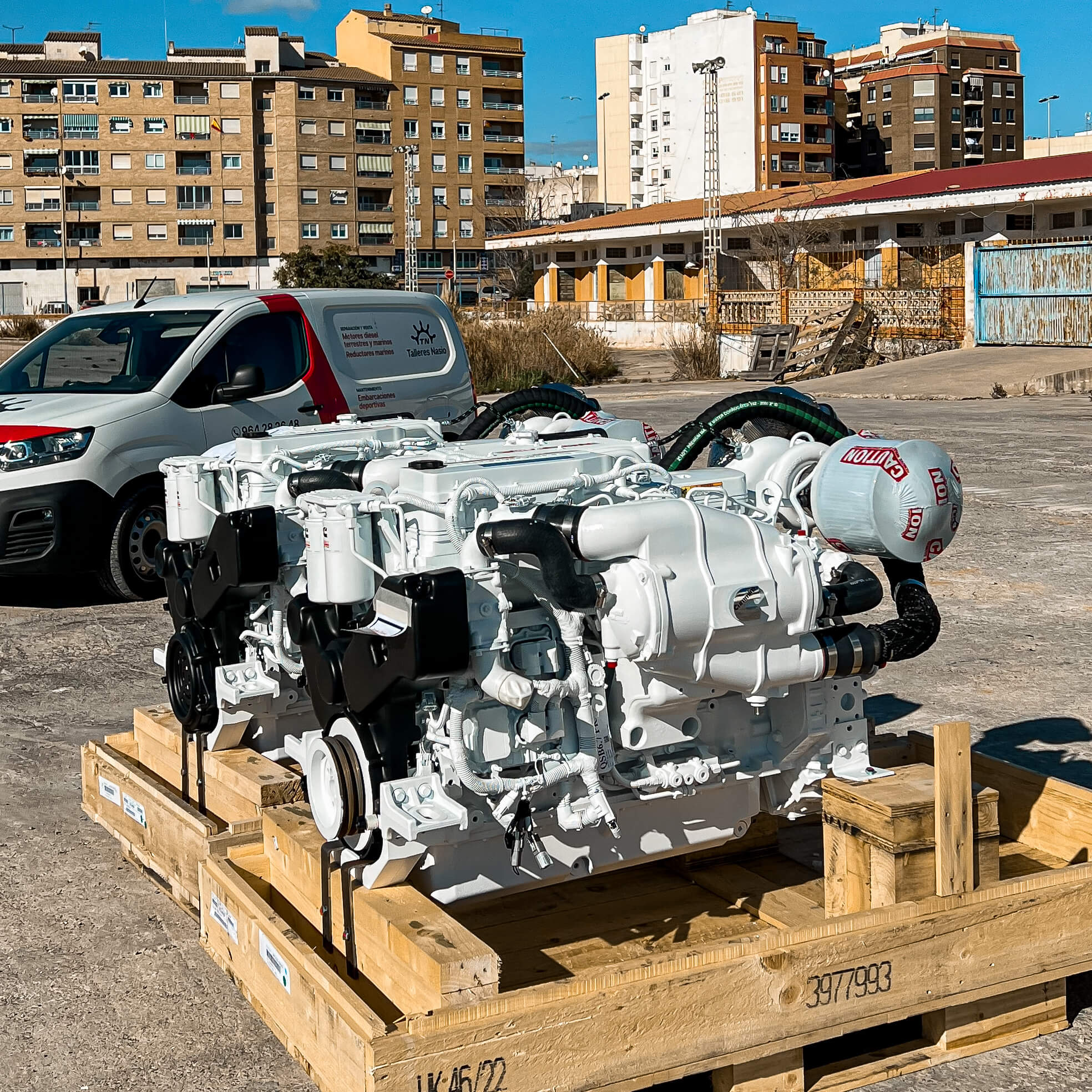
Best Marine Engine Brands to Consider for European Buyers
There is no single marine engine that is best for every vessel.
A 100 HP workboat does not need the same engine as a 550 HP sportfishing boat, and a commercial vessel operating thousands of hours annually has different requirements from a recreational cruiser.
Instead of choosing by brand reputation alone, start with the application.
Cummins Marine Engines
Cummins is one of the major marine-engine manufacturers represented in the Power Engine Market catalog.
The current Cummins QSB 6.7 category includes multiple horsepower configurations, including 250 HP, 305 HP, 330 HP, 355 HP, 380 HP, 425 HP, 480 HP and 550 HP listings.
That range illustrates an important purchasing principle.
Even within the same engine family, the correct horsepower configuration depends on the vessel and propulsion requirements.
Cummins QSB6.7 550HP Marine Diesel Engine
One example is the Cummins QSB6.7 550HP Marine Diesel Engine, currently listed by Power Engine Market at $42,088 and shown as in stock at the time of the current product-page crawl.
The product is described for inboard propulsion applications including sportfishing boats, cruisers, commercial vessels, patrol boats and repower projects.
The listed price is useful for understanding the current product range, but it should not be treated as a guaranteed landed price for Europe.
A European buyer still needs to account for freight and any applicable destination-related costs.
More importantly, 550 HP alone does not prove that the engine will fit your vessel.
Before purchasing, confirm:
- Rated RPM
- Engine dimensions
- Mounting arrangement
- Transmission compatibility
- Cooling arrangement
- Exhaust requirements
- Controls
- Electrical configuration
- Duty rating
- Included accessories
Power Engine Market specifically advises buyers to confirm the final configuration, duty rating, controls, cooling setup, gearbox and included accessories before purchase.
That is exactly the kind of information we want to establish before an international shipment begins.
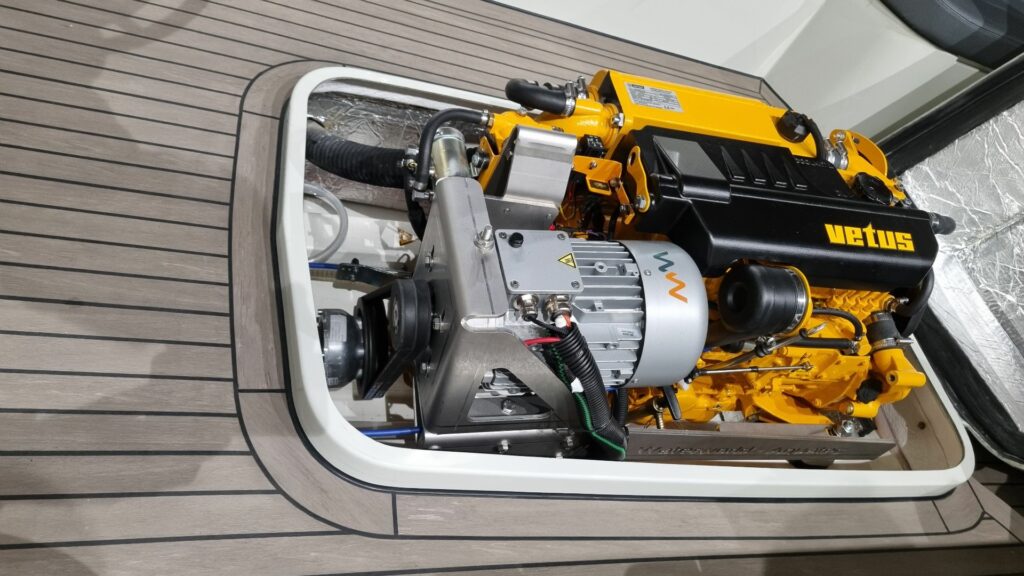
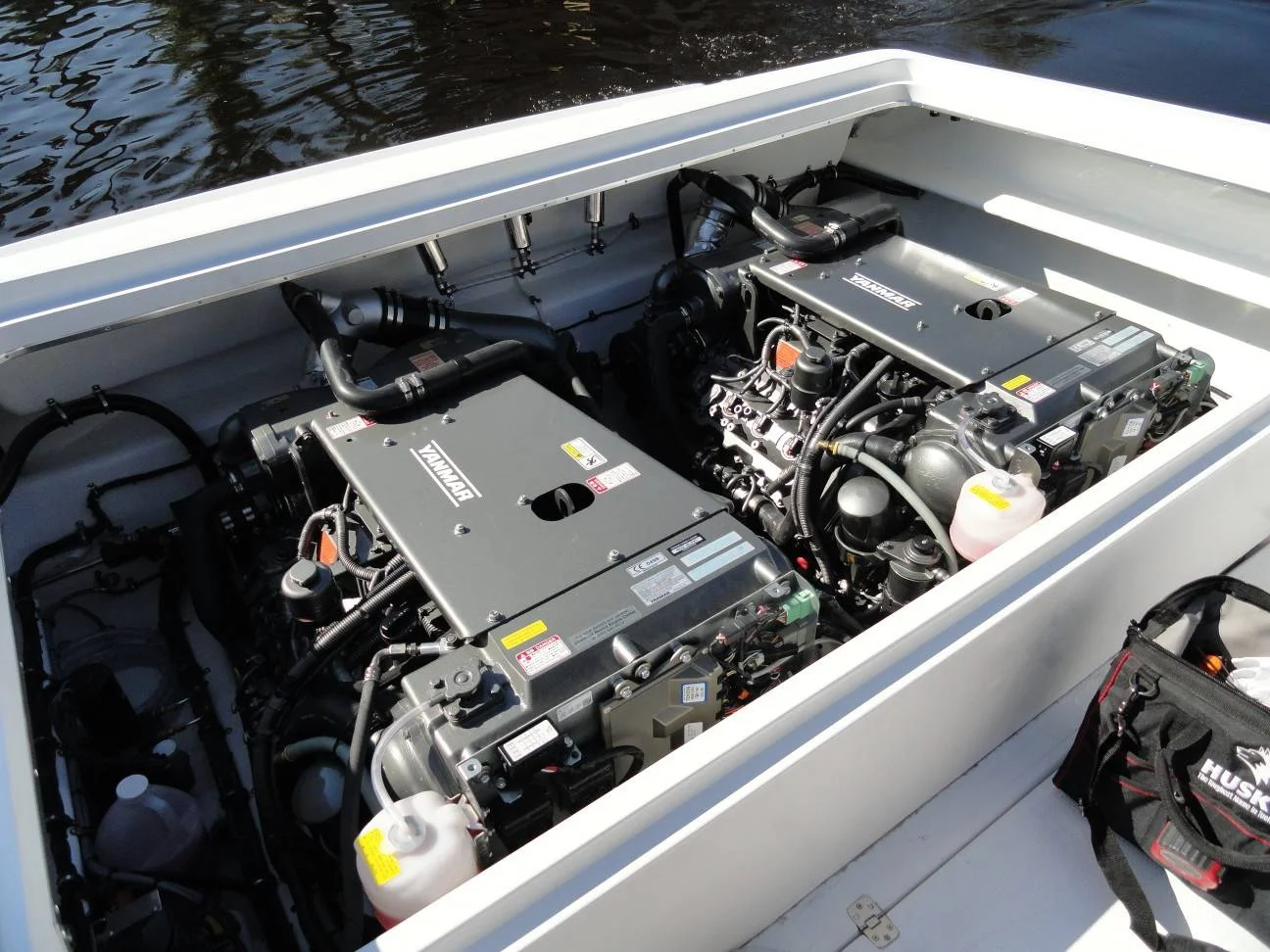
Yanmar Marine Engines
Yanmar is another major marine-engine category available through Power Engine Market.
Yanmar engines span different vessel and power requirements, so buyers should avoid searching simply for “a Yanmar.”
Instead, identify the exact model or provide enough vessel information to narrow down the appropriate model.
For a buyer searching for a Yanmar marine engine shipped to Europe, useful information includes:
- Current engine model
- Required horsepower
- Rated RPM
- Vessel type
- Transmission
- Installation dimensions
- Intended operating profile
Volvo Penta Marine Engines
Volvo Penta is another significant category for marine propulsion.
The Power Engine Market catalog includes Volvo Penta marine engine configurations, giving buyers an option when considering new propulsion equipment or a repower.
When evaluating a Volvo Penta replacement, the same principle applies:
Match the complete propulsion arrangement—not simply the horsepower.
Baudouin Marine Engines
Baudouin becomes particularly relevant when the project requires higher-power marine propulsion.
Power Engine Market’s current catalog includes Baudouin models such as the 4W105M, 6M16, 6M19.3, 6M26.2, 6M26.3, 6M33.2, 12M26.2 and 12M26.3 across different power ranges.
For larger commercial vessels, this type of range allows buyers to consider substantially different propulsion requirements.
However, selecting a high-horsepower engine requires more than checking maximum output.
You should also evaluate:
- Vessel displacement
- Propeller requirements
- Gearbox ratio
- Shaft speed
- Duty cycle
- Cooling
- Installation space
- Fuel requirements
- Service access
FPT, Perkins and Vetus Marine Engines
Power Engine Market also carries marine-engine categories from manufacturers including FPT, Perkins and Vetus.
These give buyers additional choices when the vessel’s requirements do not point specifically toward Cummins, Yanmar, Volvo Penta or Baudouin.
The right decision should be based on the actual project rather than choosing the brand with the most familiar name.
How to Choose the Right Marine Engine Before Shipping It
This is where a good marine-engine purchase begins.
Before we discuss freight, we need to know what is being shipped.
And before we know what is being shipped, we need to know what the vessel requires.
1. Identify the Existing Engine
If you’re replacing an existing engine, start with the identification plate.
Record:
- Manufacturer
- Model
- Serial number
- Horsepower
- Rated RPM
- Engine family
- Transmission model
Take photographs.
A clear photograph of the identification plate can be extremely useful when discussing a replacement.
Also photograph the engine compartment from several angles.
2. Determine the Required Horsepower
Horsepower is important, but don’t use it as the only selection criterion.
A vessel’s required power depends on factors such as:
- Hull design
- Displacement
- Propeller
- Gearbox
- Intended cruising speed
- Operating conditions
- Vessel load
- Duty cycle
A commercial workboat that operates under heavy load requires a different analysis from a recreational boat that operates intermittently.
3. Check Engine RPM
RPM is often overlooked by inexperienced buyers.
That can be a serious mistake.
The engine’s operating speed interacts with the marine transmission and propeller.
If you install a different engine with a different rated RPM, the existing gearbox and propeller arrangement may no longer be appropriate.
That’s why marine engine and gearbox compatibility should be confirmed before ordering.
4. Measure the Engine Room
Measure the actual installation space.
At minimum, check:
- Engine length
- Engine width
- Engine height
- Mounting points
- Engine-bed dimensions
- Front and rear clearance
- Top clearance
- Side access
- Service access
Also think about how the engine will physically enter the vessel.
A technically suitable engine is not useful if you cannot get it through the vessel’s access opening.
5. Check the Transmission
The gearbox is not simply an accessory attached to the engine.
It is part of the propulsion system.
Power Engine Market also supplies marine gearboxes and transmissions, including categories from Advance, Technodrive, Volvo Penta, Yanmar and ZF.
When evaluating the gearbox, consider:
- Horsepower rating
- Torque capacity
- Reduction ratio
- Input speed
- Rotation
- Output configuration
- Coupling
- Mounting
- Cooling
- Shaft alignment
If you’re retaining the existing gearbox, compatibility should be confirmed before ordering the replacement engine.
Why Engine RPM and Gearbox Ratio Matter So Much
Imagine two engines that both produce approximately the same horsepower.
That does not mean they can necessarily use the same gearbox and propeller arrangement.
The engine delivers power at a particular speed.
The gearbox changes that speed before the power reaches the propeller shaft.
The propeller then converts shaft power into thrust.
So the basic relationship is:
Engine → Gearbox → Shaft → Propeller → Thrust
Changing one part can affect the others.
This is why a marine repower should be treated as a propulsion-system project.
A buyer who provides the engine model, gearbox model, reduction ratio and propeller information gives a supplier much more useful information than someone who simply provides horsepower.
Marine Engine Shipping to Europe: What Buyers Need to Know
Once the engine has been selected, the international shipping side begins.
Power Engine Market states that worldwide shipping and export-documentation assistance are available for international buyers.
But international marine-equipment freight is not the same as shipping a small consumer product.
The engine’s weight, dimensions, packaging, origin, destination and delivery requirements all matter.
Engine Weight and Dimensions Affect Freight
A compact marine engine may be handled very differently from a large commercial propulsion engine.
For a shipping quotation, the supplier needs accurate information about:
- Engine weight
- Packaging dimensions
- Crate or pallet requirements
- Origin
- Destination
Don’t use an approximate engine weight if an exact shipping specification is available.
Provide the Complete European Destination
If you are requesting marine engine shipping to Europe, provide:
- Country
- City
- Postal code
- Delivery address
- Commercial or residential status
- Port information if relevant
Shipping to a commercial facility with unloading equipment can be a different logistical situation from delivery to a residential location without appropriate lifting equipment.
Ask What the Freight Quote Includes
This is one of the questions we recommend asking before payment.
A quotation should be clear about the shipping scope.
Depending on the transaction, ask whether the quoted amount covers:
- Export handling
- Packaging
- Freight
- Port charges
- Delivery
- Insurance
- Destination handling
- Customs-related services
Never assume that one supplier’s definition of “shipping included” is identical to another’s.
How Much Does Marine Engine Shipping to Europe Cost?
There is no honest one-size-fits-all answer.
A small diesel engine shipped to one European destination can have a completely different freight cost from a large commercial engine shipped to another.
Your marine engine shipping cost to Europe can be influenced by:
1. Engine Weight
Heavy equipment generally requires more substantial freight handling.
2. Package Dimensions
The size of the shipment affects freight planning in addition to its weight.
3. Shipping Origin
The dispatch location influences the available freight routes and cost.
4. European Destination
The destination country, city, port and final delivery location matter.
5. Packaging
Large marine engines may require specialized packaging, crating or securing for transport.
6. Delivery Method
Port delivery and final-mile delivery can involve different arrangements.
7. Customs and Destination Charges
These should not automatically be assumed to be included in the freight quotation.
The best way to obtain a useful marine engine shipping quote to Europe is therefore to provide the exact engine and the exact destination.
Understanding the Total Landed Cost
When evaluating a marine engine purchase, think beyond the product page.
A useful framework is:
Engine price + freight + applicable import charges + destination costs + installation
The exact costs depend on the transaction.
For example, Power Engine Market currently lists the Cummins QSB6.7 550HP marine diesel engine at $42,088.
That is the listed product price—not automatically the final amount a European buyer will pay after freight, customs, taxes and installation.
This distinction prevents a common purchasing mistake.
A buyer sees the engine price, calculates the budget, and then discovers additional costs later.
A better approach is to establish the expected total project cost before committing.
Importing a Marine Engine Into the European Union
International marine-engine buyers should also understand what happens when the equipment enters the EU.
The European Commission’s Access2Markets guidance explains that businesses importing goods into the EU should check applicable tariffs, taxes, import procedures, product requirements and documentation before arranging the shipment.
That is particularly important for commercial buyers.
Customs Duties and Import Taxes
VAT applies to goods imported into the EU, with the rate depending on the Member State and the applicable circumstances. Access2Markets notes that import VAT is generally paid by the importer and that its calculation can take the value of the goods and applicable duties into account.
That means the advertised marine-engine price should not automatically be treated as the buyer’s final landed cost.
Product Requirements
The European Commission also advises importers to identify applicable health, safety, environmental and technical requirements and ensure that products meet the requirements applicable to the market where they are placed.
For marine engines, the exact regulatory situation depends on the engine, vessel, intended use and applicable legislation.
For certain recreational craft and propulsion engines, EU recreational craft and propulsion engine requirements cover areas including exhaust emissions and noise emissions.
This is why buyers should not assume:
“It is a marine engine, so it must automatically meet every European requirement.”
Instead, determine which rules apply to the particular vessel and engine before purchase.
Customs Documentation
EU customs documentation requirements can include commercial invoices, transport documents, certificates of origin where applicable, import licences where required, and the import declaration, depending on the shipment.
The exact documentation depends on the shipment.
For that reason, commercial buyers should coordinate with their customs representative when they are uncertain about classification, documentation or destination requirements.
What European Buyers Should Prepare Before Ordering
If you want to make the purchasing process efficient, prepare your information before contacting the supplier.
Engine Information
Provide:
- Current engine manufacturer
- Exact model
- Serial number
- Horsepower
- Rated RPM
- Number of engines
Vessel Information
Provide:
- Vessel type
- Vessel length
- Approximate displacement
- Single or twin engine
- Recreational or commercial use
- Typical operating profile
Drivetrain Information
Provide:
- Transmission manufacturer
- Transmission model
- Reduction ratio
- Shaft diameter
- Propeller specifications, if available
Installation Information
Provide:
- Engine-bed measurements
- Mounting locations
- Available engine-room space
- Exhaust arrangement
- Cooling arrangement
- Electrical configuration
Shipping Information
For marine engine shipping to Europe, provide:
- Country
- City
- Postal code
- Full delivery address
- Commercial or residential destination
- Port details, if applicable
And send photographs whenever possible.
A photograph of the engine identification plate plus several photographs of the installation can answer questions that a short written description cannot.
New Marine Engines vs Used Marine Engines
When researching marine engines for sale in Europe, buyers will encounter new, used and remanufactured equipment.
Those categories should not be treated as interchangeable.
Power Engine Market’s current inboard-engine category states that the engines listed there are supplied as new units. The category also states that eligible engines are supported by manufacturer-backed warranty coverage depending on the brand and model.
That gives buyers a different starting point from an unknown used engine.
Why the Condition of the Engine Matters
With a used engine, buyers may need to investigate:
- Operating hours
- Maintenance history
- Previous vessel
- Previous duty cycle
- Corrosion
- Cooling-system condition
- Compression
- Oil condition
- Service records
- Previous repairs
With new equipment, the purchasing discussion can instead focus on the exact factory configuration, compatibility, warranty eligibility and installation requirements.
Neither category should be purchased blindly.
The important thing is knowing exactly what you are buying.
Marine Engine Shipping Mistakes That Can Become Expensive
Choosing Horsepower Without Checking RPM
Two engines with similar horsepower can have different operating characteristics.
Always check the complete specification.
Assuming the Existing Gearbox Will Fit
It might.
But it should be verified.
The transmission must be compatible with the engine’s output and appropriate for the propulsion system.
Measuring the Engine Room After Ordering
Do it before ordering.
Measure both the engine space and the access route into the vessel.
Forgetting Service Clearance
An engine can technically fit and still be a poor installation if filters, belts, pumps and other service points cannot be accessed properly.
Assuming Shipping Is Door-to-Door
Clarify the delivery terms.
Ask where the freight ends and who is responsible for final delivery.
Ignoring Import Costs
A European buyer should consider applicable customs duties, VAT and other destination costs rather than budgeting only for the engine and freight.
Assuming Compliance Without Checking
The regulatory requirements depend on the specific application.
Check them before committing to the engine.
Waiting Until the Last Minute
If a vessel is already in a yard waiting for an engine, every unnecessary delay becomes more expensive.
Start the shipping conversation while you are still evaluating the engine.
Why Technical Fitment Should Come Before Shipping
One of the easiest mistakes to make when buying online is becoming focused on logistics before confirming the product.
A buyer might spend time comparing freight rates for three engines that are not actually suitable for the vessel.
Reverse the process.
First: Identify the Vessel
What is it?
How does it operate?
How much power does it require?
Second: Identify the Propulsion Requirement
What horsepower and RPM are appropriate?
Third: Check the Drivetrain
What gearbox is being used?
What ratio?
What shaft and propeller arrangement?
Fourth: Check Physical Installation
Will the engine fit?
Can it be installed?
Can it be serviced?
Fifth: Arrange Shipping
Only after those questions are answered should you finalize the international logistics.
That sequence saves time and reduces avoidable purchasing mistakes.
Marine Engines Available From Power Engine Market
Power Engine Market’s current marine-engine range gives buyers several categories to compare rather than forcing every application into one engine family.
Depending on your project, you can explore:
Cummins Marine Engines
Including the QSB 6.7 family and other Cummins marine propulsion categories.
Yanmar Marine Engines
Marine diesel options for different vessel sizes and applications.
Volvo Penta Marine Engines
Marine propulsion systems covering different installation configurations.
Baudouin Marine Engines
Higher-power options for demanding commercial propulsion applications.
FPT Marine Engines
Marine diesel options for suitable vessel and propulsion requirements.
Perkins Marine Engines
Marine propulsion solutions across applicable power ranges.
Vetus Marine Engines
Options for smaller and mid-range marine applications.
Power Engine Market also carries marine gearboxes, outboard engines and marine generators, allowing buyers to evaluate related components when a project involves more than an engine replacement.
When Should You Replace the Marine Engine Instead of Repairing It?
This is a question worth asking before spending money on a replacement.
A major engine failure does not automatically mean replacement is the only option.
Depending on the condition of the existing engine, a repair or rebuild may make economic sense.
On the other hand, replacement can become attractive when the engine has:
- Extensive internal damage
- Severe corrosion
- Obsolete components
- Poor parts availability
- Repeated major failures
- Excessive operating hours
- Unacceptable fuel consumption
- Insufficient power for the vessel
The right decision depends on the engine’s condition and the economics of the project.
For a commercial vessel, downtime can also influence the decision.
A repair that appears cheaper on paper may not be preferable if the vessel will remain unavailable for an extended period.
What Makes a Good Marine Engine Shipping Quote?
A useful quote should make it easy to understand what you are actually buying.
Before placing an order, confirm:
Product
- Exact engine model
- Horsepower
- Configuration
- Quantity
- Current availability
Shipping
- Origin
- Destination
- Freight method
- Packaging
- Estimated transit information
- Delivery scope
Commercial Terms
- Product price
- Shipping cost
- Applicable taxes or charges
- Payment terms
- Warranty terms
Documentation
- Commercial invoice
- Packing documentation
- Product identification
- Applicable export documentation
- Any other documents required for the shipment
If something is unclear, ask before payment.
That is much easier than trying to resolve an ambiguity after an engine is already in transit.
How Power Engine Market Helps With International Marine Engine Purchases
When a buyer contacts Power Engine Market about a marine engine, the most useful conversation starts with the application.
Instead of focusing only on:
“What is the cheapest engine?”
we want to establish:
What vessel is it going into?
What engine is currently installed?
What horsepower and RPM are required?
What transmission is being used?
Where does the engine need to be delivered?
Those questions help narrow the purchase toward an actual marine-engine solution.
Power Engine Market’s current inboard category lists new engines, international shipping and export-documentation assistance, while the catalog covers multiple marine manufacturers and power classes.
That gives European buyers a practical starting point when comparing new propulsion equipment.
Frequently Asked Questions About Marine Engine Shipping to Europe
Can Power Engine Market ship marine engines to Europe?
Yes. Power Engine Market states that worldwide shipping and export-documentation assistance are available for international buyers of its inboard marine engines. The exact shipping arrangement depends on the engine and destination.
How much does it cost to ship a marine engine to Europe?
There is no universal shipping price.
Freight depends on the engine’s weight, dimensions, packaging, origin, destination and delivery requirements.
For an accurate quotation, provide the exact engine and complete European delivery location.
What is the best marine engine for a European boat?
There is no universal best engine.
The appropriate model depends on vessel size, displacement, required horsepower, rated RPM, gearbox, propeller system, installation space and operating profile.
Can I replace my old marine engine with a different brand?
In some cases, yes.
However, changing brands can affect mounting, controls, exhaust, cooling, electrical systems and drivetrain compatibility.
The existing and replacement engine specifications should be compared before ordering.
Can I keep my existing marine gearbox?
Possibly.
That depends on the gearbox’s compatibility with the replacement engine, including power, torque, input speed, mounting and other interface requirements.
Never assume compatibility solely because the horsepower is similar.
What information do I need for a marine engine quote?
Provide the engine model you are considering, vessel type, required horsepower, rated RPM, existing transmission, installation dimensions and European delivery destination.
Photographs of the existing engine and identification plate are also helpful.
Does the advertised engine price include European import taxes?
Not necessarily.
The product price, freight, import duties, VAT and destination charges can be separate components of the final acquisition cost.
EU import VAT and customs treatment depend on the applicable circumstances and destination.
Do marine engines need to meet European requirements?
Depending on the engine, vessel and intended use, applicable EU product and environmental requirements may apply.
European import guidance recommends checking applicable product requirements and ensuring the product meets the rules relevant to the market where it is placed.
Are Power Engine Market’s inboard engines new or used?
Power Engine Market’s current inboard-engine category states that the listed inboard engines are supplied as new units. Warranty coverage is available for eligible engines depending on brand and model.
Can you ship large commercial marine engines internationally?
Power Engine Market states that worldwide shipping is available for international buyers. Large commercial engines require shipment planning based on the actual weight, dimensions, destination and freight requirements.
Ready to Buy a Marine Engine for European Delivery?
The smartest marine-engine purchase is not necessarily the one with the lowest advertised price.
It is the one that makes sense from the engine room to the propeller—and from the supplier’s warehouse to your European delivery address.
Before ordering, establish these six things:
1. Vessel type and application
2. Required horsepower and RPM
3. Existing engine and transmission
4. Installation dimensions
5. Exact engine model
6. European shipping destination
Once those details are known, the purchasing process becomes much clearer.
Power Engine Market offers new marine engines from manufacturers including Cummins, Yanmar, Volvo Penta, Baudouin, FPT, Perkins and Vetus, along with marine gearboxes, generators and other marine power equipment. The company also provides worldwide shipping and export-documentation assistance for international buyers.
If you’re searching for a marine engine shipped to Europe, a marine diesel engine for sale with European shipping, a replacement marine engine for a European vessel, or a complete propulsion solution for a repower project, start with the specifications—not the shipping price.
Give us the current engine model, horsepower, RPM, transmission details, vessel application and European destination.
From there, the goal is simple:
Find the right marine engine, confirm that it works with the vessel’s propulsion system, and arrange the international shipment with the important details understood before the engine leaves the supplier.
Next Post: Certified Used Marine Gearbox for Sale: What to Check Before You Buy


