

Finding a marine engine at a good price is one thing. Finding a marine engine that actually works for your vessel, drivetrain, operating conditions, and budget is another.
That distinction matters.
When buyers search for a limited time marine engine sale online, the first thing they usually notice is price. A discounted engine naturally attracts attention. However, the number on the product listing doesn’t tell you the complete cost of a repower or replacement project.
You also need to consider horsepower, rated RPM, engine dimensions, weight, mounting configuration, cooling requirements, exhaust arrangement, controls, electronics, gearbox compatibility, propeller requirements, engine condition, warranty, shipping, and installation.
In other words, the cheapest engine isn’t automatically the best deal.
At Power Engine Market, we approach marine engine purchases from the equipment side first: What is the vessel? What is the existing propulsion system? What engine is being replaced? What does the buyer actually need?
Those questions can eliminate unsuitable options before money is committed.
Whether you’re searching for a marine diesel engine for a commercial vessel, an inboard engine for a repower, an outboard for a recreational boat, or a used marine engine to control project costs, this guide explains how to evaluate a marine engine sale properly.
What Makes a Marine Engine Sale a Good Deal?
A good marine engine deal should satisfy more than one requirement.
The engine needs to be suitable for the application, available in the required configuration, reasonably priced, and capable of being integrated into the vessel without creating unnecessary complications.
A useful way to think about the purchase is:
Engine Price + Required Components + Shipping + Installation + Modifications = Real Project Cost
This is why two marine engines with apparently similar prices may not represent similar deals.
For example, an engine offered without a compatible gearbox, controls, wiring harness, or other required components may ultimately require a larger investment than a slightly more expensive package that includes equipment you already need.
The Four Questions I Recommend Asking First
Before getting deeply into price comparisons, establish four things:
- What vessel will the engine power?
- What engine is being replaced, if this is a repower?
- What are the existing engine and drivetrain specifications?
- What exactly is included in the sale?
These questions sound basic, but they can save considerable time.
A marine engine is not a universal component. Its suitability depends on the system around it.
Why Buyers Search for Marine Engine Sales Online
Online purchasing has changed the way marine equipment buyers find replacement and propulsion engines.
Instead of relying exclusively on a local inventory, buyers can research manufacturers, compare specifications, examine available equipment, and communicate with suppliers across different markets.
This is particularly useful when searching for specialized equipment or older models.
Repowering an Existing Vessel
Repowering is one of the most common reasons a buyer begins looking for a replacement engine.
The existing engine may be:
- Worn
- Obsolete
- Expensive to repair
- Difficult to source parts for
- No longer appropriate for the vessel’s requirements
- At the end of its practical service life
However, replacing it isn’t simply a matter of removing one engine and installing another.
The replacement needs to be evaluated against the existing installation.
That includes the engine compartment, mounts, shaft alignment, gearbox, controls, exhaust, cooling system, electrical connections, and propeller.
Reducing Equipment Costs
A sale can make a significant difference when a vessel owner is working within a defined project budget.
This is particularly relevant when comparing new, used, rebuilt, and remanufactured equipment.
However, buyers should be careful with large discounts.
A discount is useful only when the underlying equipment remains appropriate.
A low price doesn’t compensate for an engine that requires extensive modifications or turns out to be incompatible with the vessel.
Finding Hard-to-Source Engines
Older vessels can present a different problem.
The original engine may no longer be produced, while the vessel itself still has useful service life remaining.
In these cases, buyers may investigate:
- Used marine engines
- Rebuilt engines
- Remanufactured engines
- Replacement models
- Complete propulsion packages
The goal is not necessarily to find an identical engine.
The goal is to identify a technically and economically appropriate replacement.
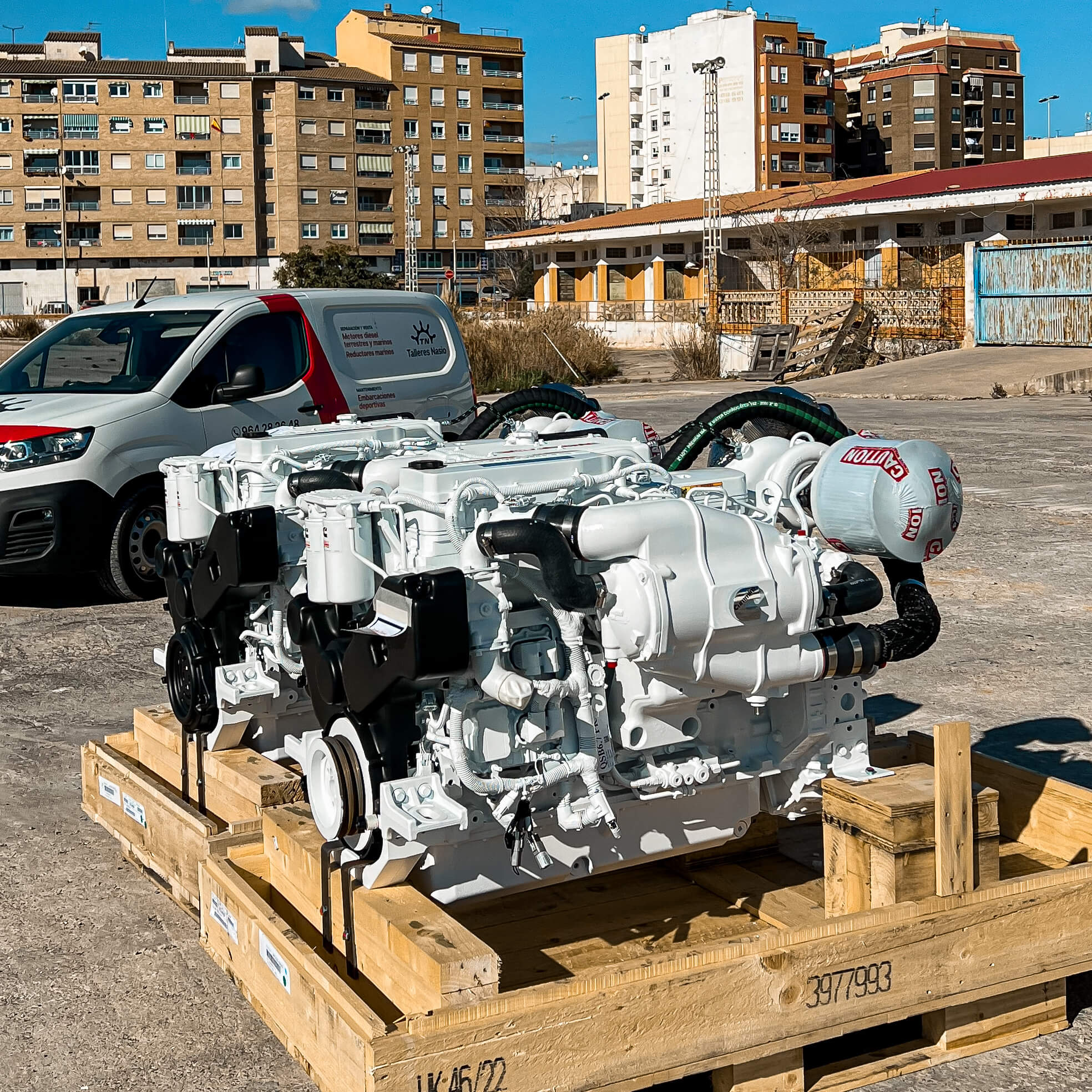
Best Marine Engines to Consider During a Sale
There isn’t one marine engine that is universally “best.”
The right choice depends on vessel size, application, propulsion configuration, operating profile, and installation requirements.
Marine Diesel Engines
Diesel propulsion remains an important option for many commercial and heavy-duty marine applications.A buyer searching for a marine diesel engine for sale online should compare much more than horsepower.
Important specifications can include:
- Rated power
- Rated RPM
- Torque characteristics
- Dimensions
- Weight
- Fuel system
- Cooling arrangement
- Exhaust requirements
- Electrical system
- Electronic controls
- Service requirements
- Gearbox compatibility
A commercial vessel that spends long periods operating under load should be evaluated differently from a recreational boat used occasionally.
The engine’s intended duty and operating environment matter.
Inboard Marine Engines
Inboard engines are commonly connected to a separate gearbox and shaft-driven propulsion system.
That makes drivetrain matching particularly important.
The basic relationship is:
Engine → Gearbox → Shaft → Propeller
Changing the engine can therefore affect the rest of the propulsion system.
Someone searching for an inboard marine engine for sale should ideally have the existing engine and gearbox information available before requesting a quotation.
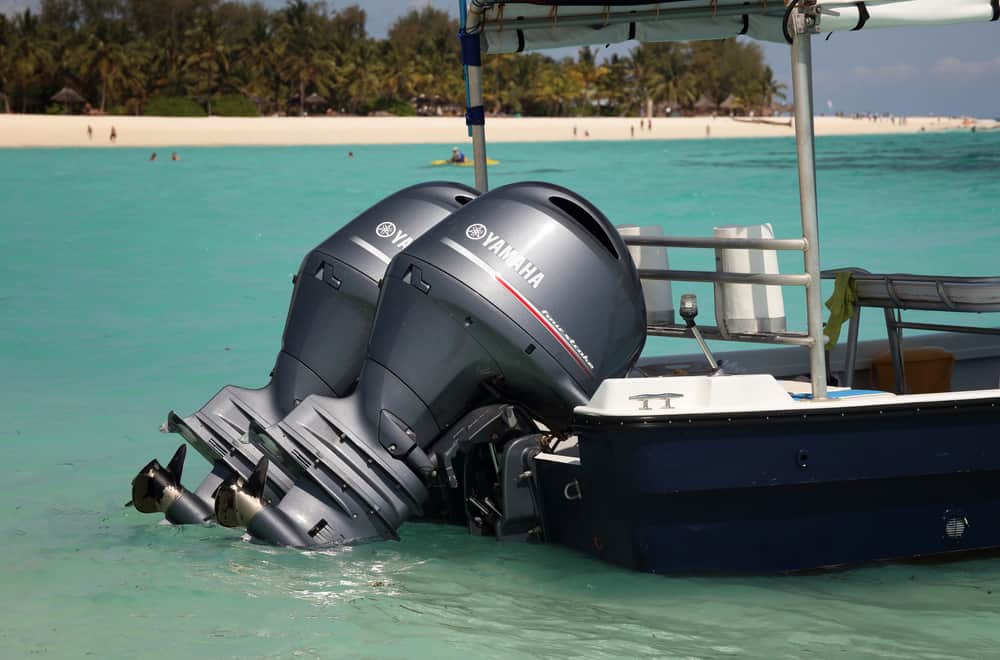
Outboard Marine Engines
Outboard propulsion is different because the propulsion unit incorporates the engine and lower-unit transmission system.
When comparing an outboard, consider:
- Horsepower
- Shaft length
- Weight
- Controls
- Fuel requirements
- Electrical requirements
- Boat specifications
- Intended operating conditions
The correct engine isn’t necessarily the largest engine that can physically be installed.
The vessel’s design and manufacturer’s recommendations should guide the selection.
Used Marine Engines
Used engines can be an attractive way to control the acquisition cost of a repower.
But used equipment requires more investigation.
When evaluating a used marine engine for sale, ask for:
- Exact model
- Serial number
- Operating hours
- Maintenance history
- Previous application
- Current photographs
- Service documentation
- Testing information where available
- Condition of major components
- Included accessories
Hours are useful information, but they aren’t a complete condition report.
An engine with documented maintenance can present a different risk profile from an engine with fewer hours but little known history.
Remanufactured Marine Engines
Remanufactured equipment can occupy an important position between new and used equipment.
However, terminology varies between suppliers.
If an engine is advertised as remanufactured, ask what was actually done.
For example:
- Which components were inspected?
- Which components were replaced?
- Which components were reconditioned?
- Was the engine tested?
- Is documentation available?
- What warranty applies?
Don’t assume the label alone answers these questions.
How to Compare Marine Engine Prices Properly
Price comparison becomes much more useful when the engines being compared are configured similarly.
Start by identifying the exact model and configuration.
Then compare:
- Horsepower
- RPM
- Condition
- Operating hours
- Included accessories
- Controls
- Electronics
- Gearbox
- Warranty
- Shipping
- Availability
Why Horsepower Alone Isn’t Enough
Suppose two engines both produce a similar horsepower rating.
That doesn’t necessarily mean they are interchangeable.
They may have different:
- Rated RPM
- Physical dimensions
- Weight
- Torque characteristics
- Mounting points
- Cooling requirements
- Exhaust arrangements
- Electronic systems
This is why a marine engine price should always be considered alongside its specifications.
Compare Complete Packages
If one listing includes an engine only and another includes an engine, gearbox, controls, and electronics, their headline prices aren’t directly comparable.
Ask:
What would I have to purchase separately to make this engine operational?
That question produces a much more meaningful comparison.
How to Choose the Right Marine Engine for Your Vessel
This is where the buying process becomes technical.
Before recommending a replacement engine, the most useful information usually comes from the vessel and its existing installation.
Start With the Existing Engine
If you’re repowering, photograph the existing engine identification plate.
Record:
- Manufacturer
- Model
- Serial number
- Horsepower
- Rated RPM
Then photograph the complete installation.
For vessels operating under applicable U.S. requirements, owners should also consult relevant U.S. Coast Guard regulations and guidance when determining applicable vessel and equipment requirements.
Useful photographs include:
- Front of engine
- Rear of engine
- Top
- Side
- Mounting points
- Gearbox
- Identification plate
- Connections
- Engine-room clearance
A photograph can reveal installation details that aren’t obvious from a model number alone.
Measure the Available Space
Measure the engine compartment rather than estimating.
Record:
- Maximum length
- Maximum width
- Maximum height
- Mounting position
- Service clearance
- Access points
Remember that an engine needs more than enough space to physically fit.
Technicians also need room to access filters, belts, connections, service points, and other components.
Consider Weight
Engine weight can affect vessel balance.
When replacing an engine, compare the old and new weights and consider how the change may affect the vessel.
This is especially important when moving between substantially different engine configurations.
Engine RPM, Gearbox Ratio and Propeller: The Connection Buyers Often Miss
One of the most important technical relationships in an inboard propulsion system is the connection between engine speed, gearbox reduction, shaft speed, and propeller selection.
Consider a simplified example.
If an engine operates at a higher rated RPM than the previous engine, the gearbox ratio becomes an important part of the conversion.
The gearbox can reduce engine speed before power reaches the propeller shaft.
The simplified relationship is:
Output Shaft RPM = Engine RPM ÷ Gear Reduction Ratio
For example, if an engine operates at 2,400 RPM and a gearbox has a 2:1 reduction ratio, the theoretical output speed is approximately 1,200 RPM.
The actual installation requires the manufacturer’s specifications and proper engineering evaluation, but the relationship illustrates why engine selection cannot be separated from gearbox selection.
This is also why buyers replacing an inboard engine should review their gearbox and propeller arrangement rather than assuming the existing setup will automatically work.
If you’re dealing with an engine-to-transmission replacement, our marine gearbox matching guide can provide additional information about engine RPM, gearbox ratios, and propeller considerations.
Electronic Controls and Integrated Diagnostics Matter Too
Modern marine propulsion systems increasingly rely on electronic control and monitoring.
Depending on the engine, the system may incorporate:
- ECU or ECM
- Electronic throttle or controls
- Temperature sensors
- Pressure sensors
- Fuel monitoring
- Engine-hour information
- Fault codes
- Digital displays
- Diagnostic interfaces
A buyer looking for a marine power system with integrated diagnostics should therefore consider the complete electronic architecture.
The important question isn’t simply:
“Does the engine have electronics?”
Instead ask:
“What electronics are included, and how will they integrate with my vessel?”
That can affect the required wiring, controls, displays, diagnostic equipment, and installation work.
What to Verify Before Buying a Marine Engine Online
Buying marine equipment online requires a little more diligence than buying an ordinary consumer product.
The engine may be heavy, expensive, specialized, and difficult to return.
That makes verification important.
Verify the Exact Model
Don’t rely on a generic product name.
Ask for the exact model designation.
Different configurations within a model family can have different specifications.
Request the Serial Number
For used equipment, the serial number is especially useful for identifying the specific engine.
Confirm Operating Hours
Ask how the hours were recorded and whether supporting documentation is available.
Request Current Photographs
For used equipment, current photographs are preferable to old catalog images.
Ask to see the identification plate and major sides of the engine.
Confirm What Is Included
Ask directly whether the quotation includes:
- Engine
- Gearbox
- ECU/ECM
- Wiring harness
- Starter
- Alternator
- Controls
- Gauges
- Displays
- Exhaust components
- Cooling components
- Mounting hardware
Never assume that every item shown in a photograph is included.
Confirm Warranty
If warranty coverage is offered, ask for the actual terms.
Important questions include:
- How long is the warranty?
- What components are covered?
- What is excluded?
- Who handles a claim?
- Are labor costs covered?
- Are international claims supported?
A clear warranty is much more useful than simply seeing the word “warranty” in a listing.
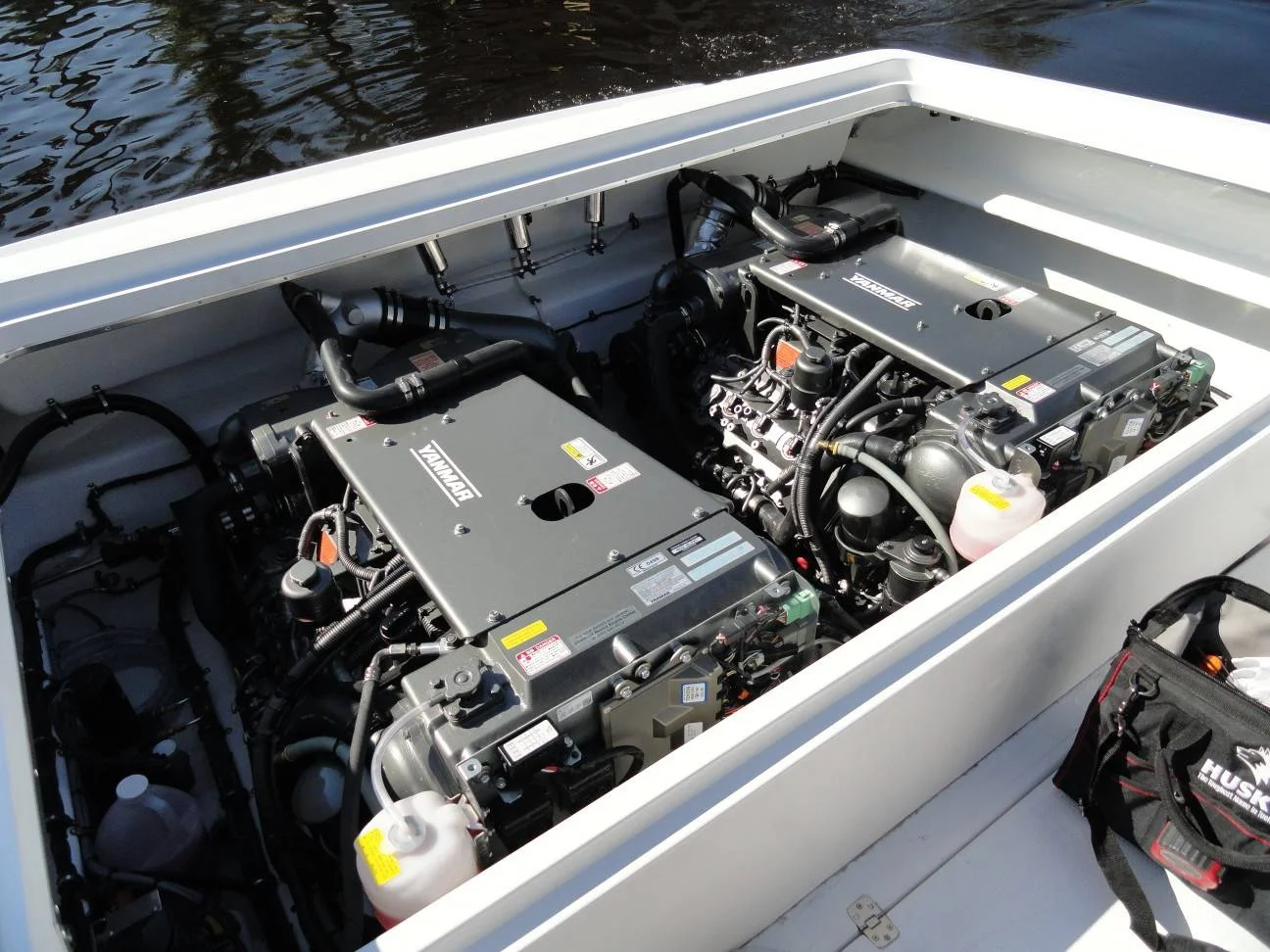
How to Evaluate a Used Marine Engine
Used equipment deserves its own checklist because condition is not visible from price alone.
Examine External Condition
Look for evidence of:
- Corrosion
- Cracks
- Oil leaks
- Coolant leaks
- Damaged wiring
- Missing components
- Physical impact
- Improper storage
External appearance doesn’t prove internal condition, but it provides useful context.
Investigate Previous Application
Ask where the engine operated.
An engine used in a different environment may have experienced different operating conditions.
Request Maintenance Documentation
Records can provide useful evidence of:
- Servicing
- Component replacement
- Maintenance intervals
- Repairs
- Operating history
Ask About Testing
If the engine has been tested, ask what was tested and whether documentation is available.
Be specific.
“Tested” can mean different things depending on the seller and the equipment.
Marine Engine Shipping Can Change the Deal Completely
An engine sale isn’t complete from a buyer’s perspective until the equipment can reach the destination economically and safely.
For heavy marine equipment, shipping can represent a significant part of the overall purchase cost.
What Determines Shipping Cost?
Common factors include:
- Weight
- Dimensions
- Packaging
- Crating
- Origin
- Destination
- Freight method
- Port handling
- Local delivery
International Marine Engine Shipping
International buyers should also consider:
- Customs procedures
- Import documentation
- Duties
- Taxes
- Port charges
- Insurance
- Local transportation
International marine operations may also involve broader maritime requirements, so buyers can consult the International Maritime Organization for official information on international maritime standards and conventions.
This is why a buyer comparing marine engine prices and shipping should request the complete logistics information before making the final decision.
Shipping to Europe
If you’re purchasing from Europe or arranging delivery there, our guide to marine engine shipping to Europe covers additional considerations related to international marine-equipment transportation.
Four Shipping Questions to Ask
At Power Engine Market, a useful quotation should make the logistics clear.
Ask for:
- Shipping fee
- Shipping method
- Estimated dispatch time
- Estimated transit time
These details make it easier to compare quotations and plan installation.
Don’t Let a Limited-Time Sale Make You Skip Due Diligence
This deserves emphasis.
If a marine engine is genuinely being offered under a time-limited promotion or because limited inventory is available, the opportunity may require a quicker decision.
But faster decision-making should not mean incomplete verification.
Before paying, you should still know:
- What engine you’re buying
- Its condition
- What is included
- Whether it suits your vessel
- What gearbox is involved
- What the shipping cost is
- What warranty applies
- When it can dispatch
A genuine sale should give you a reason to act efficiently.
It should not give you a reason to stop asking questions.
If the offer depends on artificial pressure rather than clear product information, treat that as a reason for additional caution.
Common Marine Engine Buying Mistakes
Mistake 1: Choosing the Lowest Price
The cheapest listing may not be the cheapest project.
Always calculate the total acquisition and installation cost.
Mistake 2: Choosing by Horsepower Alone
Horsepower doesn’t tell you whether the engine will physically fit or integrate with your drivetrain.
Mistake 3: Ignoring Rated RPM
Engine RPM and gearbox ratio affect shaft speed and propulsion-system compatibility.
Mistake 4: Forgetting the Gearbox
An inboard engine and gearbox should be evaluated as connected parts of the propulsion system.
Mistake 5: Assuming the Existing Propeller Will Work
A repower can change the operating conditions of the propulsion system.
The propeller should therefore be reviewed as part of the overall installation.
Mistake 6: Ignoring Electronics
A modern engine may require compatible controls, displays, wiring, and diagnostic systems.
Mistake 7: Assuming Everything in the Photograph Is Included
Always confirm the package contents in writing.
Mistake 8: Forgetting Shipping
Calculate the complete delivered cost.
Mistake 9: Buying Used Equipment Without Documentation
When documentation is available, use it.
When it isn’t available, recognize the additional uncertainty before assigning value to the engine.
What Information Should You Send When Requesting a Marine Engine Quote?
This is one of the simplest ways to make the purchasing process more efficient.
Instead of sending only:
“I need a 300 HP marine engine. How much?”
provide the supplier with the relevant vessel and installation information.
Useful Information
Send:
- Vessel type
- Vessel size
- Intended application
- Existing engine manufacturer
- Existing engine model
- Serial number
- Horsepower
- Rated RPM
- Gearbox manufacturer
- Gearbox model
- Gear ratio
- Engine dimensions
- Engine weight if known
- Location
- New or used preference
- Required delivery destination
Then attach photographs.
This gives the supplier a much better basis for identifying potential options.
Why Power Engine Market Focuses on the Complete Marine Engine Purchase
A marine engine purchase shouldn’t end with sending a product link and a price.
For a serious repower or replacement project, the surrounding details matter.
Power Engine Market‘s marine equipment offering can include solutions across categories such as:
- Marine diesel engines
- Inboard marine engines
- Outboard marine engines
- Commercial marine engines
- Replacement marine engines
- Used marine engines
- Remanufactured marine engines
- Marine gearboxes
- Marine propulsion components
The right product depends on the buyer’s vessel and application.
That is why product selection should begin with specifications rather than assumptions.
Marine Engine and Gearbox Compatibility
For an inboard installation, the engine should be considered together with the gearbox, shafting, and propeller.
A suitable engine with an unsuitable transmission configuration can create an entirely different installation project.
Buyers replacing a gearbox at the same time may also want to compare a certified used marine gearbox where appropriate, provided its condition, ratio, configuration, and compatibility have been properly verified.
International Buyers
For international buyers, the quotation should also account for logistics.
A clear understanding of shipping costs and estimated delivery timing can prevent unpleasant surprises later in the purchasing process.
How to Order a Marine Engine Online From Power Engine Market
Once you have identified a suitable engine, the purchasing process can be organized into a few straightforward stages.
Step 1: Identify the Vessel
Provide the vessel type, size, and application.
Step 2: Identify the Existing Engine
Send the model, serial number, horsepower, RPM, and photographs.
Step 3: Provide Gearbox Information
For an inboard system, include the gearbox model and ratio whenever possible.
Step 4: Review Suitable Options
Compare:
- Specifications
- Condition
- Included components
- Price
- Availability
- Warranty
- Compatibility
Step 5: Review Shipping
Confirm:
- Shipping fee
- Shipping method
- Estimated dispatch time
- Estimated transit time
Step 6: Review the Quotation
Make sure the quotation clearly identifies the equipment and commercial terms.
Step 7: Confirm the Purchase
Once the technical and commercial details are understood, proceed according to the agreed purchasing process.
Frequently Asked Questions About Marine Engine Sales
Where can I find a limited time marine engine sale online?
You can search specialist marine equipment suppliers such as Power Engine Market for available marine engines and compare them according to application, specifications, condition, price, and availability. If a listing is promoted as a limited-time sale, verify the actual offer period and product availability before ordering.
What is the best marine engine to buy?
There is no single best marine engine for every vessel. The appropriate choice depends on horsepower requirements, vessel size, intended use, engine compartment dimensions, RPM, drivetrain configuration, controls, and other installation requirements.
How much does a marine engine cost?
Marine engine prices vary considerably depending on manufacturer, model, horsepower, condition, configuration, accessories, gearbox, availability, and shipping destination. The delivered project cost is more useful than comparing engine prices alone.
Is a used marine engine worth buying?
It can be, particularly when the engine’s model, operating history, condition, maintenance records, configuration, and compatibility can be properly evaluated.
What information do I need to buy a marine engine online?
At minimum, provide the vessel application and existing engine information. Model, horsepower, rated RPM, serial number, gearbox details, dimensions, location, and photographs can make the evaluation much more precise.
Does a marine engine normally include the gearbox?
Not necessarily. Some engines are sold separately while others may be offered as complete packages. Always confirm the exact equipment included in the quotation.
Why does gearbox ratio matter?
The gearbox affects the relationship between engine speed and propeller-shaft speed. For an inboard propulsion system, gearbox ratio therefore needs to be considered alongside engine RPM and propeller requirements.
Can I replace my marine engine without replacing the propeller?
Possibly, but it should not be assumed. A different engine or gearbox configuration can change propulsion-system operating conditions. Propeller suitability should be evaluated as part of the repower.
What should I ask about a used marine engine?
Ask for the exact model, serial number, operating hours, maintenance history, previous application, photographs, testing information where available, included components, and warranty terms.
What should marine engine shipping information include?
A useful quotation should identify the shipping fee, shipping method, estimated dispatch time, and estimated transit time. International buyers should also consider customs, duties, taxes, port handling, and local delivery.
Final Verdict: The Best Marine Engine Deal Is the One That Fits the Whole Project
A marine engine sale can create a valuable opportunity, especially when the right equipment becomes available at a competitive price.
But don’t let the word “sale” make the decision for you.
The strongest purchase is the one where the engine, vessel, drivetrain, installation requirements, condition, equipment package, shipping, and total cost all make sense together.
Before you order, think through the complete chain:
Vessel → Engine → Gearbox → Shaft → Propeller → Controls → Installation → Shipping → Total Cost
That is the difference between simply finding a marine engine and finding the right marine engine.
If you’re looking for a marine engine for sale, a commercial propulsion engine, a replacement diesel, an inboard engine, an outboard, a used engine, or a broader marine propulsion solution, start by gathering your vessel and existing engine information.
Send the model details, photographs, gearbox information, destination, and application.
From there, the comparison becomes much more meaningful.
And when a genuine limited time marine engine sale online presents an opportunity, you’ll be in a much better position to determine whether you’re looking at a real bargain or simply a low price on the wrong engine.
Next Post: Marine Power System With Integrated Diagnostics for Sale: Best Systems to Buy in 2026


