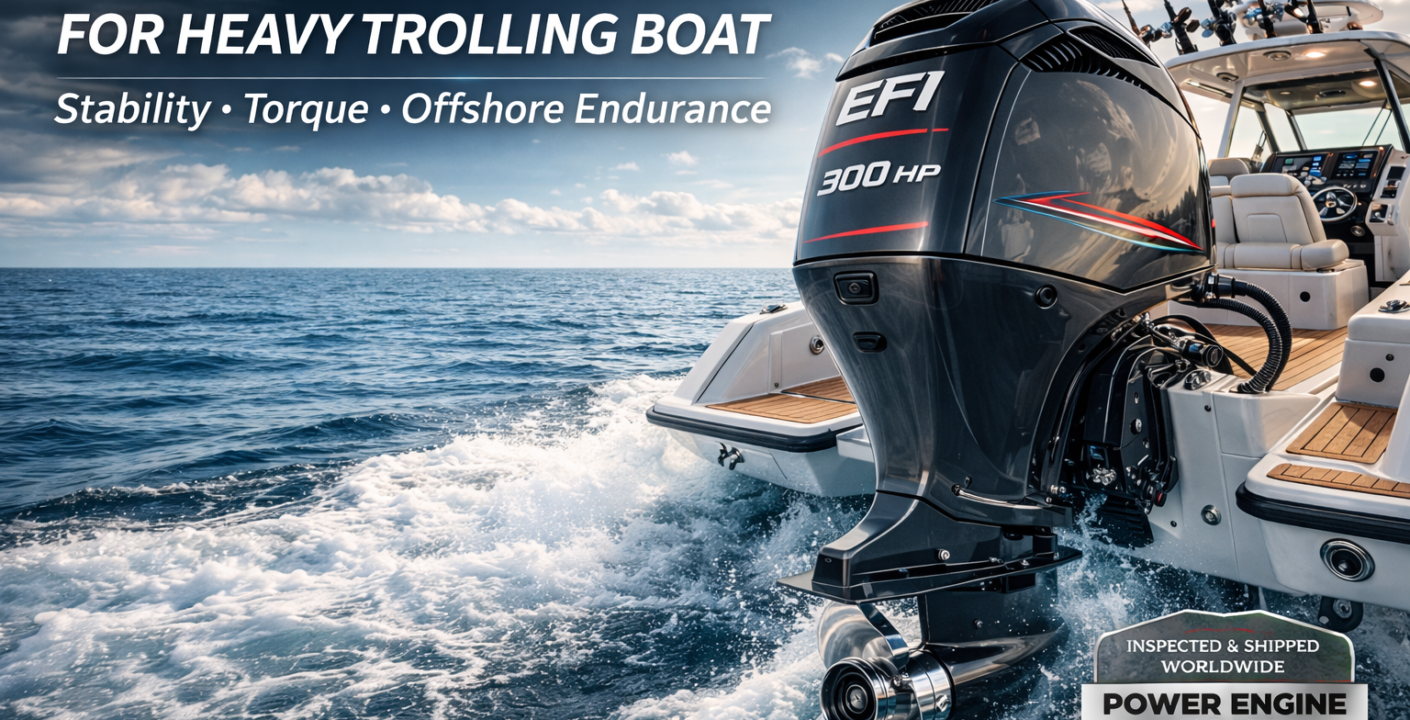
If you’ve spent real time offshore in a fully loaded trolling boat, you already know something most marketing brochures don’t mention:
A heavy trolling boat exposes weaknesses fast.
I’ve worked directly with offshore anglers, charter captains, and commercial operators who run 8–12 hour sessions in open water. When an engine isn’t properly matched to hull weight and load profile, the problems show up immediately — sluggish planing, excessive fuel burn, unstable trim, overheating at extended idle.
That’s why choosing the correct outboard engine for heavy trolling boat applications is not about brand hype. It’s about torque delivery, durability, and proper configuration.
At Power Engine Market, we specialize in supplying new, warranty-backed outboard engines for serious offshore use — and this guide reflects what we’ve learned from real installations.
Key Benefits of a New Outboard Engine for Heavy Trolling Boat
- High torque at mid-range RPM
- Fuel-efficient EFI system
- Offshore-grade cooling performance
- Reinforced gearcase durability
- Saltwater corrosion resistance
- Manufacturer-backed warranty
What Makes a Heavy Trolling Boat Mechanically Demanding?
Heavy trolling boats differ from lightweight recreational vessels in several critical ways:
- Deep-V hull design increases drag
- Reinforced transoms add weight
- Large fuel tanks increase displacement
- Offshore gear adds hundreds of pounds
- Extended idle trolling hours stress cooling systems
Most heavy trolling boats operate between 3–7 knots for extended periods, then require immediate throttle response during maneuvering.
That operating pattern requires a properly configured high torque outboard engine for heavy trolling boat performance.
Torque Matters More Than Horsepower
One of the most common mistakes we see is buyers selecting engines based only on advertised horsepower.
Horsepower is only part of the equation.
For heavy trolling boats, torque at mid-range RPM (3,000–4,500 RPM) determines:
- Hull lift efficiency
- Planing speed under load
- Fuel burn stability
- Engine strain over time
Modern EFI outboards from established manufacturers such as Yamaha, Mercury, Suzuki, and Honda are engineered with optimized torque curves for marine load applications.
When customers contact us searching for the best new outboard engine for heavy trolling boat offshore fishing, our first discussion centers around torque and gear ratio — not peak speed. Read about U.S. Coast Guard boating safety guidelines
Why EFI Is Critical for Heavy Trolling Applications
Electronic Fuel Injection (EFI) is no longer optional for serious offshore use.
A properly calibrated saltwater outboard engine for heavy boat use with EFI provides:
- Precise air-fuel ratio control
- Stable idle for long trolling sessions
- Improved fuel efficiency at cruising RPM
- Reduced carbon buildup during low-speed operation
- Better cold-start reliability
Extended low-RPM trolling can cause excessive carbon buildup in carbureted engines. EFI systems dynamically adjust fuel delivery to reduce that issue.
From an operational standpoint, this translates into:
- Cleaner combustion
- More consistent RPM stability
- Lower long-term maintenance costs
Cooling System Performance at Extended Idle
Heavy trolling boats often run for hours at low RPM.
During these sessions, engine cooling performance becomes critical.
Modern EFI outboards incorporate:
- High-capacity water pumps
- Thermostatic temperature regulation
- Optimized cooling passages
These systems maintain stable operating temperatures during prolonged idle conditions — reducing risk of overheating during offshore sessions.
This is one of the primary reasons professional operators prefer a properly rated commercial grade trolling boat outboard engine
Lower Unit Strength & Gearcase Durability
The lower unit absorbs continuous stress in heavy applications.
A suitable outboard engine for heavy trolling boat offshore use must include:
- Reinforced gearcase housing
- Heavy-duty prop shaft
- Correct gear ratio for load conditions
- Marine-grade corrosion-resistant components
Improper gear ratio selection can reduce thrust efficiency and increase fuel consumption.
At Power Engine Market, we guide customers through gear ratio matching based on hull size and intended use.
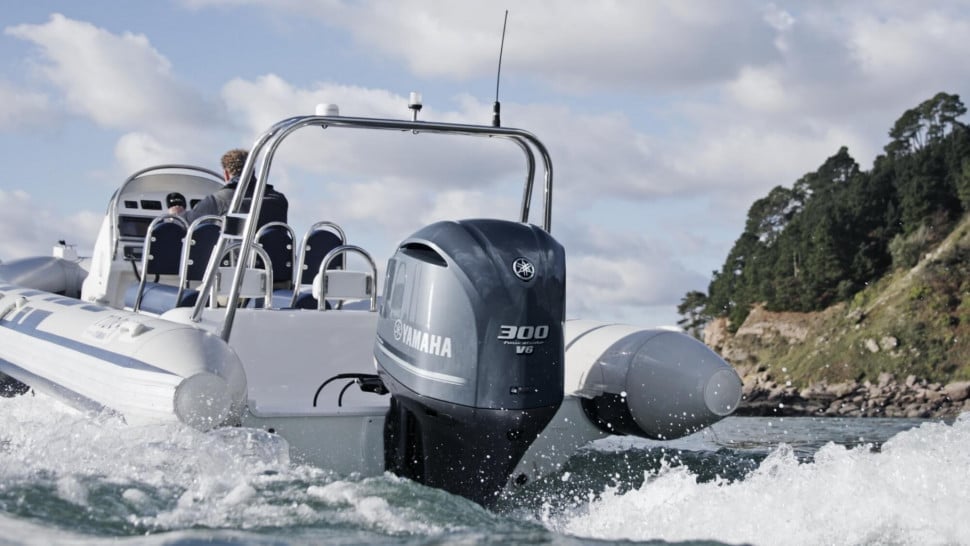
Horsepower Recommendations Based on Real-World Installations
150–200 HP Range
Suitable for mid-weight trolling boats in dual configurations or lighter offshore setups.
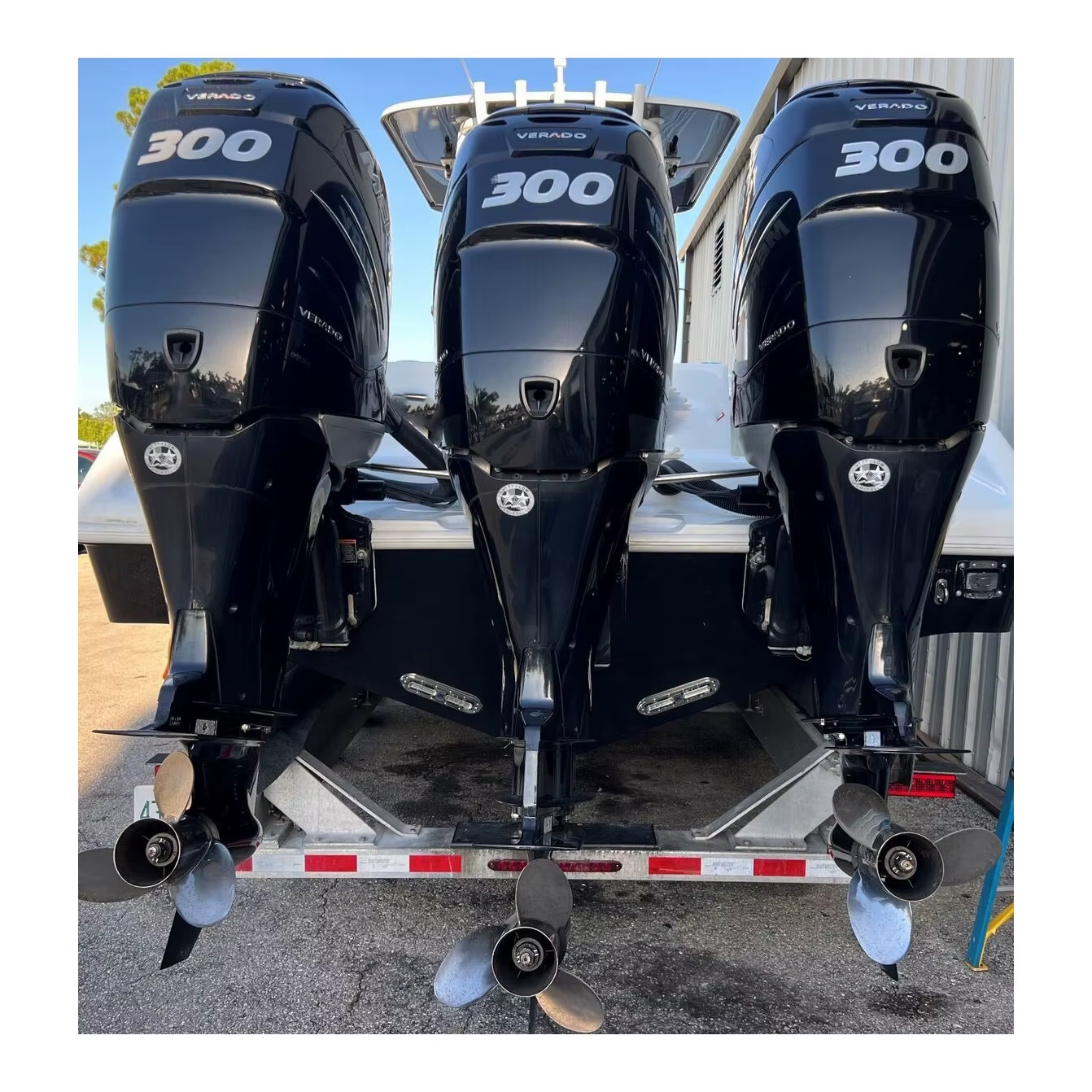
225–300 HP Range
Often optimal for 26–32 foot heavy offshore trolling vessels.
This range provides:
- Improved hole shot under load
- Stable mid-range RPM
- Reduced engine strain
- Better long-term durability
Many serious anglers upgrading to a new outboard engine for heavy trolling boat with high torque output find this category provides the best balance between performance and fuel efficiency.
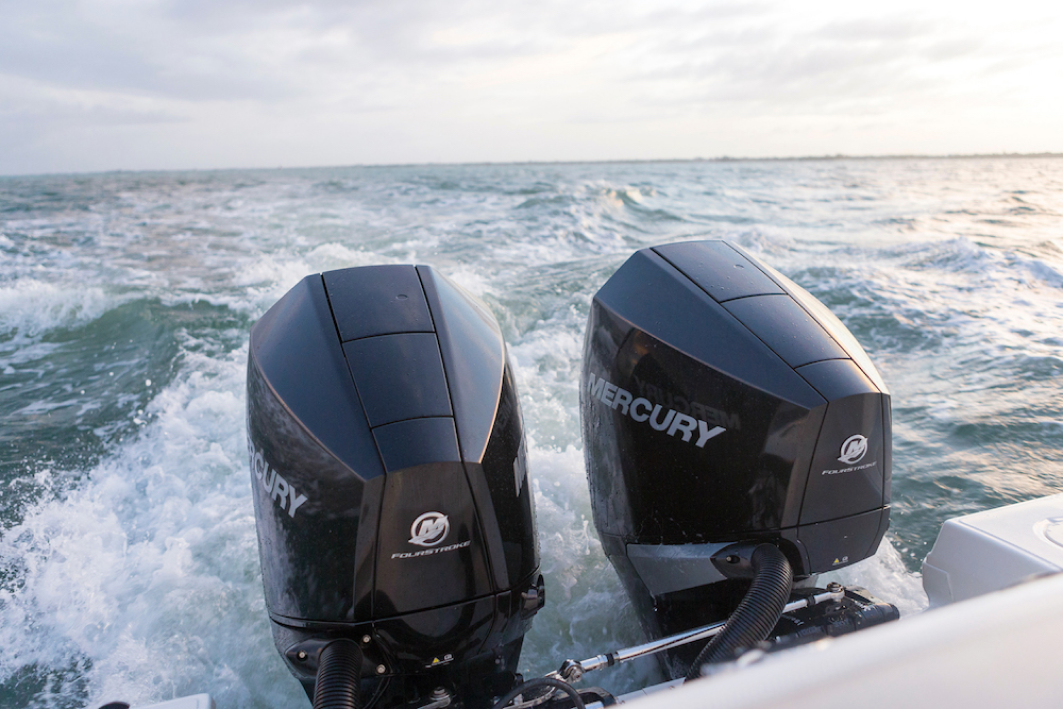
Twin Engine Configurations for Offshore Stability
Twin setups are common in heavy trolling boats for three reasons:
- Redundancy for offshore safety
- Balanced transom weight
- Improved maneuverability during trolling
When evaluating a dual outboard engine for heavy trolling boat offshore configuration, we consider:
- Total transom weight capacity
- Fuel tank size
- Expected load distribution
- Propeller pitch optimization
These factors directly affect long-term reliability and performance.
Fuel Efficiency & Operational Cost Control
A properly matched fuel efficient outboard engine for heavy trolling boat operation can significantly reduce seasonal fuel expenses.
Optimized EFI mapping ensures:
- Stable combustion at cruising RPM
- Lower unburned fuel waste
- Consistent throttle response
For commercial charter operators, fuel efficiency directly affects profitability.
Saltwater Durability & Corrosion Protection
Offshore trolling exposes engines to:
- Salt spray
- High humidity
- Extended storage cycles
A suitable saltwater-rated outboard engine for heavy trolling boat use includes:
- Anti-corrosion coatings
- Sacrificial anodes
- Sealed electrical connectors
- Marine-grade hardware
Long-term durability depends on proper material engineering and routine maintenance.
Why Buy from Power Engine Market?
Authoritativeness is not marketing language — it’s process.
- Engines are inspected prior to dispatch
- Serial numbers are documented
- Warranty coverage is verified
- Secure freight coordination is arranged
- Export documentation is prepared for international buyers
Customers searching for a new outboard engine for heavy trolling boat with worldwide shipping need assurance that logistics and documentation are handled professionally.
We provide that structure.
Frequently Asked Questions
What is the best outboard engine for heavy trolling boat use?
The best engine is one matched to hull weight, torque needs, and trolling RPM requirements — typically in the 225–300HP EFI range for offshore setups.
Are EFI engines better for heavy trolling boats?
Yes. EFI systems provide smoother idle, better fuel efficiency, and reduced carbon buildup during extended trolling sessions.
How much horsepower does a heavy trolling boat need?
Most offshore heavy trolling boats perform best with 200HP+ depending on load and configuration.
Is twin engine setup better for offshore trolling?
For larger vessels, yes. Twin setups improve balance, stability, and safety redundancy offshore.
Final Thoughts
A heavy trolling boat demands:
- Torque under load
- Stable RPM during long sessions
- Efficient fuel delivery
- Durable cooling systems
- Corrosion resistance
- Verified warranty coverage
Selecting the correct outboard engine for heavy trolling boat offshore performance is not about chasing the highest advertised horsepower.
It’s about selecting an engine engineered — and configured — for endurance, stability, and long-term reliability.
At Power Engine Market, we work with serious anglers and commercial operators who expect their equipment to perform offshore, not just look good on a specification sheet.
When you’re miles offshore, fully loaded, and the weather shifts unexpectedly, confidence in your propulsion system is not optional.
It’s essential.
Next Post: High-Performance EFI Outboard Engine for Sale: Save Fuel, Gain Speed, Cut Maintenance


